
Last Updated: December 24, 2025
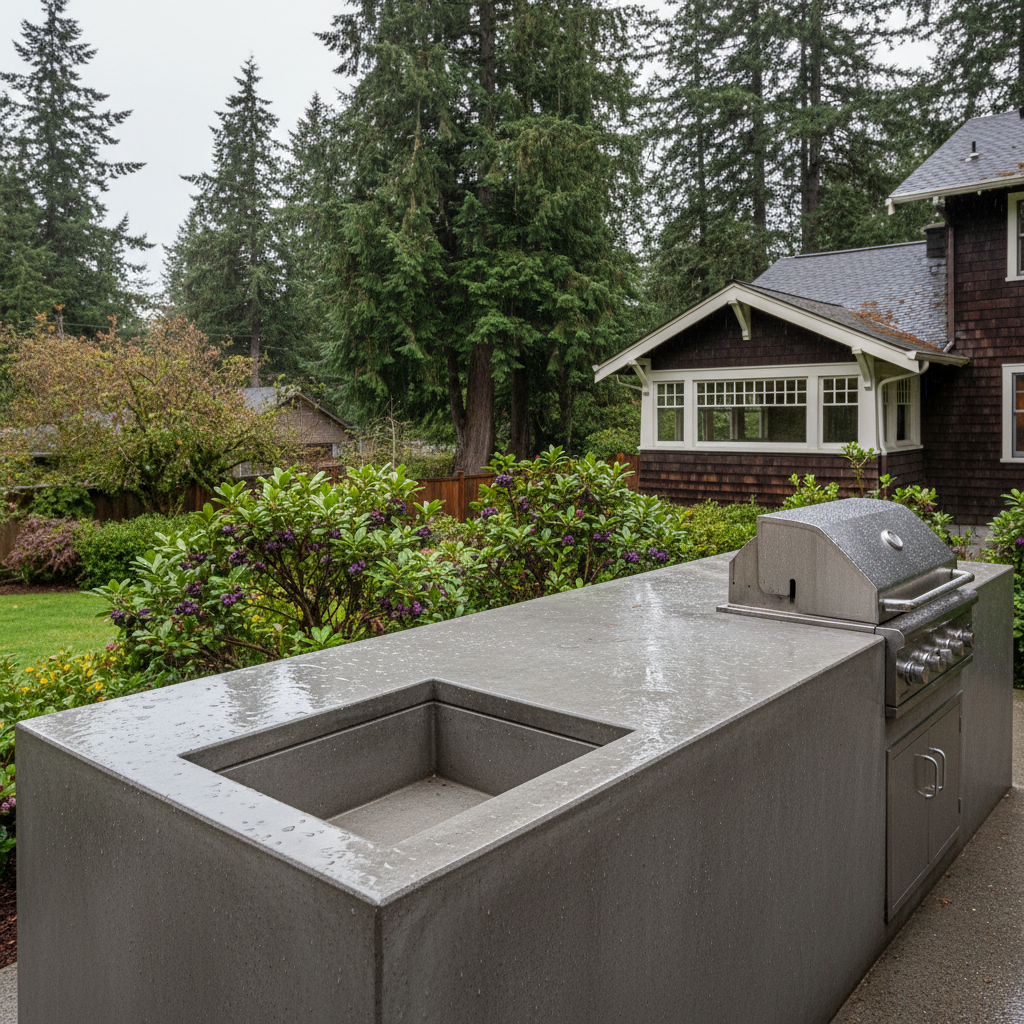
Are you tired of outdoor kitchen countertops that crack, stain, or fade after just one Oregon winter? When designing outdoor living spaces in Salem, OR, homeowners face a unique challenge: finding materials that withstand our region’s relentless rain, temperature swings, and UV exposure while maintaining aesthetic appeal. While granite and tile dominate indoor kitchens, concrete has emerged as the premier choice for outdoor cooking spaces—offering unmatched customization, durability, and weather resistance that transforms backyard areas into year-round entertainment hubs.
The Pacific Northwest climate demands countertop solutions engineered for moisture, and concrete delivers. Our team has installed outdoor concrete kitchen countertops throughout Salem, OR, from the tree-lined neighborhoods near Bush’s Pasture Park to properties along the Willamette River corridor, and we’ve witnessed firsthand how properly sealed concrete outperforms traditional materials in our wet climate. Unlike other surface options that deteriorate or require frequent replacement, concrete countertops develop a distinctive patina that enhances their character while maintaining structural integrity for decades.
Quick Answer: Why Choose Concrete for Outdoor Kitchens?
Concrete countertops provide exceptional durability for outdoor kitchens in Salem, OR, combining heat resistance, customizable aesthetics, and weather resilience. At 1.5 inches thick, they withstand Pacific Northwest rain when properly sealed with UV-stable epoxy or urethane finishes, offering infinite design possibilities through integral pigments, aggregates, and custom edges that complement any outdoor living space.
Key Takeaways:
- Climate-Ready Durability: Concrete resists Salem’s freeze-thaw cycles and constant moisture with proper sealing
- Heat-Resistant Surface: Place hot cookware directly on sealed surfaces (with trivets for protection)
- Custom Design Options: Unlimited colors, textures, and integrated features like drainboards or sinks
- Sustainable Materials: Modern mixes incorporate 50%+ recycled industrial by-products
- Long-Term Investment: Weighing 220 pounds per 10.7 square feet, these counters last decades with biannual sealer maintenance
Understanding Concrete Countertops for Pacific Northwest Outdoor Kitchens
Concrete countertops represent a dramatic evolution from traditional kitchen surfaces. Unlike granite slabs cut from quarries or manufactured quartz composites, concrete offers moldability that enables custom shapes, integrated features, and seamless integration with outdoor flooring—particularly important when extending your concrete patio services into functional cooking areas.
Composition and Construction Methods
Professional outdoor concrete kitchen countertops in Salem, OR typically feature Portland cement blended with sustainability-focused additives like fly ash, slag cement, or silica fume—industrial by-products that reduce carbon emissions by over 50% compared to traditional concrete. According to the U.S. Environmental Protection Agency, these supplementary cementitious materials enhance durability while minimizing environmental impact.
The mixture incorporates aggregates ranging from fine sand to crushed glass or locally sourced quarry materials, creating visual depth and enhancing drainage properties. Water activates the cement, initiating a curing process that produces minor hairline cracks—cosmetic features that add character without compromising structural integrity. Standard thickness ranges from 1 to 1.5 inches, increasing to 2 inches around integrated sinks or heavy appliances for added stability.
Precast vs. Cast-in-Place Installation
Most Salem installations utilize precast methods, where artisans fabricate slabs offsite in controlled environments. This approach ensures precision, minimizes weather-related complications during Oregon’s rainy seasons, and allows intricate customization through custom molds. Cast-in-place alternatives involve pouring concrete directly at your property, enabling seamless integration with existing stamped concrete services or outdoor flooring patterns.
Why Salem’s Climate Demands Specialized Sealing
Salem receives approximately 42 inches of annual rainfall, with winter temperatures occasionally dipping below freezing. Our experience working throughout zip codes 97301, 97302, and 97304 has taught us that UV-stable topical sealers—specifically epoxy or urethane formulations—provide superior protection against moisture infiltration and thermal cycling compared to penetrating sealers alone. While penetrating options inhibit deep staining, they permit surface marks from acidic foods or grease common in outdoor cooking environments.
Before installation, our crews coordinate with Pacific Power to ensure proper electrical access for outdoor appliances, verifying that countertop layouts accommodate utility requirements without compromising design aesthetics.
Common Mistakes When Selecting Outdoor Countertop Materials
Homeowners frequently make critical errors when choosing outdoor kitchen surfaces, leading to premature failure, costly replacements, or ongoing maintenance headaches. Understanding these pitfalls helps you make informed decisions for your Salem outdoor living project.
Underestimating Weight Requirements
At approximately 220 pounds per 10.7 square feet for standard 1.5-inch thickness, concrete countertops demand robust structural support. Inadequate cabinet reinforcement or insufficient foundation support beneath outdoor kitchen islands causes sagging, cracking, or catastrophic failure. When we install outdoor concrete kitchen countertops in Salem, OR, our teams verify that base cabinets and underlying concrete patio contractors in Salem, OR have established proper load-bearing foundations before proceeding.
Choosing Inappropriate Sealer Types
Not all sealers perform equally in outdoor environments. Wax-based products deteriorate rapidly under UV exposure and temperature fluctuations, while acrylic sealers scratch easily from grill utensils or serving dishes. Our contrarian insight for Pacific Northwest applications: despite manufacturer claims, we’ve found that oil-based penetrating sealers allow natural aging and patina development better suited to Salem’s variable weather patterns than glossy topical finishes—though they require more frequent reapplication every 6-12 months versus biannual schedules for urethane systems.
Neglecting Drainage and Slope Considerations
Flat outdoor countertops accumulate standing water during Salem’s rainy months, accelerating sealer degradation and creating unsightly water spots. Professional installations incorporate subtle slopes toward drainboards or edges, channeling moisture away from food preparation zones while maintaining functional work surfaces.
Best Approach: Designing Your Outdoor Concrete Countertop
Successful outdoor kitchen countertops balance aesthetic vision with practical durability, especially in challenging climates. Our comprehensive approach ensures your investment withstands decades of Pacific Northwest weather while enhancing your property’s value and usability.
Color and Texture Selection for Oregon Environments
Integral pigments provide color consistency throughout the concrete depth, preventing unsightly wear patterns as surfaces age. For Salem installations, we recommend earth tones—warm grays, taupes, or terracotta shades—that complement Oregon’s natural landscape while concealing minor staining from outdoor cooking. Acid stains create variegated patterns but offer less predictability, while UV-stable dyes deliver consistent coloration resistant to our region’s extended summer daylight.
Aggregate selections dramatically impact visual appeal and functionality. Exposed river rock creates rustic textures ideal for properties near the Willamette River, while crushed glass aggregates add contemporary shimmer to modern outdoor designs. Smooth trowel finishes minimize surface irregularities, simplifying cleaning after grilling sessions or outdoor dinner parties.
Integrated Features and Custom Elements
Concrete’s moldability enables features impossible with natural stone. Integrated drainboards channel water directly to drainage systems, while built-in cooling troughs keep beverages chilled during summer gatherings. Custom edge profiles—from sleek square edges to decorative ogee treatments—personalize your outdoor kitchen while maintaining structural integrity through proper thickness specifications.
| Feature | Benefit | Thickness Requirement |
|---|---|---|
| Standard Surface | Heat-resistant work area | 1-1.5 inches |
| Integrated Sink | Seamless drainage, easy cleaning | 2 inches at edges |
| Drainboard | Channels rainwater away | 1.5 inches minimum |
| Appliance Cutouts | Grill or cooktop integration | 2 inches surrounding |
Selecting the Right Professional Team
DIY concrete countertop projects rarely succeed in outdoor applications due to complex mold construction, precise mixture ratios, and climate-specific sealing requirements. Professional installers understand Portland’s building codes, proper reinforcement techniques, and sealer selection for Pacific Northwest weather patterns. Local options include Salem Concrete and experienced contractors familiar with Oregon’s unique environmental challenges.
How to Maintain Your Outdoor Concrete Countertops
Proper maintenance extends your countertop’s lifespan while preserving its aesthetic appeal. Salem’s climate demands more frequent attention than drier regions, but simple routines prevent costly repairs or premature deterioration.
Daily and Seasonal Cleaning Protocols
After each outdoor cooking session, wipe surfaces with mild dish soap and water, avoiding acidic cleaners that etch sealers or harsh abrasives that scratch finishes. During Oregon’s wet winters, remove standing water promptly to prevent prolonged sealer exposure to moisture. Spring cleaning should include thorough inspection for sealer degradation—look for water absorption rather than beading, indicating reapplication needs.
Resealing Schedule for Pacific Northwest Conditions
Most outdoor concrete kitchen countertops in Salem, OR require resealing every 6-12 months depending on sealer type and usage intensity. Topical epoxy or urethane sealers typically last 12-18 months, while penetrating oil-based options need more frequent application—every 6-8 months in our experience throughout Marion County. Before resealing, clean thoroughly and allow complete drying for 24-48 hours, timing applications during Salem’s drier summer months for optimal adhesion.
Protecting Against Common Outdoor Hazards
While concrete resists heat better than many materials, always use trivets under extremely hot cookware to prevent thermal shock that could crack sealers. Immediately blot acidic spills like citrus juice, wine, or tomato-based sauces that etch surfaces if left standing. Cover countertops during extended non-use periods to minimize UV exposure and debris accumulation, though quality UV-stable sealers mitigate most sun-related degradation.
Frequently Asked Questions About Outdoor Concrete Countertops
How long do outdoor concrete countertops last in Salem’s climate?
With proper sealing and maintenance, outdoor concrete countertops endure 20-30+ years in Pacific Northwest conditions. The concrete itself remains structurally sound indefinitely, while sealers require periodic renewal. Our installations throughout Salem’s varying microclimates—from cooler elevations near Salem Heights to milder areas near Keizer—consistently demonstrate exceptional longevity when homeowners follow recommended maintenance schedules.
Can concrete countertops crack from freezing temperatures?
Properly mixed concrete incorporates air-entrained additives that allow internal expansion during freeze-thaw cycles, preventing structural cracking. Minor hairline surface cracks develop during curing regardless of temperature—these cosmetic features don’t compromise function. Salem’s relatively mild winters (typically 25-40°F) pose minimal risk compared to harsher climates, though proper sealing prevents moisture infiltration that could freeze and expand within the concrete matrix.
What’s the cost range for outdoor concrete kitchen countertops?
Professional installations typically range from $75-150 per square foot depending on complexity, custom features, and finish selections. Basic gray concrete with standard edges occupies the lower range, while elaborate color treatments, integrated sinks, or specialized aggregates increase costs. This pricing reflects Salem area labor rates and material costs as of December 2025, positioning concrete competitively against granite or high-end tile installations while offering superior customization.
How does concrete compare to granite for outdoor use?
Concrete offers moldability for custom shapes and integrated features impossible with quarried granite slabs, plus superior heat resistance and lower material costs. However, granite requires less maintenance once installed and shows fewer stains over time. For Salem’s wet climate, concrete’s ability to incorporate drainage features and match existing concrete patios provides significant design advantages, while granite’s limited sizing creates more visible seams in large outdoor kitchen layouts.
Do I need special permits for outdoor kitchen countertops in Salem?
City of Salem building codes typically don’t require separate permits for countertop installation alone, but comprehensive outdoor kitchen projects often need permits for electrical, plumbing, or structural work. When incorporating gas lines for grills or adding substantial weight-bearing structures, consult Salem’s Community Development Department to verify requirements. Our crews routinely coordinate with local inspectors to ensure all services meet current building standards and safety regulations.
Conclusion: Building Outdoor Kitchens That Last
Outdoor concrete kitchen countertops in Salem, OR represent the intersection of durability, customization, and climate-appropriate design. As Pacific Northwest homeowners increasingly invest in year-round outdoor living spaces, concrete emerges as the material best equipped to handle our region’s challenging weather while delivering the aesthetic flexibility modern outdoor kitchens demand. From integrated drainage features that channel Salem’s abundant rainfall to heat-resistant surfaces that withstand intense grilling sessions, properly installed concrete countertops transform backyard cooking areas into functional, beautiful spaces that endure for decades.
The key to success lies in professional installation, appropriate sealer selection, and consistent maintenance tailored to Oregon’s unique environment. Whether you’re designing a contemporary outdoor kitchen in South Salem or a rustic cooking space near Mission Mill Museum, concrete’s versatility accommodates any vision while providing the structural integrity essential for long-term satisfaction. By understanding material composition, avoiding common installation mistakes, and following Pacific Northwest-specific maintenance protocols, your outdoor kitchen investment delivers exceptional value and performance throughout changing seasons.
Ready to explore how outdoor concrete countertops can elevate your Salem property’s outdoor living potential? Professional consultation ensures your project receives the specialized attention Oregon’s climate demands, from initial design through final sealing and beyond.
Sources and References
- U.S. Environmental Protection Agency – Cement Sector Sustainability
- Industry research on concrete countertop composition and durability (2025)
- Pacific Northwest climate data and building material performance studies
- Salem, Oregon building code requirements for outdoor structures
Disclaimer: This content provides educational information about outdoor concrete kitchen countertops and does not constitute professional construction advice. Always consult licensed contractors and local building authorities for specific project requirements and code compliance in your area.