
Last Updated: December 24, 2025
Is your commercial concrete floor showing its age with uneven surfaces, stubborn stains, or worn-down areas that make your business space look unprofessional? In Salem, OR, where heavy foot traffic and Oregon’s fluctuating weather take their toll on concrete surfaces, the difference between a floor that lasts another decade and one that needs replacement often comes down to one critical service: professional grinding. Whether you’re managing a warehouse in the 97302 area or overseeing retail space downtown, understanding when and how to use concrete grinding can save thousands while extending the life of your investment.
When we work with commercial clients across Salem, OR, we consistently see the same pattern—property managers waiting too long to address surface issues, only to face much costlier repairs later. The reality is that concrete grinding services offer a cost-effective solution that restores functionality while addressing both aesthetic and structural concerns before they escalate.
Quick Answer: What Is Concrete Grinding and When Do You Need It?
Concrete grinding uses diamond-impregnated tools to smooth, level, and polish concrete surfaces by removing imperfections, lippage, and damaged top layers. In Salem, OR, it’s essential for commercial floors, driveways, and slabs experiencing wear from traffic and weather exposure, offering a sustainable alternative to complete replacement while enhancing durability and aesthetics.
Key situations requiring professional grinding:
- Uneven concrete surfaces causing trip hazards or drainage issues
- Preparing floors for polished concrete finishes or epoxy coatings
- Removing surface contamination, stains, or old coatings
- Leveling lippage between concrete slabs or panels
- Restoring worn commercial floors to extend service life
Understanding Concrete Grinding Services in Salem, OR
Concrete grinding involves precision equipment that systematically removes material from the surface, creating a smooth, level finish. The process traces its roots to innovations in Portland cement production, developed in 1824 by British bricklayer Joseph Aspdin, who created the foundational material that revolutionized modern construction. According to the Portland Cement Association, this innovation spread to the United States by the late 19th century, establishing standards that Oregon contractors still follow today.
When our team works on projects throughout Salem, from the West Salem neighborhood to commercial districts near Lancaster Drive, we encounter diverse concrete conditions shaped by Oregon’s unique climate. The region’s freeze-thaw cycles, moisture exposure, and temperature swings create specific challenges that require specialized grinding approaches. Unlike generic surface treatments, professional grinding addresses underlying structural issues while preparing surfaces for long-term performance.
How Modern Grinding Equipment Works
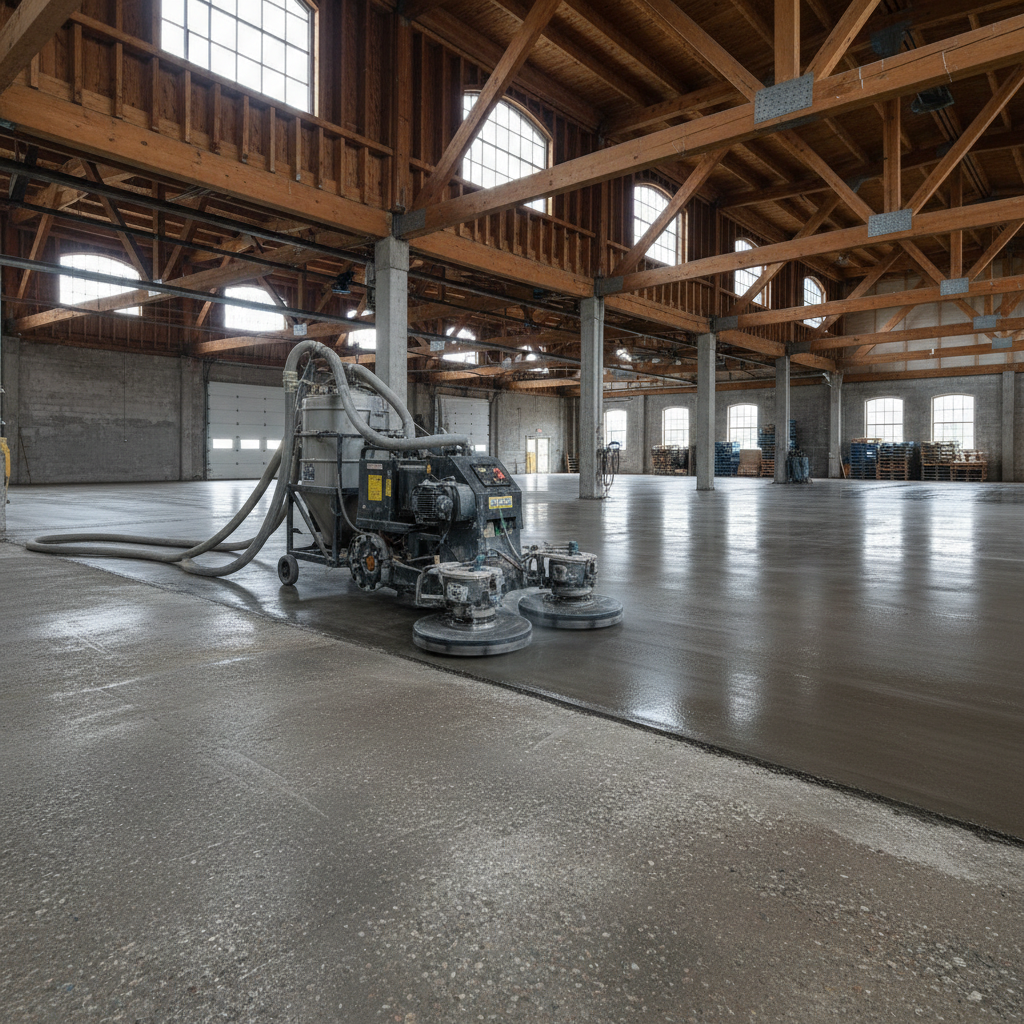
Professional concrete grinding in Salem, OR utilizes specialized machines equipped with diamond-segment grinding heads. These tools operate at varying speeds and pressures to remove material progressively, from coarse initial passes to fine finishing stages. The diamond segments—industrial-grade crystals bonded into metal matrices—cut through concrete efficiently while generating minimal heat and dust when paired with proper vacuum systems.
The process creates an exposed aggregate finish that reveals the concrete’s internal composition, or it can produce a polished surface with reflective qualities ideal for retail and commercial spaces. We coordinate with Portland General Electric before starting larger projects to ensure adequate power supply for industrial grinding equipment, particularly in older Salem buildings where electrical infrastructure may require assessment.
Applications for Commercial and Industrial Spaces
In Salem’s commercial sector, grinding serves multiple critical functions beyond basic surface smoothing. Warehouse facilities in the 97301 and 97302 zip codes frequently require grinding to level driveways and loading zones where heavy truck traffic creates surface deterioration. Retail spaces benefit from polished concrete that reduces maintenance costs while providing an attractive, modern aesthetic.
Manufacturing facilities throughout the Keizer area utilize grinding for ADA-compliant walkways and ramps, ensuring compliance with federal accessibility standards. The process removes trip hazards created by settling or heaving concrete while establishing proper drainage slopes—a critical consideration given Salem’s annual rainfall patterns and the need for effective water management around building foundations.
Common Mistakes Property Managers Make
Over two decades working with Salem commercial properties, we’ve observed recurring mistakes that cost property owners thousands in unnecessary expenses or premature replacement. Understanding these pitfalls helps you make informed decisions when evaluating concrete grinding services Salem Oregon contractors offer.
Delaying Surface Corrections
The most expensive mistake is postponing grinding when early signs of deterioration appear. Small surface cracks and minor lippage between panels accelerate into major structural issues once water infiltrates and freeze-thaw cycles begin. In Salem’s climate, a minor surface defect in October can become a significant repair by March after winter weather compounds the damage.
We recommend addressing surface irregularities within the first year of noticing them, particularly before Oregon’s wet season. Summer months provide optimal conditions for grinding and subsequent sealing, allowing proper curing before moisture exposure. This contrarian approach—investing in preventive grinding rather than waiting for obvious failure—typically extends concrete life by 10-15 years compared to reactive maintenance strategies.
Choosing Price Over Expertise
Low-bid contractors often lack the specialized equipment needed for proper concrete grinding in Salem, OR. Industrial-grade grinders with effective dust collection systems represent significant capital investments that budget operators avoid. The result? Inadequate material removal, inconsistent surface profiles, and excessive dust that disrupts business operations and creates health concerns.
Professional grinding requires understanding concrete composition, aggregate types, and how Oregon’s regional materials respond to different diamond segments. We’ve seen numerous projects requiring complete rework after inexperienced contractors created uneven surfaces or damaged the concrete matrix through improper grinding techniques.
Ignoring Environmental Factors
Salem’s unique position in the Willamette Valley creates specific conditions affecting concrete performance. Our region experiences temperature swings that cause concrete expansion and contraction, moisture levels that impact surface preparation, and soil conditions that influence long-term stability. Generic grinding approaches that work in arid climates often fail here without adjustments for these local factors.
Best Practices for Selecting Grinding Services
Selecting the right concrete grinding contractor in Salem, OR requires evaluating several critical factors beyond basic cost comparisons. The following framework helps property managers and business owners make informed decisions that deliver lasting results.
Equipment and Technology Assessment
Professional operations maintain current-generation grinding equipment with HEPA-rated dust collection systems that comply with OSHA crystalline silica regulations. This equipment protects both workers and building occupants from harmful dust exposure—a critical consideration for occupied commercial spaces. Ask potential contractors about their dust management systems and compliance with federal workplace safety standards.
Quality contractors invest in multiple grinding heads with varying diamond configurations, allowing customization based on concrete hardness, aggregate type, and desired finish. When we encounter harder aggregate common in regional concrete mixes, proper equipment selection makes the difference between efficient completion and project delays.
Local Experience and Project Portfolio
Review completed grinding projects similar to your requirements. Contractors experienced with Salem’s commercial sector understand coordination with general contractors, compliance with city building codes, and timing considerations for minimal business disruption. Local experience also means familiarity with Marion County permit requirements when grinding connects to structural modifications or drainage alterations.
Comprehensive Service Approach
The best concrete grinding services Salem Oregon offers include surface preparation analysis, moisture testing, and post-grinding sealing or coating recommendations. Grinding alone addresses immediate surface issues, but long-term performance requires appropriate sealers or densifiers that protect against moisture intrusion and surface wear. Contractors offering comprehensive solutions deliver better value than those providing grinding as an isolated service.
Step-by-Step Professional Grinding Process
Understanding the complete grinding workflow helps you set realistic expectations and identify corners being cut by inexperienced contractors. Professional concrete grinding follows a systematic approach designed to achieve specified results while protecting the underlying concrete structure.
Pre-Grinding Assessment and Preparation
Every project begins with thorough surface evaluation, including moisture testing and identification of existing coatings or sealers. We map areas requiring different grinding depths and identify control joints, cracks, or structural concerns needing repair before grinding begins. For commercial spaces in Salem, this phase includes coordination with facility managers to minimize operational disruption and schedule work during low-traffic periods.
Surface preparation involves removing debris, addressing existing damage, and protecting adjacent areas from dust and equipment contact. For projects involving outdoor concrete surfaces, we establish proper drainage protection and coordinate with utility locating services to mark underground lines before heavy equipment operation.
Systematic Grinding Execution
Grinding proceeds through progressive stages, starting with coarse diamond segments that remove significant material and address major surface irregularities. Each pass uses finer diamond grits, gradually refining the surface to the specified profile. For polished concrete applications, this process may involve 5-8 distinct grinding stages, each progressively smoother than the last.
Professional operators maintain consistent grinding patterns with appropriate overlap to avoid visible lines or inconsistent surface texture. Equipment speed, pressure, and movement rate adjust based on concrete hardness and the response observed during grinding. This requires experienced operators who recognize proper material removal rates and adjust technique accordingly.
Post-Grinding Treatment and Protection
After achieving the desired surface profile, professional contractors apply appropriate densifiers, sealers, or coatings based on the intended use and traffic levels. These treatments penetrate the concrete surface, filling microscopic voids and creating a harder, more durable wearing surface resistant to moisture intrusion and chemical exposure.
For Salem commercial applications, we recommend lithium silicate densifiers that chemically react with concrete to increase surface hardness while maintaining breathability—critical given our region’s moisture exposure. Final surface cleaning removes all grinding residue and prepares the concrete for immediate use or subsequent coating application.
Frequently Asked Questions
How long does concrete grinding take for a typical commercial space?
Project duration depends on square footage, desired finish level, and concrete condition. A 5,000-square-foot warehouse floor requiring basic leveling typically takes 2-3 days, while polished concrete installation with multiple grinding stages may require 5-7 days. We schedule work to minimize business disruption, often working nights or weekends for occupied facilities.
Can grinding fix all concrete surface problems?
Grinding effectively addresses surface-level issues including minor lippage, wear, staining, and shallow spalling. However, structural problems like significant cracking, deep spalling, or underlying substrate failure require repair before grinding. Professional assessment determines whether grinding alone suffices or if additional structural work is necessary first.
Is concrete grinding environmentally sustainable?
Yes—grinding represents one of the most sustainable concrete maintenance options. By restoring existing surfaces rather than replacing them, grinding eliminates the environmental costs of concrete removal, disposal, and new material production. Modern dust collection systems also minimize airborne particulates, creating cleaner work environments compared to older methods.
When is the best time of year for concrete grinding in Salem, OR?
Summer months (June through September) provide optimal conditions for grinding and subsequent sealing due to lower humidity and warmer temperatures that facilitate proper curing. However, interior grinding can proceed year-round with appropriate climate control. We recommend scheduling before Salem’s wet season to allow complete surface treatment and curing before moisture exposure.
How does grinding compare cost-wise to concrete replacement?
Professional grinding typically costs 40-60% less than complete concrete replacement while delivering comparable surface quality and extended service life. The cost advantage increases for larger commercial projects where removal and disposal expenses become substantial. Grinding also eliminates the 28-day curing period required for new concrete, allowing faster return to normal operations.
Making the Right Decision for Your Salem Property
Concrete grinding services in Salem, OR provide cost-effective solutions for commercial and industrial properties facing surface deterioration, uneven floors, or aesthetic concerns. When properly executed by experienced professionals using modern equipment, grinding extends concrete service life by decades while addressing immediate functional and safety issues.
The key to successful outcomes lies in selecting contractors with proven local experience, appropriate equipment, and comprehensive service approaches that address both immediate surface needs and long-term protection. By understanding the complete grinding process and avoiding common mistakes like delaying necessary work or prioritizing low bids over expertise, property managers protect their investments while maintaining professional, safe working environments.
Whether you’re managing warehouse facilities in the 97301 area, retail spaces downtown, or industrial sites throughout Marion County, professional concrete grinding delivers measurable returns through extended surface life, improved safety, and reduced long-term maintenance costs. The sustainable nature of grinding—restoring rather than replacing—aligns with modern environmental priorities while providing the durability Oregon’s commercial sector demands.
For property owners evaluating their options, the investment in professional grinding services represents a strategic decision that pays dividends through enhanced property value, operational efficiency, and compliance with safety standards. In Salem’s competitive commercial market, well-maintained concrete surfaces reflect professional management and attention to detail that clients and customers notice immediately upon entering your facility.
Sources and References
- Portland Cement Association – History and Standards
- Wikipedia: Portland Cement
- OCAPA (Oregon Concrete & Aggregate Producers Association) – Excellence in Concrete Awards
- Occupational Safety and Health Administration (OSHA) – Crystalline Silica Standards