
Last Updated: December 24, 2025
Are you planning to remove aging concrete from your property but unsure where to start? Whether you’re demolishing an old driveway, removing deteriorating foundations, or clearing the way for new construction, proper preparation can mean the difference between a smooth project and costly complications. In Salem, OR, concrete removal preparation involves navigating unique local regulations, weather considerations, and historical preservation requirements that many property owners overlook until problems arise.
Salem’s concrete infrastructure dates back to the early 20th century, when the city installed major water systems including a 13-mile, 36-inch concrete pipe from Stayton Island to Fairmont Hill in 1936-1937. Today, removing and replacing these aging concrete structures requires careful planning to protect both your investment and Salem’s architectural heritage. This guide walks you through every critical step of concrete removal preparation Salem OR property owners need to know.
Quick Answer: Essential Preparation Steps
Before starting concrete removal in Salem, OR, you must conduct a thorough site assessment, obtain necessary permits from the City of Salem, select appropriate demolition methods based on concrete reinforcement, coordinate utility location with Pacific Power and Northwest Natural Gas, and establish safety protocols that comply with Oregon OSHA requirements.
Key Takeaways:
- Site assessment identifies reinforcements, hazardous materials, and structural challenges
- Permit requirements vary based on project location, especially in historic districts
- Method selection depends on concrete type, thickness, and surrounding structures
- Professional preparation typically takes 1-4 weeks depending on project complexity
- Environmental factors including Salem’s winter rain require drainage planning
Understanding Salem’s Concrete Removal Landscape
Salem’s unique position along the Willamette River and its rich industrial history create specific challenges for concrete removal projects. The city’s infrastructure includes historic concrete channels like the Division race along Division Street NE, early 20th-century commercial buildings with concrete foundations and warehouses, and aging residential structures throughout neighborhoods in zip codes 97301, 97302, and 97305.
Local Regulatory Environment
The City of Salem requires specific permits for concrete removal, particularly in historic districts like the State Street–Commercial Street area. Projects involving structures within these designated zones must undergo historical review to ensure compliance with National Register of Historic Places (NRHP) guidelines. When we work on properties near landmarks like the Capitol building or along Commercial Street, we always coordinate with the Salem Historic Landmarks Commission before beginning demolition work.
Oregon building codes mandate contractor licensing for concrete removal exceeding certain thresholds. Property owners must verify that their chosen contractor holds proper Oregon Construction Contractors Board (CCB) certification and carries adequate liability insurance for demolition work.
Climate and Environmental Considerations
Salem’s weather patterns significantly impact concrete removal preparation. The city receives substantial winter rainfall from October through March, creating challenges for excavation and debris management. Our teams typically recommend scheduling major concrete removal projects between May and September when ground conditions remain stable and debris hauling won’t be hampered by muddy conditions.
The Willamette Valley’s freeze-thaw cycles also affect concrete durability. Many older Salem structures show characteristic cracking and spalling from decades of temperature fluctuations. Because Salem’s concrete often contains air-entrained specifications to resist this cycling, removal can be more challenging than in warmer climates—the concrete is engineered to be tougher and more resistant to breaking.
Common Mistakes That Delay Projects
Even experienced property owners make critical errors during concrete removal preparation that lead to project delays, cost overruns, and safety hazards. Understanding these pitfalls helps you avoid them.
Skipping Professional Site Assessment
Many homeowners assume all concrete is the same and can be removed using basic equipment. This misconception leads to rented equipment sitting idle when crews discover heavy rebar reinforcement, post-tensioned cables, or unexpected thickness. A professional assessment identifies these factors before equipment rental begins, saving both time and money.
We’ve encountered numerous Salem properties where concrete foundations contain significantly more reinforcement than visible inspection suggests. This is especially common in structures built during the 1950s expansion period when Salem’s population grew rapidly and construction standards emphasized durability.
Ignoring Utility Location Requirements
Oregon law requires contacting the Oregon Utility Notification Center (call 811) at least two business days before excavation. This free service coordinates with Pacific Power, Northwest Natural Gas, and other utility providers to mark underground lines. Failure to complete this step can result in service disruptions, substantial fines, and serious safety hazards.
In older Salem neighborhoods near Fairmount Hill and along Division Street NE, utility maps are often incomplete or outdated. Professional concrete removal contractors use additional detection equipment to supplement 811 markings, especially when working near the historic water infrastructure installed in the 1930s and 1950s.
Underestimating Debris Volume and Disposal
Concrete is deceptively heavy and voluminous. A typical residential driveway measuring 20 feet by 40 feet with 4-inch thickness weighs approximately 32,000 pounds—16 tons of material requiring proper disposal. Many property owners rent dumpsters that prove inadequate, leading to multiple trips and escalating costs.
Salem’s waste management regulations also require proper sorting. Reinforced concrete must be separated from clean concrete at recycling facilities. Professional concrete removal services handle this sorting and disposal as part of comprehensive project management.
Best Approach to Concrete Removal Preparation
Successful concrete removal preparation in Salem, OR follows a systematic process that addresses technical, regulatory, and logistical requirements. This approach minimizes surprises and keeps projects on schedule and within budget.
Comprehensive Site Assessment
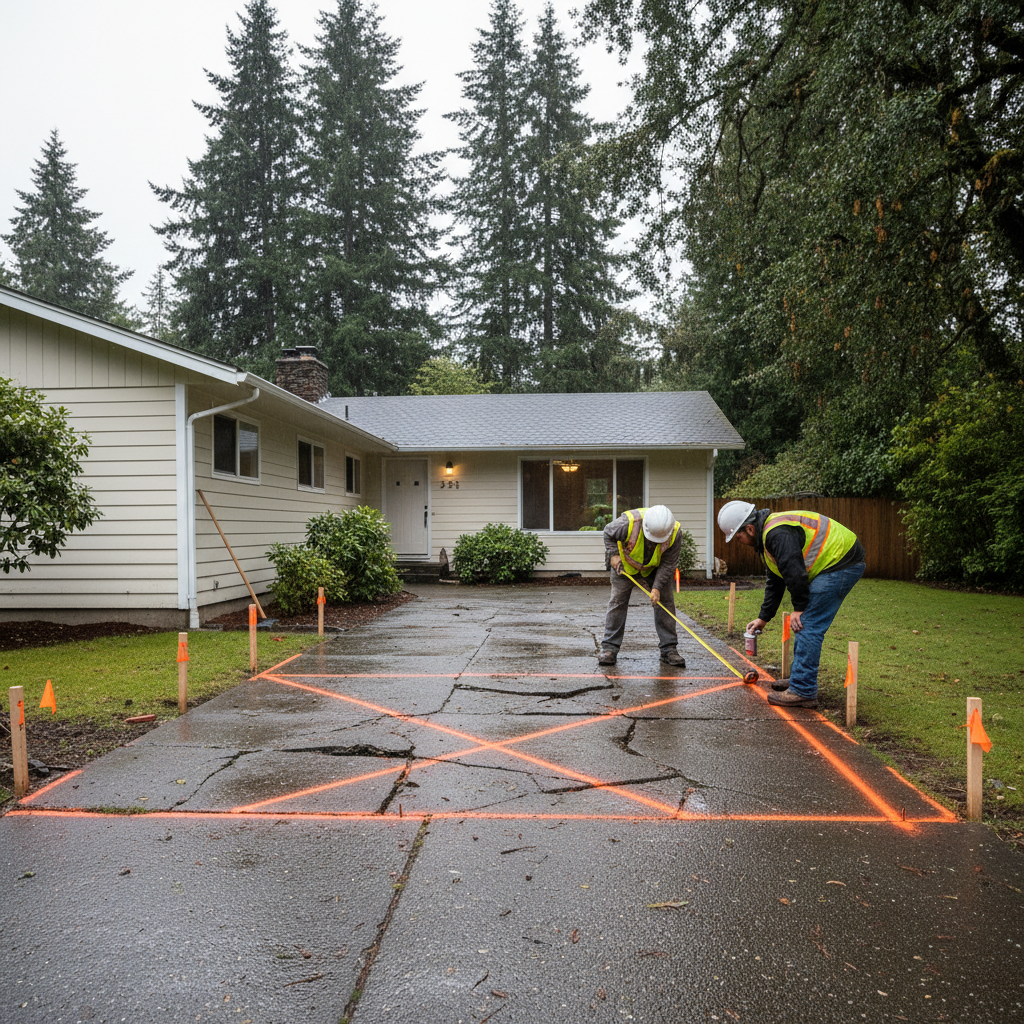
Begin with a thorough evaluation of the concrete structure you plan to remove. Document concrete thickness, reinforcement type (rebar, wire mesh, post-tensioning), surface area, and proximity to other structures. Use core drilling or ground-penetrating radar for subsurface investigation when dealing with foundations or thick slabs.
Assess surrounding conditions including soil stability, drainage patterns, and access routes for heavy equipment. In Salem’s older neighborhoods with narrow streets and mature trees, equipment access often determines which removal methods are practical. When working near the State Street Historic District, we evaluate potential vibration impacts on adjacent historic structures—a consideration unique to downtown removal projects.
Permit Acquisition and Regulatory Compliance
Contact the City of Salem Building and Safety Division to determine permit requirements for your specific project. Demolition permits typically require site plans, disposal documentation, and proof of contractor licensing. Projects in historic overlay zones need additional approvals that can extend timelines by several weeks.
According to EPA asbestos regulations, structures built before 1980 may contain asbestos in concrete additives or surrounding materials. Salem requires asbestos inspection and abatement certification before demolition of pre-1980 structures. This step cannot be skipped and substantially impacts project timelines.
Method Selection and Equipment Planning
Choose removal methods based on your site assessment findings. Common approaches for concrete removal preparation Salem OR contractors use include:
| Method | Best For | Considerations |
|---|---|---|
| Wrecking Ball | Large slabs, foundations, open areas | High impact, requires significant space |
| High-Reach Arm | Urban areas, tall structures | Controlled demolition, limited noise |
| Hydraulic Breaking | Residential driveways, patios | Precision work, minimal vibration |
| Concrete Sawing | Partial removal, clean edges | Requires water management, dust control |
For concrete driveway removal or patio demolition, hydraulic breaking and sawing typically provide the best balance of efficiency and neighbor consideration in residential Salem neighborhoods.
Step-by-Step Preparation Process
Following a structured timeline ensures all preparation elements are completed before demolition begins.
Weeks 1-2: Initial Planning and Assessment
Week 1: Schedule professional site assessment with a licensed Oregon contractor. Request quotes from multiple providers, ensuring each includes site evaluation, permit acquisition assistance, removal method specification, debris hauling, and disposal. Salem Concrete and other local contractors typically provide free assessments for residential projects.
Week 2: Review assessment findings and select your contractor. Finalize project scope, timeline, and budget. If your property was built before 1980 or is located in a historic district, initiate required inspections during this period.
Weeks 2-3: Permits and Utility Coordination
Submit permit applications to the City of Salem with your contractor’s assistance. Standard demolition permits typically process within 5-10 business days, though historic district approvals may take 2-4 weeks. Contact Oregon 811 at least 48 hours before scheduled work begins to initiate utility marking.
Coordinate with neighbors if equipment will impact street parking or access. In dense neighborhoods near downtown Salem, advance notice helps maintain good relationships and may prevent complaints to city authorities.
Week 4: Final Preparation and Mobilization
Once permits are issued and utilities marked, conduct a final site walkthrough with your contractor. Verify access routes, debris staging areas, and protection measures for landscaping or adjacent structures. Confirm that all required safety equipment, including dust control systems for concrete sawing, is available.
If rain is forecast, discuss drainage and mud control measures. Salem’s winter conditions can turn excavation sites into muddy quagmires, delaying projects and damaging surrounding areas. Experienced contractors use stabilization materials and erosion control barriers to manage this challenge.
Frequently Asked Questions
How much does concrete removal cost in Salem, OR?
Costs typically range from $2 to $6 per square foot depending on concrete thickness, reinforcement, accessibility, and disposal requirements. A standard residential driveway (400-800 square feet) usually costs between $800 and $4,800 for complete removal and disposal. Projects requiring special permitting or historic preservation measures may incur additional fees.
Do I need a permit to remove concrete in Salem?
Most concrete removal projects require a demolition permit from the City of Salem, particularly if they involve structural elements like foundations or retaining walls. Simple driveway or patio removal may not require permits in some cases, but it’s essential to verify with the Building and Safety Division before beginning work. Properties in historic districts always require additional approvals regardless of project scope.
How long does concrete removal preparation take?
Typical preparation timelines range from 1 to 4 weeks. Simple residential projects with straightforward permitting may be ready in 7-10 days, while complex projects involving historic reviews, asbestos abatement, or environmental remediation can require 4-6 weeks of preparation before demolition begins.
Can I remove concrete myself?
While homeowners can legally remove small concrete sections, most projects benefit from professional expertise. DIY concrete removal is labor-intensive, requires specialized equipment, and involves significant safety risks. Professional contractors complete projects faster, handle disposal properly, and ensure compliance with local regulations. For any project exceeding basic patio slab removal, professional service is strongly recommended.
What happens to removed concrete?
Most removed concrete is recycled at approved facilities where it’s crushed and used as aggregate for road base, new concrete, or drainage material. According to the EPA’s construction waste guidelines, concrete recycling diverts millions of tons from landfills annually. Reputable Salem contractors separate reinforced concrete, sort materials properly, and provide documentation of proper disposal for your records.
Conclusion
Proper concrete removal preparation Salem OR property owners undertake dramatically impacts project success, timeline, and cost. By conducting thorough site assessments, obtaining necessary permits, coordinating utility location, selecting appropriate methods, and planning for debris management, you set the foundation for efficient, safe concrete removal.
Salem’s unique regulatory environment, weather patterns, and historic infrastructure require local expertise that national contractors often lack. Working with experienced professionals who understand Salem’s specific requirements—from coordinating with Pacific Power and Northwest Natural Gas to navigating historic district approvals—ensures your project proceeds smoothly from preparation through completion.
Whether you’re removing an aging driveway in zip code 97301, demolishing commercial concrete downtown, or clearing the way for new construction throughout the greater Salem area, investing time in thorough preparation pays dividends in reduced costs, faster completion, and better outcomes. Start your project by contacting licensed Oregon contractors for professional assessment and detailed planning tailored to your specific property and goals.
Sources and References
- U.S. Environmental Protection Agency – Asbestos Regulations and Guidelines
- U.S. Environmental Protection Agency – Sustainable Management of Construction and Demolition Materials
- City of Salem Building and Safety Division – Demolition Permit Requirements
- Oregon Construction Contractors Board – Licensing Standards
- Oregon Utility Notification Center – Safe Digging Guidelines