
Last Updated: December 28, 2025
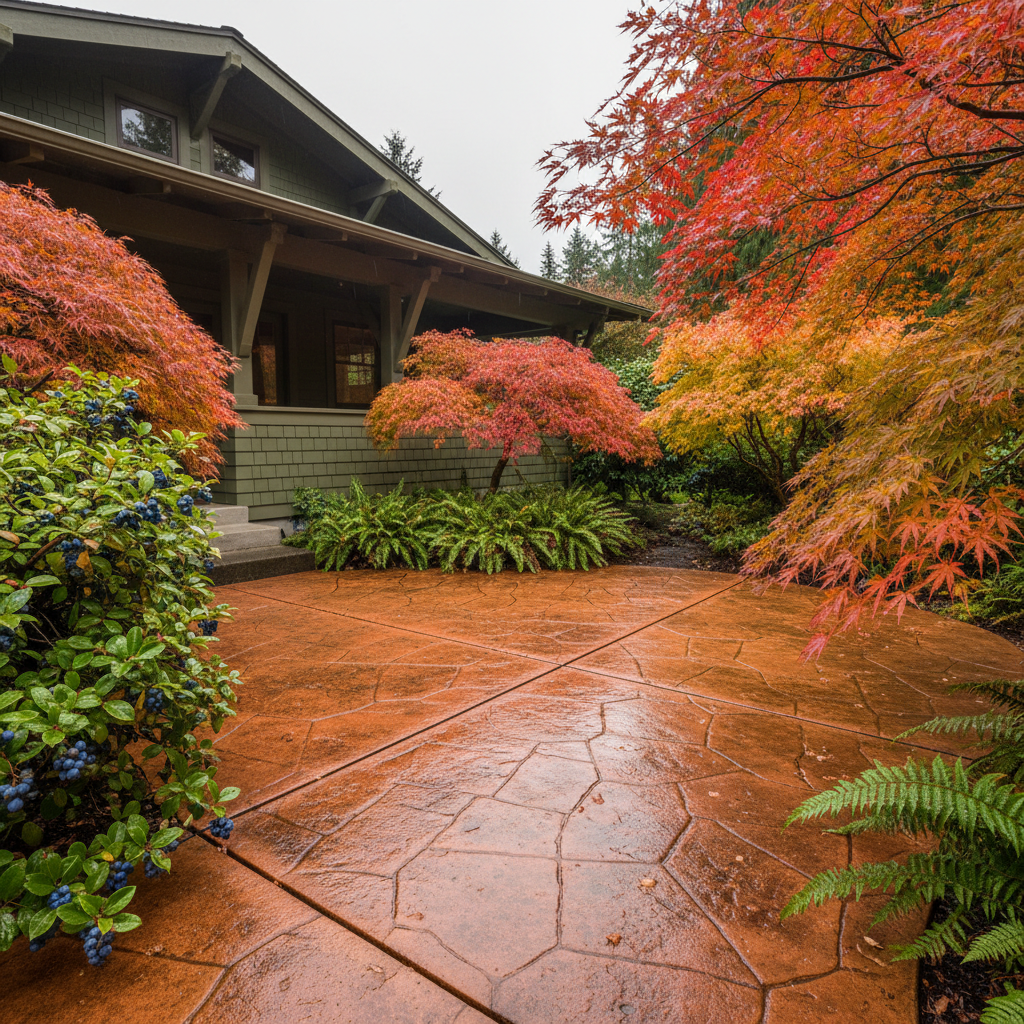
What if your gray, lifeless concrete patio or driveway could transform into a stunning surface that mimics natural stone—without the cost of replacing it? Across Salem, OR, homeowners are discovering that outdoor concrete staining delivers exactly that transformation, turning utilitarian slabs into architectural features that enhance curb appeal and outdoor living spaces.
The Pacific Northwest’s unique climate—wet winters, mild summers, and occasional freeze-thaw cycles—creates specific challenges for outdoor concrete finishes. Understanding which stains for outdoor concrete in Salem, OR work best in these conditions can mean the difference between a finish that lasts decades and one that fails within a few years.
Quick Answer: Best Stains for Salem’s Climate
For Salem’s wet, mild climate, acid-based (reactive) stains combined with breathable sealers offer the best longevity and depth. Water-based stains provide more color options and easier application but require more frequent maintenance. Both penetrate the concrete surface rather than forming a film that can peel in moisture-heavy environments.
Key Takeaways:
- Acid stains create permanent, earth-tone colors through chemical reactions with concrete
- Water-based stains offer broader color ranges and lower VOC emissions
- Salem’s rainy climate demands breathable sealers over stains to prevent moisture trapping
- Proper substrate preparation determines 80% of staining success
- Resealing every 2-5 years maintains appearance and protection
Understanding Outdoor Concrete Staining Options
Concrete staining evolved from mid-20th century industrial chemistry into today’s sophisticated decorative-concrete systems. Modern stains work by either chemically bonding with the concrete or penetrating its porous surface to deposit color particles. Both methods differ fundamentally from paint, which merely sits atop the surface and inevitably peels in outdoor applications.
Acid-Based (Reactive) Stains
Acid stains use metallic salts in an acidic carrier to react chemically with the hydrated lime in cured concrete. This reaction creates permanent, translucent color that won’t peel or fade from UV exposure. According to the historical development of decorative concrete, these systems produce naturally variegated, mottled appearances reminiscent of aged stone or leather.
The color palette is limited to earth tones—browns, terra cottas, greens, and blue-greens—because the hues result from chemical reactions rather than pigments. For concrete patio services in Salem, acid stains excel on well-finished slabs where clients want that natural stone aesthetic without glossy artificiality.
Water-Based (Non-Reactive) Stains
Water-based systems carry pigments or dyes that penetrate concrete pores without chemical reaction. They deliver broader color ranges—including reds, charcoals, and custom tints—and lower VOC emissions than older solvent-based products. West Coast environmental regulations have accelerated adoption of these systems throughout Oregon.
When our team works on concrete driveway services in neighborhoods near Bush’s Pasture Park (97302) or South Salem (97306), we often specify water-based stains for homeowners wanting precise color-matching to architectural elements or branding for commercial entries. The trade-off is more frequent resealing compared to acid stains.
Specialty Systems and Combinations
Concrete dyes (water- or solvent-based) penetrate even deeper than stains and are frequently layered with base stains to create accents, borders, or logos in decorative projects. Tinted sealers add semi-opaque color while sealing, useful for maintenance or recoloring patchy older slabs in historic areas like Salem’s downtown district.
Common Mistakes with Outdoor Staining in Salem
Understanding what not to do is often as important as knowing best practices. Salem’s climate and the Pacific Northwest’s construction methods create specific pitfalls.
Ignoring Substrate Quality and Preparation
The biggest cause of staining failure is poor concrete quality or inadequate surface prep. Pre-existing curing compounds, sealers, or surface contaminants block stain penetration, creating blotchy, uneven color. On older Salem slabs—especially downtown sidewalks dating to mid-century modernization or patched residential surfaces—previous coatings must be removed through grinding, chemical stripping, or pressure washing before staining.
High-quality, well-cured concrete produces predictable results. Rushed or poorly finished slabs with surface dust, weak mortar, or finishing defects will show every imperfection magnified after staining.
Using Non-Breathable Sealers
Salem’s rainy climate demands vapor-permeable (breathable) sealers over stained concrete. Thick, film-forming coatings trap moisture migrating upward through the slab, causing whitening, blistering, or delamination over wet winters. We consistently specify penetrating or low-film sealers with adequate moisture-vapor transmission rates on all outdoor horizontal surfaces.
Forgetting Anti-Slip Measures
Sealed concrete becomes slick when wet. On sloped driveways, walkways near the Willamette River areas, or stamped concrete services projects with textured patterns, failing to incorporate anti-slip additives in the final sealer coat creates liability and safety hazards during Salem’s long wet season.
Best Approach for Salem’s Outdoor Concrete
Successful outdoor staining in the Willamette Valley requires matching system selection to climate realities, existing slab condition, and aesthetic goals.
Climate-Responsive Product Selection
For Salem’s cool, wet winters, mild summers, and occasional freeze-thaw cycles in surrounding Marion County elevations, we prioritize:
- Penetrating stains (acid or water-based) that become part of the concrete rather than forming a surface film
- Breathable acrylic or silane/siloxane sealers allowing moisture vapor transmission
- UV-stable systems to resist fading during summer sun exposure
- Slip-resistant finishes with texture or additives for safety on wet surfaces
Due to Oregon’s environmental standards and Salem’s proximity to the Willamette River watershed, low-VOC water-based systems have become increasingly popular. Before any outdoor staining near municipal infrastructure, we coordinate with Portland General Electric or Pacific Power to locate and mark underground utilities, ensuring project safety.
Matching Stain Type to Project Goals
| Project Type | Best Stain Choice | Reason |
|---|---|---|
| Residential patio | Acid stain + breathable sealer | Natural variegation, minimal maintenance, UV resistance |
| Commercial entry | Water-based stain with custom color | Brand color matching, predictable appearance |
| Pool deck | Water-based + anti-slip sealer | Chlorine resistance, safety texture |
| Historic downtown sidewalk | Subtle earth-tone acid stain | Compatibility with brick/stone, preservation standards |
Lifecycle Planning and Maintenance
Outdoor stained concrete in Salem requires scheduled maintenance rather than one-time application. We advise homeowners and property managers to plan for resealing every 2–5 years depending on traffic, UV exposure, and whether de-icing salts or traction sand are used in winter. Regular pressure washing and prompt resealing extends color life and surface protection significantly.
How to Successfully Stain Outdoor Concrete in Salem
Professional results require methodical execution. Here’s the step-by-step process we use for stains for outdoor concrete in Salem, OR projects.
Step 1: Surface Evaluation and Preparation
Inspect the slab for structural defects, prior coatings, oil stains, or surface contamination. Concrete must be at least 28 days cured (preferably longer) and free from moisture barriers that block stain penetration. According to concrete industry guidelines, proper surface profile is critical.
Preparation methods include:
- Diamond grinding to remove sealers or create profile
- Chemical stripping of prior coatings
- Pressure washing (3,000+ PSI) for general cleaning
- Acid etching or abrading for reactive stain adhesion
Step 2: Stain Application
Apply stain according to manufacturer specifications, typically by low-pressure sprayer for even coverage. Acid stains require 6–24 hours of dwell time for the chemical reaction, then neutralization and thorough rinsing. Water-based stains dry faster (1–4 hours) but may require multiple coats for color depth.
We always perform test patches in inconspicuous areas, because concrete variability means final color can differ from sample charts. On concrete patio contractors projects, we coordinate application timing with Salem’s dry summer months when forecast rain won’t interrupt curing.
Step 3: Sealing and Protection
After stain has fully cured (typically 24–48 hours), apply a breathable sealer in two thin coats rather than one heavy coat. For Salem’s climate, we favor:
- Acrylic sealers for moderate protection and ease of recoating
- Silane/siloxane penetrators for maximum breathability and invisible protection
- Polyurethane systems for high-traffic commercial areas requiring abrasion resistance
Add anti-slip additives to the final coat on walkways, stairs, or any sloped surface. In our experience throughout zip codes 97301, 97302, and 97306, this simple step prevents countless winter slip incidents.
Frequently Asked Questions
How long does outdoor concrete stain last in Salem’s climate?
With proper application and maintenance, acid stains can last 10+ years before significant fading, while water-based stains typically need refreshing every 5–7 years. Sealer reapplication every 2–5 years protects the underlying stain and extends overall system life.
Can you stain old, existing concrete?
Yes, but success depends on removing prior sealers, coatings, or contaminants. Older slabs with extensive patching or surface damage may produce uneven coloring. In such cases, a tinted sealer or combination system can even out variations.
Will stained concrete be slippery when wet?
The sealer determines slip resistance more than the stain itself. Always specify anti-slip additives or textured sealers on outdoor horizontal surfaces, especially in rainy climates like Salem’s where algae and wetness compound slipperiness.
Do I need a permit to stain my concrete patio or driveway in Salem?
Generally no—staining existing concrete is a finish treatment, not structural work. However, always check with the City of Salem’s Building Division if your project involves drainage modifications or connects to municipal infrastructure.
What’s the cost difference between acid and water-based stains?
Material costs are similar, but acid stains often require more labor-intensive prep (etching, neutralizing, extensive rinsing) and disposal of acidic rinse water. Water-based systems have simpler application and cleanup, which can reduce installation time and total project cost slightly.
Conclusion
Choosing the right stains for outdoor concrete in Salem, OR means balancing aesthetic goals with the Pacific Northwest’s climate realities. Acid-based stains deliver timeless, natural variegation with exceptional longevity, while water-based systems offer design flexibility and environmental advantages. Both work beautifully when paired with breathable sealers and proper maintenance schedules.
Whether you’re refreshing a residential patio near Fairmount Hill, upgrading a commercial entry downtown, or enhancing a driveway in South Salem, understanding substrate preparation, climate-appropriate product selection, and lifecycle maintenance will ensure your stained concrete remains beautiful for years. Professional contractors throughout Marion County have the specialized knowledge to navigate Salem’s unique conditions—from coordinating utility locates to specifying slip-resistant finishes that comply with local safety expectations.
As December 28, 2025 marks the tail end of Salem’s wet season, early planning now positions your project for execution during the ideal dry summer window ahead.
Sources and References
- Wikipedia contributors. “Decorative concrete.” Wikipedia, The Free Encyclopedia. https://en.wikipedia.org/wiki/Decorative_concrete
- The Concrete Network. “Concrete Stains: Types, Application & Design Ideas.” ConcreteNetwork.com.
- Salem Downtown Historic District documentation, National Register of Historic Places