
Last Updated: December 30, 2025
Is your concrete driveway absorbing water like a sponge? In Salem, OR’s notoriously wet climate, an unsealed driveway is fighting a losing battle against rain, freeze-thaw cycles, and UV exposure. While many homeowners overlook this critical maintenance step, sealing your concrete driveway could be the difference between a surface that lasts decades versus one that develops expensive cracks and potholes within just a few years.
The Willamette Valley’s unique weather patterns—characterized by heavy winter rainfall, temperature swings, and extended moisture exposure—make driveway sealing not just recommended, but essential for protecting your investment. When our team works throughout Salem, from West Salem to South Gateway, we consistently see the same pattern: properly sealed driveways maintain their integrity and appearance, while unsealed surfaces deteriorate rapidly, leading to costly repairs.
Quick Answer: How to Seal Your Concrete Driveway
To seal a concrete driveway in Salem, OR, start by thoroughly cleaning the surface and repairing all cracks. Choose a penetrating sealer designed for the Pacific Northwest climate, apply on a dry day, and allow 24-48 hours to cure. Reseal every 2-3 years to maintain protection against Oregon’s rain and freeze-thaw cycles.
Key Takeaways:
- Penetrating sealers work best in Salem’s wet climate by bonding below the surface
- Proper surface preparation (cleaning and crack repair) is critical for long-lasting results
- New driveways should be sealed after one year, then every 2-3 years thereafter
- Professional application ensures even coverage and addresses underlying structural issues
- Sealing extends driveway life by several years and prevents expensive pothole repairs
Understanding Why Sealing Matters in Salem’s Climate
Salem’s location in the Willamette Valley creates a perfect storm for concrete deterioration. With average annual rainfall exceeding 40 inches and winter temperatures that regularly dip below freezing, unsealed concrete faces constant assault from moisture infiltration and freeze-thaw cycles. When water penetrates concrete pores and then freezes, it expands by approximately 9%, creating internal pressure that leads to surface spalling, cracks, and structural damage.
We’ve observed this pattern consistently across Salem neighborhoods—from the established homes near Bush’s Pasture Park to newer developments in Keizer Station. Unsealed driveways typically show signs of distress within 3-5 years, while properly maintained sealed surfaces remain intact for decades. The Portland Cement Association confirms that regular sealing is one of the most cost-effective maintenance practices for extending concrete lifespan in moisture-prone regions.
The Science Behind Concrete Sealing
Concrete is naturally porous, with tiny capillaries throughout the material that readily absorb water. Penetrating sealers work by chemically reacting with the concrete to create a hydrophobic barrier below the surface. Unlike topical coatings that sit on top and can peel or flake, penetrating sealers become part of the concrete matrix itself, providing lasting protection without altering the surface appearance.
For Salem homeowners, this distinction matters significantly. Surface coatings may work in drier climates, but Oregon’s persistent moisture can trap water beneath topical layers, accelerating damage rather than preventing it. That’s why local concrete professionals consistently recommend penetrating silane or siloxane-based sealers specifically formulated for Pacific Northwest conditions.
Beyond Weather: Additional Benefits of Sealing
While weather protection is primary, sealing delivers multiple advantages. Sealed concrete resists oil stains, deicing chemicals, and UV fading, maintaining its fresh appearance longer. For homeowners considering stamped concrete driveway options, sealing is absolutely essential to preserve decorative colors and patterns. The process also simplifies maintenance—dirt and grime clean away more easily from sealed surfaces, reducing the need for aggressive pressure washing that can damage concrete over time.
Common Mistakes That Compromise Sealing Results
Even with the best products, improper application techniques doom sealing projects to failure. Through years of experience providing concrete driveway services throughout the Salem area, we’ve identified the most common errors that homeowners make when attempting DIY sealing projects.
Skipping or Rushing Surface Preparation
The single biggest mistake is insufficient cleaning before sealer application. Dirt, oil stains, moss, algae, and efflorescence (white mineral deposits) must be completely removed for proper sealer penetration. We recommend professional-grade pressure washing at 3,000+ PSI, followed by treatment with concrete degreaser for any oil spots. The surface must then dry completely—which in Salem’s humid climate can take 48-72 hours or longer.
Many homeowners seal too soon after cleaning, trapping moisture beneath the sealer. This creates a breeding ground for mildew and can cause the sealer to fail prematurely. A simple test: tape a piece of plastic to the concrete overnight. If condensation appears underneath by morning, the surface isn’t ready for sealing.
Ignoring Crack Repair and Structural Issues
Applying sealer over damaged concrete is like painting over rust—it doesn’t solve the underlying problem. All cracks wider than 1/8 inch should be filled with appropriate concrete crack filler before sealing. Larger structural issues like settled sections, spalling, or deep potholes require professional repair. Sealing is a protective measure for sound concrete, not a fix for damaged surfaces.
Using the Wrong Sealer Type
Not all concrete sealers perform equally in Salem’s climate. Acrylic sealers, while popular in dry regions, can trap moisture and yellow over time in wet environments. Here’s a contrarian insight specific to Oregon: while many contractors nationwide push high-gloss sealers for curb appeal, we’ve found that low-sheen penetrating sealers actually outperform in the Willamette Valley because they allow moisture vapor transmission—critical when ground moisture wicks up through concrete foundations in our wet soil conditions.
| Sealer Type | Best For Salem Climate? | Key Characteristic |
|---|---|---|
| Penetrating Silane/Siloxane | ✓ Excellent | Subsurface protection, breathable |
| Acrylic Topical | ✗ Poor | Surface film, can trap moisture |
| Epoxy | ~ Fair | Durable but not breathable |
| Polyurethane | ~ Fair | UV resistant but costly |
Best Approach: Step-by-Step Sealing Process
Successfully sealing a concrete driveway in Salem, OR requires careful timing, proper materials, and meticulous execution. This process works whether you’re handling the project yourself or preparing to work with professional contractors.
Timing Your Project Around Salem Weather
Oregon’s weather significantly impacts sealing success. The ideal window runs from late June through early September when consistent dry weather is most likely. You need at least 48 hours of dry conditions before application and 24-48 hours after for proper curing. Before starting any outdoor concrete work, we always coordinate with Portland General Electric to ensure no underground utility conflicts, especially important when doing comprehensive driveway work that includes repairs.
Temperature matters too—most sealers require application between 50°F and 90°F. Early morning or late afternoon applications work best, avoiding direct midday sun that can cause too-rapid drying and uneven penetration.
Material Selection and Preparation
For Salem driveways, we recommend silane-siloxane blend penetrating sealers specifically labeled for Pacific Northwest climates. These products combine the deep penetration of silanes with the water-repelling properties of siloxanes. Look for products that specify resistance to freeze-thaw cycles and are VOC-compliant with Oregon environmental regulations.
Calculate coverage carefully—most penetrating sealers cover 100-200 square feet per gallon on standard concrete, but porous or aged surfaces may require more. Purchase 10-15% extra to ensure complete coverage. You’ll also need a garden sprayer or roller for application, painter’s tape for edge protection, and appropriate safety equipment including gloves and eye protection.
The Application Process
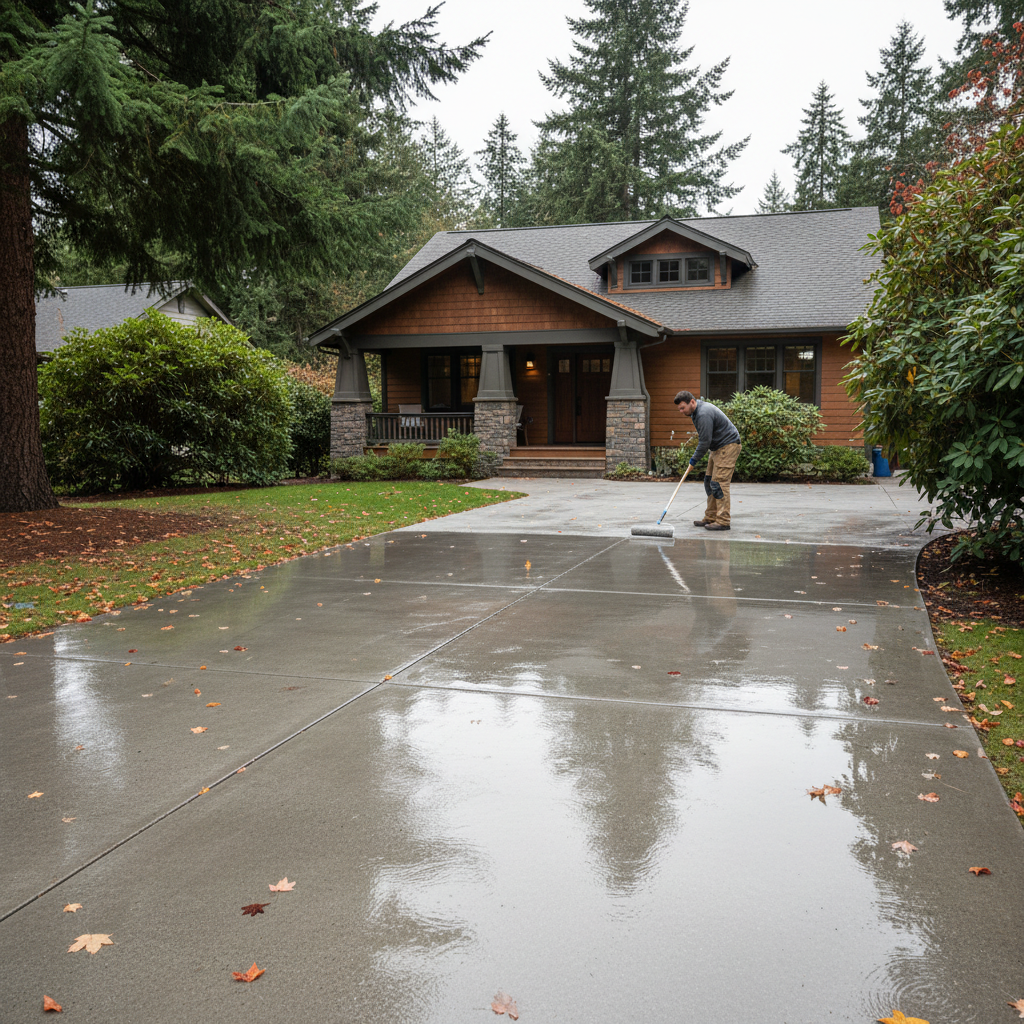
Once your driveway is thoroughly cleaned, repaired, and completely dry, application proceeds quickly. Pour sealer into a pump sprayer and apply in even, overlapping passes. Work in manageable sections (approximately 10×10 feet) to maintain a wet edge. Within 5-10 minutes of application, use a roller or brush to work the sealer into the surface and eliminate puddles, which can cause uneven appearance.
Most penetrating sealers require only one coat, though porous concrete may benefit from a second application after the first has fully absorbed (typically 2-4 hours). The key is achieving saturation without pooling—excess sealer that doesn’t penetrate will leave a whitish residue that’s difficult to remove.
Professional vs. DIY: Making the Right Choice
While sealing a concrete driveway is certainly a manageable DIY project for homeowners with basic skills, several factors should influence your decision. For straightforward maintenance sealing on sound concrete, DIY can save money while delivering good results. However, if your driveway shows significant damage, drainage issues, or if this is your first time sealing new concrete, professional expertise pays dividends.
Professional contractors bring specialized equipment, experience identifying underlying problems, and access to commercial-grade products. They can also handle the full spectrum of concrete services if your driveway needs repair work beyond simple sealing. Throughout the Salem area—from the historic neighborhoods near the Oregon State Capitol to newer developments in South Salem (zip codes 97302, 97306, and 97317)—we see homeowners achieve the best long-term results when they address structural issues professionally before maintaining surfaces themselves.
How-To Guide: Complete Driveway Sealing Checklist
Follow this comprehensive checklist when learning how to seal concrete driveway Salem OR homeowners trust for lasting results:
Phase 1: Assessment and Planning (1-2 Days)
- Inspect entire driveway for cracks, spalling, oil stains, and structural issues
- Note any drainage problems or settled areas that need addressing
- Check weather forecast for 5-day dry window
- Purchase materials: sealer, crack filler, degreaser, application equipment
- Clear driveway completely and protect adjacent landscaping
Phase 2: Cleaning and Repair (2-3 Days)
- Pressure wash entire surface at 3,000+ PSI
- Treat oil stains with concrete degreaser, scrub vigorously, and rinse
- Remove any loose or spalling concrete
- Fill cracks with appropriate filler and allow to cure per manufacturer instructions
- Allow surface to dry completely—48-72 hours in Salem’s humidity
- Perform overnight plastic tape test to confirm dryness
Phase 3: Sealer Application (1 Day)
- Choose a day with temperatures between 50-90°F and no rain forecast
- Apply sealer in overlapping passes, working in manageable sections
- Back-roll or brush within 5-10 minutes to ensure even penetration
- Avoid puddling—excess sealer won’t penetrate and causes problems
- Apply second coat if needed after first coat fully absorbs
- Block driveway access for 24-48 hours during curing
Phase 4: Maintenance Schedule
- Test water repellency annually by sprinkling water on surface
- When water absorbs rather than beads, plan for resealing
- Typically reseal every 2-3 years for optimal protection
- Clean surface regularly to prevent buildup and staining
- Address cracks immediately before they expand
Frequently Asked Questions
How long does concrete sealer last in Salem’s climate?
Quality penetrating sealers typically last 2-3 years in Oregon’s wet climate before requiring reapplication. High-traffic areas or driveways exposed to deicing chemicals may need more frequent maintenance. Regular inspection helps you catch deterioration early.
When should I seal a newly poured concrete driveway?
New concrete requires a curing period before sealing—typically one year. This allows residual moisture to escape and the concrete to reach its full strength. According to the Concrete Network, premature sealing can trap moisture and cause surface problems.
Can I seal concrete in winter?
Winter sealing in Salem is challenging due to moisture and temperature constraints. Most sealers require temperatures above 50°F and dry conditions. Late summer through early fall offers the best window, allowing the sealer to cure before winter weather arrives.
Will sealing fix existing cracks?
No—sealing protects sound concrete but doesn’t repair structural damage. All cracks must be filled with appropriate crack filler before sealing. Think of sealing as preventive maintenance rather than corrective repair.
How much does professional driveway sealing cost?
Professional sealing typically costs $0.50-$1.50 per square foot, depending on driveway condition and prep work required. A standard 500-square-foot driveway runs $250-$750. DIY materials cost approximately $100-$300 but require your time and labor. For detailed pricing on various options, you can contact local contractors for estimates specific to your situation.
Conclusion: Protecting Your Investment
Learning how to seal concrete driveway Salem OR homeowners can rely on comes down to understanding local climate challenges and following proven methods. Salem’s persistent rainfall, freeze-thaw cycles, and seasonal temperature swings make sealing not optional but essential for extending concrete lifespan and preventing expensive repairs.
The investment in proper sealing—whether DIY or professional—pays returns through extended driveway life, maintained curb appeal, and avoided emergency repairs. By choosing appropriate penetrating sealers, preparing surfaces meticulously, and maintaining a regular resealing schedule, your concrete driveway can withstand decades of Pacific Northwest weather while looking great.
Whether you’re maintaining an existing driveway or planning new installation, remember that sealing represents your first line of defense against Oregon’s challenging climate. Take the time to do it right, and your driveway will serve you well for years to come.
Sources and References
- Portland Cement Association – Concrete maintenance and protection guidelines
- Concrete Network – Sealing specifications and best practices
- Local Salem, OR contractors – Field observations and climate-specific recommendations
- National Weather Service – Salem climate data and precipitation patterns