
Last Updated: January 5, 2026
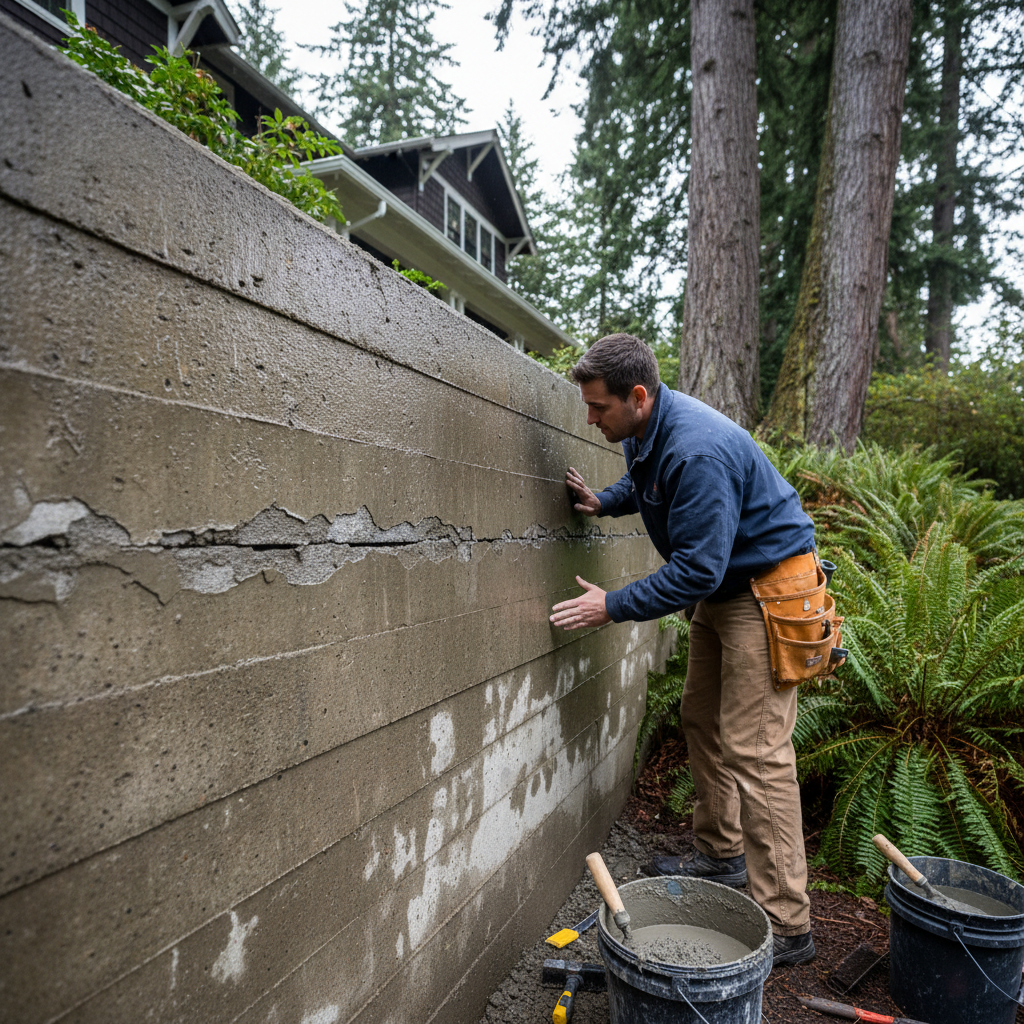
Is your retaining wall showing cracks, leaning forward, or suffering from water damage? Concrete retaining wall failures don’t just look bad—they threaten your property’s structural integrity and can lead to thousands in soil erosion damage. When we work throughout Salem, OR, we consistently see homeowners waiting too long to address early warning signs, turning manageable repairs into complete rebuilds.
Retaining wall problems escalate quickly in the Willamette Valley’s climate. Winter rains saturate soil behind walls, creating hydrostatic pressure that pushes against already-weakened concrete. Spring freeze-thaw cycles worsen existing cracks. By addressing concrete retaining wall repair in Salem early, you can extend your wall’s life by decades while avoiding catastrophic failure.
Quick Answer: When to Repair vs. Replace
Repair is viable when damage affects less than 30% of the wall structure, cracks are under 1/4 inch wide, and the foundation remains stable. Walls leaning more than 2 inches, showing horizontal cracks, or experiencing soil washout behind them typically require replacement. Professional assessment determines the most cost-effective approach for your specific situation.
Key Takeaways:
- Minor cracks (under 1/4 inch) can be epoxy-injected for lasting repairs
- Leaning walls require immediate evaluation to prevent collapse
- Proper drainage is essential for long-term wall stability
- Salem’s clay soils create unique expansion/contraction challenges
- Professional repairs cost 40-60% less than complete replacement
Understanding Retaining Wall Damage in Salem’s Environment
Salem’s unique climate and soil conditions accelerate retaining wall deterioration. The Willamette Valley receives approximately 40 inches of annual rainfall, concentrated heavily between November and March. This seasonal pattern creates dramatic moisture fluctuations that challenge concrete structures.
When our team evaluates walls throughout neighborhoods near Chemeketa Street and Lancaster Drive, we see consistent patterns. The region’s predominantly clay-based soils expand significantly when saturated, then contract during drier summer months. This constant expansion-contraction cycle stresses concrete walls, particularly those built without proper drainage systems.
Common Warning Signs Requiring Immediate Attention
Recognizing early warning signs prevents minor issues from becoming major structural failures. Horizontal cracks indicate excessive soil pressure and require urgent evaluation. Vertical cracks under 1/8 inch typically result from normal concrete curing and pose minimal structural concern. However, vertical cracks exceeding 1/4 inch suggest foundation settlement or inadequate reinforcement.
Bulging or leaning represents advanced failure. Walls tilting more than 2 inches from vertical have likely lost footing stability or lack sufficient drainage. We’ve responded to emergencies near Bush’s Pasture Park where walls tilted 4-6 inches within a single winter season due to saturated backfill and inadequate weep holes.
Efflorescence—white mineral deposits on concrete surfaces—indicates water penetration. While cosmetic initially, it signals ongoing moisture issues that will worsen structural integrity over time. Soil erosion at the wall base or water pooling behind the structure confirms drainage failure.
How Salem’s Clay Soils Impact Wall Stability
Salem sits atop Willamette silt loam with substantial clay content—soil that exhibits significant shrink-swell potential. According to the USDA Natural Resources Conservation Service, these soils can expand up to 10% when transitioning from dry to saturated conditions.
This expansion generates lateral earth pressure exceeding design specifications for many older walls. In our experience working throughout the 97301 and 97302 zip codes, we’ve found that walls constructed before the 1990s often lack adequate reinforcement or drainage to handle these forces. Modern concrete services incorporate geotextile fabrics, proper weep hole spacing, and reinforced designs that accommodate soil movement.
Common Mistakes That Worsen Retaining Wall Problems
Homeowners attempting DIY repairs or delaying professional assessment frequently make problems worse. Understanding these pitfalls helps you avoid costly mistakes.
Sealing Cracks Without Addressing Root Causes
The most common error we encounter is surface-sealing cracks with caulk or concrete patch while ignoring underlying drainage or structural issues. This approach traps moisture inside the concrete, accelerating freeze-thaw damage. Within months, sealed cracks reappear wider than before.
Effective retaining wall repair in Salem requires identifying why cracks formed. Is inadequate drainage creating hydrostatic pressure? Has the footing settled? Are tree roots pushing against the wall? We address these root causes before implementing lasting repair solutions.
Ignoring Drainage Installation or Upgrades
Proper drainage extends retaining wall life by decades. Salem’s wet winters demand functional drainage systems—yet many walls lack weep holes, drain pipes, or gravel backfill. When we excavate behind failing walls, we commonly find backfill consisting entirely of native clay soil rather than the free-draining gravel required by modern standards.
Before any concrete work begins, we coordinate with Portland General Electric to mark underground utilities. This critical safety step prevents service disruptions and ensures repair work proceeds safely. Installing French drains or backfill upgrades requires excavation that could encounter buried power, gas, or water lines.
Attempting Major Structural Repairs Without Engineering
Walls exceeding 4 feet in height or retaining significant slopes require engineering calculations to ensure adequate reinforcement and footing design. Oregon building codes mandate permits for many retaining wall projects, particularly when structures affect property boundaries or drainage patterns affecting neighboring properties.
We work closely with the City of Salem Building and Safety Division to ensure all repairs meet current code requirements. This protects your investment and prevents future liability issues if wall failure damages adjacent properties.
Best Approach: Professional Repair Methods That Last
Modern concrete repair techniques provide durable solutions that extend wall life for decades when properly executed. The approach depends on damage severity and underlying causes.
Epoxy Injection for Structural Crack Repair
For cracks between 1/8 and 1/2 inch wide that don’t indicate ongoing movement, epoxy injection provides structural repair that often exceeds the original concrete’s strength. We use high-grade structural epoxies that penetrate deep into cracks, bonding fractured sections together permanently.
This method works best when drainage issues have been corrected and no active settlement continues. The process involves cleaning cracks, installing injection ports, and pumping epoxy under pressure until complete penetration occurs. Properly executed epoxy repairs restore original load-bearing capacity.
Carbon Fiber Reinforcement Systems
When walls show horizontal cracking but remain structurally sound, carbon fiber reinforcement provides exceptional strengthening without extensive excavation. We apply high-strength carbon fiber strips bonded with structural epoxy to wall surfaces, creating a reinforcement layer that prevents further cracking and distributes loads more effectively.
This approach is particularly effective for basement retaining walls or situations where excavating behind the wall would be prohibitively expensive. Carbon fiber systems add minimal thickness while providing reinforcement equivalent to steel at a fraction of the weight.
Drainage System Installation and Upgrades
No repair succeeds long-term without proper drainage. We install comprehensive systems including perforated drain pipes at the wall footing, gravel backfill, filter fabric, and properly-spaced weep holes. For Salem’s clay soils, we typically specify 3/4-inch crushed gravel extending at least 12 inches behind the wall.
Drain pipes connect to daylight outlets or catch basins that safely divert water away from the structure. This prevents hydrostatic pressure buildup that causes most retaining wall failures. For past projects, we’ve documented how proper drainage eliminates recurring cracking and extends wall life by 30+ years.
Step-by-Step Professional Repair Process
Understanding the repair process helps you work effectively with contractors and set realistic expectations for timeline and results.
Initial Assessment and Engineering Evaluation
Comprehensive evaluation begins with visual inspection documenting all visible damage, measurements of any leaning or displacement, and excavation of test holes to examine footing conditions and backfill composition. We photograph conditions thoroughly and map crack patterns to distinguish structural versus cosmetic issues.
For walls showing significant movement or exceeding 4 feet in height, we recommend geotechnical engineering evaluation. Engineers conduct soil testing, calculate lateral earth pressures, and specify reinforcement requirements for lasting repairs. While this adds upfront cost, it prevents repair failures and provides documentation for building permits.
Excavation and Preparation Work
Repair work typically requires excavating behind the wall to access the footing and install drainage systems. We excavate in sections to prevent wall collapse, shore adjacent sections as needed, and carefully remove failed backfill. This stage also allows inspection of footing conditions and detection of any undermining or settlement issues.
Throughout Salem, from South Commercial Street to the neighborhoods surrounding Willamette University in the 97301 area, we’ve managed excavations in tight residential settings where equipment access is limited. Proper planning and experienced operators minimize landscape disruption while ensuring thorough access for quality repairs.
Structural Repairs and Reinforcement Installation
With excavation complete, structural repairs proceed: crack injection, carbon fiber reinforcement application, or concrete resurfacing as conditions dictate. For severely damaged sections, we may remove and replace concrete panels while tying new sections into existing structure with drilled-in reinforcement.
New concrete work uses air-entrained mixes specifically formulated for Oregon’s freeze-thaw conditions. According to Federal Highway Administration guidelines, air-entrained concrete provides significantly better freeze-thaw resistance than standard mixes—critical for Salem’s winter climate.
Drainage System and Backfill Installation
Once structural work cures, we install perforated drain pipes at the footing level, sloped to drainage outlets. Filter fabric prevents soil migration into gravel backfill. We use 3/4-inch crushed gravel—not rounded river rock—as angular gravel interlocks to resist compaction while maintaining drainage capacity.
Weep holes are drilled every 4-6 feet horizontally and at each level for walls exceeding 4 feet in height. These allow water to escape rather than building pressure behind the wall. The combination of footing drains, gravel backfill, and weep holes creates redundant drainage that protects your investment.
Frequently Asked Questions About Retaining Wall Repair
How much does concrete retaining wall repair cost in Salem?
Repair costs vary widely based on damage extent and accessibility. Minor crack injection typically runs $500-$1,500 for straightforward projects. Drainage system installation with limited excavation averages $2,000-$5,000. Significant structural repairs involving carbon fiber reinforcement or partial rebuilding range from $5,000-$15,000 depending on wall height and length. Complete replacement costs 40-60% more than comprehensive repairs in most cases.
How long do retaining wall repairs last?
Properly executed repairs with adequate drainage systems should last 20-30+ years. Epoxy-injected cracks typically perform for the wall’s remaining life when underlying issues are corrected. Carbon fiber reinforcement systems carry 25-year+ service life expectations. The key factor is drainage—walls with functional drainage systems dramatically outlast those where moisture continues attacking the structure.
Can I repair my retaining wall myself?
Minor cosmetic repairs like surface patching are suitable DIY projects. However, structural repairs, drainage installation, and work on walls exceeding 3-4 feet should be performed by professionals. Improper repairs can worsen problems and create safety hazards. Additionally, building permits required for significant work necessitate professional involvement to ensure code compliance.
When is replacement better than repair?
Replacement makes sense when damage exceeds 30-40% of the wall structure, footings have failed completely, or walls lean more than 4 inches from vertical. Walls built without adequate footings or reinforcement may cost nearly as much to repair as replace, making new construction the better long-term value. Professional assessment determines the most cost-effective approach for your situation.
Do I need a permit for retaining wall repairs in Salem?
City of Salem requires permits for retaining walls exceeding 4 feet in height, walls supporting surcharges (driveways, structures), or those affecting drainage patterns. Even repair work may require permits if structural modifications are involved. Consult the Building and Safety Division before beginning significant work to ensure compliance and avoid complications during property sales.
Choosing the Right Repair Professional
Selecting qualified contractors ensures repairs perform as expected. Look for firms with demonstrated concrete repair experience, not just new construction expertise. Request examples of previous retaining wall projects and ask about their approach to drainage—any contractor minimizing drainage importance should be avoided.
Verify proper licensing through the Oregon Construction Contractors Board, which requires contractors to maintain insurance and demonstrate competency. Check references and review past project outcomes. Local options include experienced firms familiar with Salem’s soil conditions and climate challenges, as well as established providers like Salem Concrete who understand the unique requirements of Willamette Valley concrete work.
Request detailed written proposals specifying repair methods, materials, drainage system design, and warranty terms. Quality contractors provide comprehensive quotes explaining their approach rather than simple per-foot pricing. This transparency helps you compare proposals effectively and understand exactly what you’re purchasing.
Protecting Your Investment Long-Term
After professional repairs restore your retaining wall, simple maintenance preserves your investment. Inspect walls annually, particularly after heavy winter rains, looking for new cracks, displacement, or drainage system clogs. Keep weep holes clear of debris, soil, and vegetation.
Manage landscape watering to avoid saturating soils behind walls. Excessive irrigation increases hydrostatic pressure unnecessarily. Similarly, direct downspouts and surface drainage away from retaining walls rather than concentrating water near structures.
Control tree and shrub growth near walls. Roots can exert significant pressure against concrete and compromise drainage systems. Maintain vegetation at least 3-5 feet from wall faces for smaller ornamentals; large trees should be 10+ feet distant depending on species.
Document wall conditions with photographs annually. This creates a visual record showing whether changes occur over time, making it easier to identify problems early when repairs remain simple and affordable.
Conclusion
Concrete retaining wall repair in Salem, OR demands specialized knowledge of local soil conditions, climate challenges, and proper engineering principles. Early intervention prevents minor problems from escalating into expensive failures. Professional assessment identifies whether repair or replacement provides the best long-term value for your property.
Quality repairs combine structural restoration with comprehensive drainage systems designed for Salem’s wet winters and expansive clay soils. When executed properly by experienced professionals, these repairs extend wall life by decades at a fraction of replacement costs.
Don’t wait until minor cracks become major structural failures. Contact us for a thorough evaluation of your retaining wall’s condition and a detailed proposal addressing both immediate needs and long-term protection of your property investment.
Sources and References
- USDA Natural Resources Conservation Service – Soil Survey and Classification Data
- Federal Highway Administration – Concrete Durability Guidelines and Freeze-Thaw Specifications
- Oregon Construction Contractors Board – Licensing and Regulatory Requirements
- City of Salem Building and Safety Division – Permit Requirements and Code Standards