
Last Updated: January 10, 2026
Are you planning to invest in a hot tub but worried about finding the perfect foundation? Without a properly engineered concrete pad, your new spa could settle unevenly, crack the shell, or void your warranty before you’ve enjoyed a single soak. In Salem, OR, where seasonal rainfall and varied soil conditions present unique challenges, the foundation you choose can make or break your hot tub investment.
When you install a concrete hot tub pad in Salem, OR, you’re creating more than just a flat surface—you’re building a structural foundation capable of supporting several thousand pounds of water, equipment, and bathers. Our team has seen firsthand how the Willamette Valley’s wet climate and soil composition demand specific construction techniques that differ from standard patio work. This guide walks you through everything you need to know about creating a durable, code-compliant foundation for your backyard oasis.
Quick Answer: What Makes a Proper Hot Tub Pad?
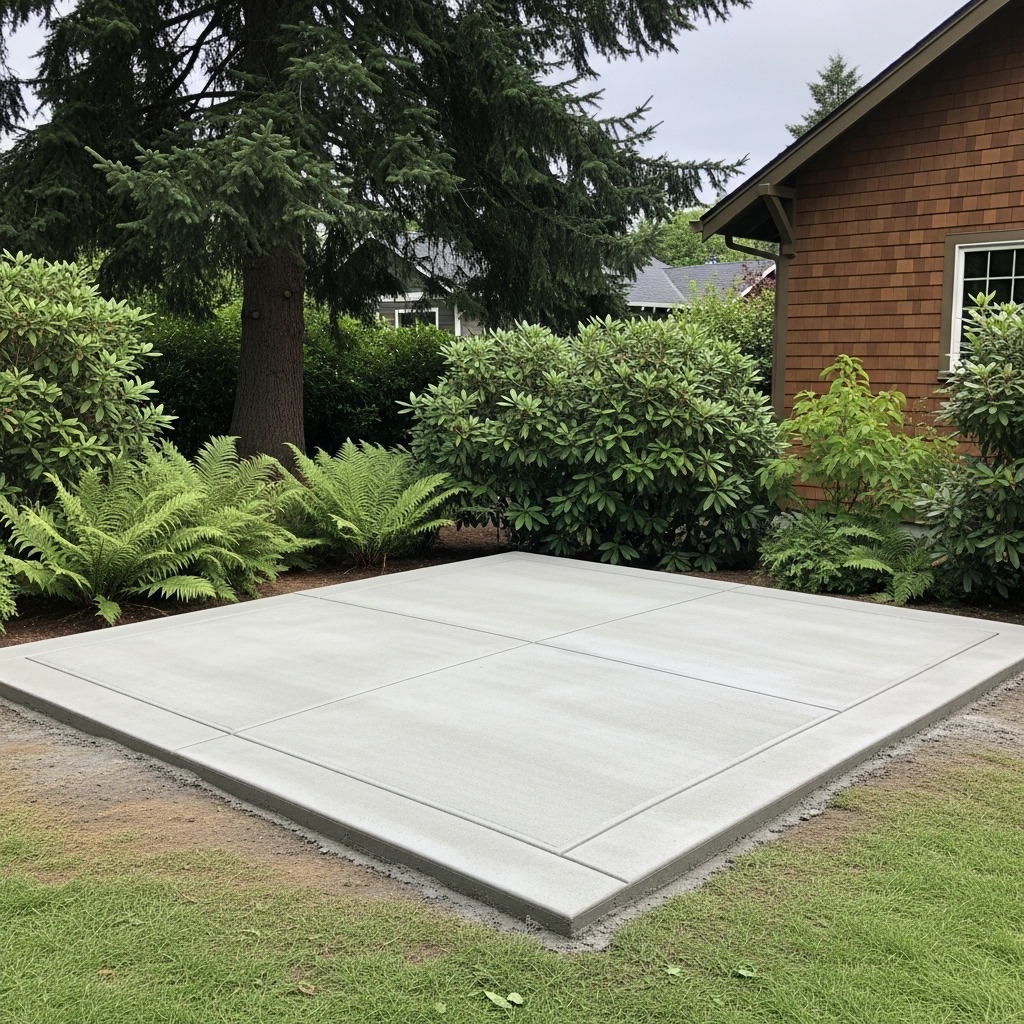
A concrete hot tub pad in Salem, OR requires a 6-inch thick reinforced slab with proper rebar, a compacted gravel base, and strategic drainage planning. The pad must be level, structurally sound, and sized to accommodate your spa’s footprint plus equipment access panels.
Key requirements for Salem hot tub pads:
- Minimum 6-inch thickness with steel reinforcement (rebar or wire mesh)
- Compacted gravel base (4-6 inches) for drainage and stability
- Level surface under spa location with slight slope away for drainage
- Properly sized for spa dimensions plus 12-18 inches clearance on service sides
- Coordination with electrical access and local building requirements
Why Salem’s Climate Demands Specialized Foundation Work
The Willamette Valley presents unique challenges that generic hot tub pad advice doesn’t address. Salem receives substantial annual rainfall, and our mixed soil types—ranging from clay-rich loam to silt deposits—behave differently when saturated. When our crews work in neighborhoods like West Salem or South Gateway, we consistently encounter soil conditions that require extra attention to drainage and base preparation.
Soil and Settlement Considerations
Unlike desert climates where soil remains relatively stable, Salem’s wet winters cause soil expansion and contraction. A hot tub filled with water can weigh 4,000-6,000 pounds concentrated on a small footprint—roughly the same load as a compact car parked in your backyard. Without proper subgrade preparation, this weight on saturated soil leads to differential settlement, where one side of the pad sinks more than the other.
We always excavate below the topsoil layer, removing organic material that will decompose and create voids. The excavation typically extends 10-12 inches below the final pad surface: 6 inches for the concrete slab and 4-6 inches for a compacted gravel base. This granular base provides uniform support and allows water to drain away rather than pooling beneath the slab.
Drainage Planning for Wet Seasons
Before digging, we coordinate with Pacific Power to mark underground electrical lines—a critical safety step that Oregon law requires. Once excavation begins, we plan drainage that directs both groundwater and surface runoff away from your foundation and hot tub equipment. The pad itself should be level where the spa sits, but surrounding concrete patio surfaces can incorporate a subtle slope (1-2%) to move water away.
In areas like the 97301 and 97302 zip codes, where older neighborhoods may have less sophisticated drainage systems, we sometimes integrate French drains or gravel channels alongside the pad to handle heavy winter rains. This prevents standing water that can undermine the slab edges and create ice hazards during Salem’s occasional freezes.
Common Mistakes That Compromise Hot Tub Pads
Over the years working with homeowners throughout Marion County, we’ve encountered numerous hot tub installations that failed due to preventable errors. Understanding these pitfalls can save you thousands in repairs and warranty complications.
Undersized or Thin Slabs
One of the most frequent mistakes is treating a hot tub pad like a standard concrete patio. A typical patio might be poured at 4 inches thick with minimal reinforcement because it supports distributed foot traffic. A hot tub concentrates massive weight on a small area—often 80-100 pounds per square foot when filled and occupied.
We’ve seen homeowners attempt DIY pads at 3-4 inches thick without reinforcement. Within a year, these slabs develop cracks radiating from the corners, or worse, develop a visible sag in the middle. The spa shell then rests unevenly, stressing seams and potentially cracking acrylic or fiberglass components. Most hot tub manufacturers will void warranties if the foundation doesn’t meet their specifications, which typically call for 6-inch reinforced concrete as a minimum.
Skipping Base Preparation
Pouring concrete directly onto native soil or lawn is a recipe for settlement. Organic material beneath the slab will decompose, creating voids that allow portions of the pad to sink. In Salem’s clay-heavy soils, moisture changes cause expansion and contraction that can heave or drop sections of an improperly prepared slab.
Proper base preparation means removing all topsoil and vegetation, then installing a compacted gravel layer. We use a plate compactor to densify this base in lifts (layers), ensuring uniform support. This step alone can prevent 90% of settlement issues, yet it’s frequently skipped by inexperienced installers trying to cut costs.
Ignoring Access and Service Needs
A hot tub isn’t a static object—it requires regular maintenance access to pumps, heaters, and filtration systems. Many homeowners size their pad to exactly match the spa footprint, then discover they can’t access service panels without climbing onto adjacent landscaping or wrestling equipment around tight corners. We recommend extending the pad 12-18 inches beyond the spa on sides with equipment access panels, creating a stable work surface for future maintenance.
Best Practices for Long-Lasting Hot Tub Foundations
Building a hot tub pad that will support your investment for decades requires attention to structural engineering principles adapted to local conditions. Here’s how professionals approach the work throughout the Salem area.
Structural Design and Reinforcement
According to federal accessibility standards and industry best practices, a properly engineered hot tub pad uses steel reinforcement to prevent cracking and distribute loads. We typically specify #4 rebar in a grid pattern on 18-24 inch centers, positioned in the middle third of the slab thickness for optimal tensile strength.
The concrete mix itself should be appropriate for outdoor exposure in Salem’s freeze-thaw climate. We use a minimum 3,000 PSI concrete with air entrainment—microscopic air bubbles that provide expansion space when moisture freezes within the concrete matrix. This prevents the surface scaling and spalling that can occur during Salem’s occasional hard freezes.
Integration with Outdoor Living Spaces
Most homeowners don’t want an isolated concrete square in the middle of their yard. When we install concrete hot tub pads in Salem, OR, we typically coordinate with broader landscaping and hardscaping projects. The hot tub pad becomes an extension or focal point of a larger concrete services project that might include:
- Adjacent patios: Extend entertaining space with consistent or complementary finishes
- Walkways: Safe paths from the house to spa, especially important during wet seasons
- Retaining walls: Manage grade changes and create terraced outdoor rooms
- Decorative finishes: Stamped, colored, or broom-finished surfaces that match your home’s aesthetic
This integrated approach not only looks better but also allows coordinated drainage planning and consistent structural standards across all concrete work. We can pour the hot tub pad as a thicker, more heavily reinforced section of a larger patio, creating visual continuity while maintaining the structural integrity each area requires.
Local Material Sourcing and Climate Adaptation
Here’s a contrarian insight most national guides miss: we source aggregate from Willamette Valley quarries that produce rock with thermal expansion characteristics matching Salem’s existing concrete infrastructure. This matters because concrete expands and contracts with temperature changes, and using locally-sourced aggregate minimizes differential movement between your new hot tub pad and adjacent structures.
Additionally, due to Oregon’s frequent freeze-thaw cycles near the slab edges (even though Salem rarely sees deep freezes), we always specify air-entrained concrete. This protection isn’t needed in desert climates but is essential here to prevent surface deterioration over time.
Step-by-Step Installation Process
Understanding the installation sequence helps homeowners plan timelines, coordinate with other contractors (electricians, landscapers), and recognize quality workmanship. Here’s how a professional hot tub pad installation unfolds in Salem.
Site Assessment and Layout
The process begins with site evaluation. We assess soil conditions, existing drainage patterns, proximity to utilities, and access for concrete trucks. In neighborhoods like South Salem (97302) or Keizer Station areas, mature landscaping and narrow side yards sometimes require creative solutions for concrete delivery. We mark the pad location with spray paint or stakes, ensuring adequate clearance from property lines, structures, and underground utilities.
Before excavation, we always call Oregon 811 for utility locates and coordinate with Pacific Power for electrical line marking. This legally required step typically takes 2-3 business days and prevents costly—and dangerous—accidents during digging.
Excavation and Base Installation
We excavate to a depth that accommodates both the concrete slab and gravel base—typically 10-12 inches below the desired finished height. All organic material, roots, and soft spots are removed. The excavation extends 6-12 inches beyond the pad perimeter to provide room for forming and proper edge support.
Next comes the gravel base, usually 4-6 inches of ¾-inch crushed rock. We spread this in lifts and compact each layer with a mechanical plate compactor, achieving 95% density. This step is critical in Salem’s variable soils—proper compaction prevents future settlement that could crack your spa shell.
Forming, Reinforcement, and Pour
We install sturdy wooden or metal forms that define the pad edges and establish the finished height. Forms are leveled and braced—accuracy here determines whether your hot tub sits level or rocks on uneven corners. Inside the forms, we place steel reinforcement on chairs or dobies that hold the rebar at mid-depth in the slab.
The concrete pour is scheduled for favorable weather—Salem’s rainy season presents challenges, so we monitor forecasts and sometimes use curing blankets or temporary enclosures. We specify at least 3,000 PSI concrete with air entrainment and appropriate slump for placement. Once poured, the concrete is screeded level, floated smooth, and finished according to your preference (broom finish for traction, smooth troweled, or decorative options).
Curing and Final Preparation
Proper curing is essential for strength development. We typically apply a curing compound or cover the slab with plastic sheeting to retain moisture for 7 days. In Salem’s cooler, damper conditions, curing is less challenging than in hot, dry climates, but attention is still required.
After curing, we remove forms and backfill around the pad edges. The slab should cure for at least 28 days before bearing the full weight of a filled hot tub, though light foot traffic is acceptable after 7 days. This waiting period allows concrete to achieve design strength and reduces the risk of early cracking under heavy loads.
Permitting and Code Compliance in Salem
While a standalone concrete pad often doesn’t require a building permit, the overall hot tub installation may trigger city or county requirements. The City of Salem Building Division requires permits for electrical work associated with hot tubs, including GFCI-protected circuits, disconnects, and bonding.
Additionally, if your property is subject to homeowner association rules or if the hot tub is located close to property lines, setback requirements may apply. Marion County and the City of Salem also have regulations regarding barriers and fencing for water features that could pose drowning hazards, particularly in homes with young children or rental properties.
We recommend contacting the Salem Building Division or Marion County Building Inspection before beginning work to confirm local requirements. Working with established contractors like Salem Concrete, who are familiar with these regulations, helps ensure your project meets all applicable codes.
Cost Factors and Investment Considerations
The cost to install a concrete hot tub pad in Salem, OR varies based on size, site conditions, reinforcement requirements, and finish options. Understanding these factors helps you budget appropriately and recognize value versus shortcuts.
| Factor | Impact on Cost | Typical Range |
|---|---|---|
| Pad Size | Larger pads require more materials and labor | 8×8 ft to 12×12 ft common |
| Site Access | Difficult access increases labor time | 10-30% premium for tight spaces |
| Soil Conditions | Poor soil requires deeper excavation, more base | 15-25% additional for problem soils |
| Finish Options | Decorative finishes cost more than standard broom | 20-50% premium for stamped or colored |
| Integration | Part of larger project may reduce per-SF cost | 5-15% savings on combined work |
We serve homeowners throughout the greater Salem area, from West Salem (97304) to Keizer (97303) and South Salem (97302), tailoring each project to site-specific conditions and client preferences.
Frequently Asked Questions
How thick should a concrete hot tub pad be in Salem, OR?
A hot tub pad should be minimum 6 inches thick with steel rebar reinforcement. This thickness and reinforcement are necessary to support the concentrated weight of a filled spa (typically 4,000-6,000 pounds) without cracking or settling.
Can I place a hot tub directly on an existing patio?
Only if the existing patio was built to structural standards for heavy loads—at least 6 inches thick with proper reinforcement and a compacted base. Most standard patios are 4 inches thick and not designed for concentrated spa loads. We often recommend pad expansion or reinforced extensions to existing patios.
How long does installation take?
A typical hot tub pad installation takes 3-5 days from start to finish: 1 day for excavation and base preparation, 1 day for forming and reinforcement, 1 day for the pour and finishing, followed by curing time. Full strength develops over 28 days, though light use is possible after 7 days.
What drainage considerations are important in Salem?
Salem’s wet winters require careful drainage planning. The pad should be level where the spa sits but surrounded by surfaces that slope slightly away (1-2%) to direct water away from the foundation and equipment. A compacted gravel base beneath the slab allows groundwater to drain rather than pool underneath.
Do I need a permit to install a hot tub pad in Salem?
The concrete pad itself typically doesn’t require a permit, but the overall hot tub installation—particularly the electrical work—does require permits from the City of Salem or Marion County. Contact your local building department to confirm specific requirements for your property and installation.
Ready to Build Your Hot Tub Foundation?
Installing a properly engineered concrete hot tub pad protects your significant spa investment and provides decades of trouble-free enjoyment. In Salem’s unique climate and soil conditions, the difference between a pad that performs flawlessly and one that fails prematurely comes down to proper design, quality materials, and experienced execution.
Whether you’re planning a standalone hot tub pad or integrating your spa into a larger outdoor living project, working with experienced concrete professionals ensures structural integrity, code compliance, and aesthetic appeal. From West Salem to Keizer and throughout Marion County, proper foundation work makes all the difference.
Don’t risk your hot tub investment on an inadequate foundation. Contact us today to discuss your hot tub pad project and receive a detailed assessment based on your specific site conditions and goals.
Sources and References
- U.S. Access Board – ADA Standards for Accessible Design
- Oregon Building Codes Division – Structural and electrical requirements for residential installations
- City of Salem Building Division – Local permitting and code compliance information
- Willamette Valley concrete contractor best practices and regional installation standards
Disclaimer: This article provides general information about concrete hot tub pad installation in Salem, OR. Specific requirements may vary based on local codes, property conditions, and hot tub manufacturer specifications. Always consult with licensed professionals and local building authorities before beginning construction projects.