
Last Updated: January 12, 2026
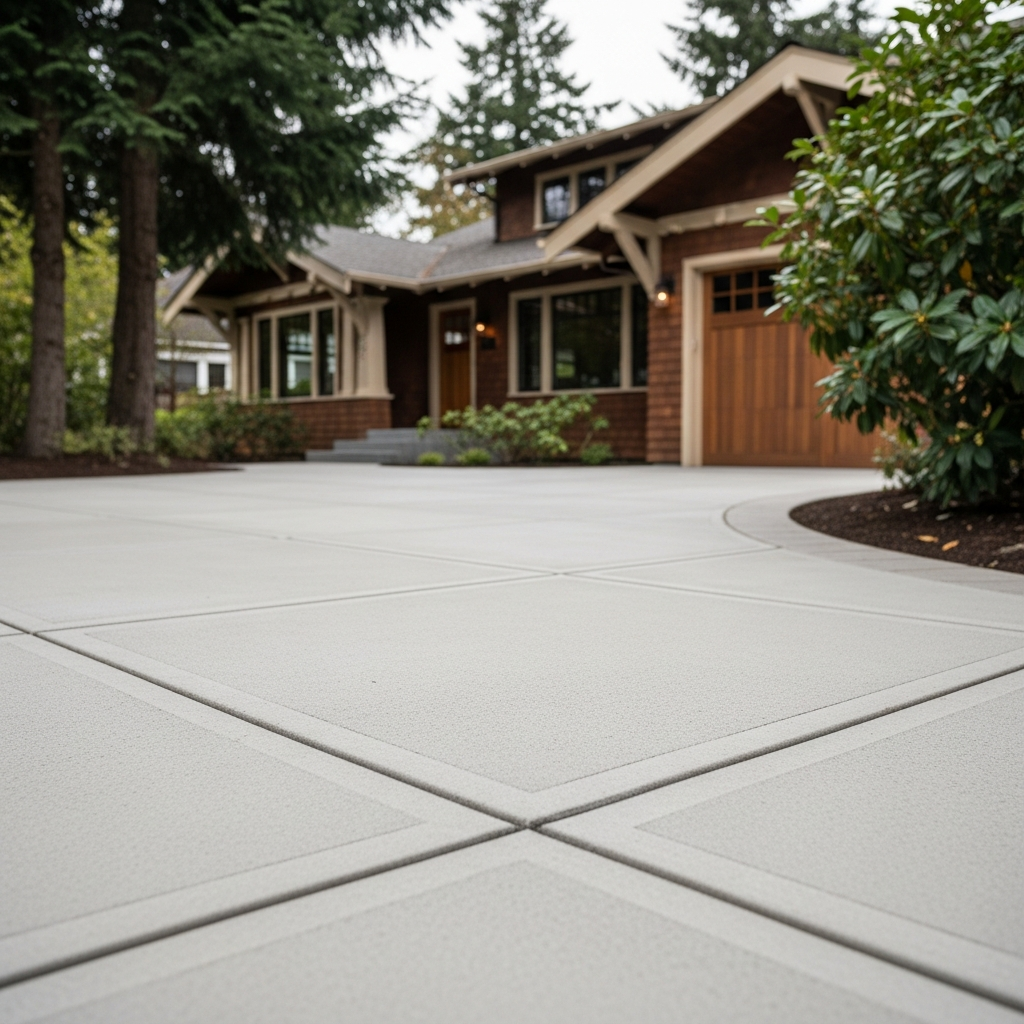
Have you ever noticed the elegant grid lines cutting across a modern driveway or the intricate diamond patterns adorning a plaza in downtown Salem, OR? These aren’t random cuts—they’re carefully planned concrete scoring patterns that combine engineering functionality with striking visual appeal. Whether you’re planning a new patio installation or renovating an existing walkway, understanding scoring patterns can transform ordinary concrete into an architectural statement while preventing costly cracking.
In Oregon’s Willamette Valley, concrete scoring has evolved from simple control joints into a sophisticated design technique that addresses both our region’s specific climate challenges and aesthetic preferences. Salem’s historic downtown sidewalks showcase traditional rectangular scoring from the early 1900s, while newer developments near Riverfront Park and the Capitol Mall feature contemporary decorative patterns that rival expensive tile or stone installations at a fraction of the cost.
Quick Answer: What Are Concrete Scoring Patterns?
Concrete scoring patterns are intentional grooves or cuts made into concrete surfaces to control cracking, define panels, and create decorative effects. These shallow cuts—typically ¼ to ½ inch deep—guide where natural shrinkage cracks occur while transforming plain concrete into visually appealing surfaces that mimic tile, stone, or custom geometric designs.
Key Takeaways:
- Dual purpose: Scoring serves both structural (crack control) and aesthetic (decorative pattern) functions
- Common patterns: Grids, borders, diamonds, medallions, and custom geometric designs
- Best timing: Cuts should be made 4-12 hours after pour when concrete is firm but not fully cured
- Local relevance: Salem’s freeze-thaw cycles make proper scoring essential for longevity
- Cost-effective: Scoring offers designer looks at significantly lower cost than pavers or natural stone
Understanding Concrete Scoring: History and Function
Concrete scoring patterns in Salem, OR, have a rich history dating back to when Portland cement sidewalks began appearing throughout Oregon in the 1890s. Early contractors quickly learned that large concrete slabs would crack unpredictably as they cured and responded to temperature changes. By introducing deliberate score lines—also called control joints—they could direct where cracks would form, keeping them hidden within the grooves rather than zigzagging across the surface.
The Engineering Behind Score Lines
When concrete cures, it shrinks slightly—typically about 0.05% of its volume. In a 20-foot driveway, that translates to nearly 1.5 inches of potential movement. Without relief points, this stress builds until the concrete fractures randomly. Score cuts create intentional weak points that absorb this movement in predictable locations. The Portland Cement Association has standardized these practices since the early 1900s, with spacing recommendations typically between 8-12 feet for most residential applications.
In Salem’s climate—where we experience wet winters and dry summers—thermal expansion and contraction add another layer of stress. When our team works throughout the 97301, 97302, and 97304 zip codes, we always specify air-entrained concrete to handle freeze-thaw cycles, and we coordinate scoring patterns that accommodate these seasonal movements while enhancing the design.
From Functional to Decorative
Around 70 years ago, pioneers in stamped concrete services transformed the industry by proving concrete could be beautiful, not just durable. Decorative scoring followed naturally—contractors realized that by varying score line spacing, adding diagonal cuts, or combining scoring with acid stains, they could create stunning visual effects. Jacksonville, Oregon’s historic California Street features decorative scoring patterns from the 1890s, demonstrating that Salem-area contractors have long understood concrete’s aesthetic potential.
Popular Scoring Patterns for Salem Projects
Today’s concrete scoring patterns range from timeless classics to contemporary designs. The choice depends on your project type, architectural style, and personal preferences. Here are the patterns we see most frequently in Salem, OR installations:
Grid and Tile Layouts
The most popular pattern for concrete patio services is the simple grid—square or rectangular panels that mimic large-format tile. Standard grid sizes include 2×2-foot, 3×3-foot, or 4×4-foot squares, though rectangular layouts (like 2×3 feet) add visual interest. When combined with contrasting stains at grid intersections, this pattern creates a sophisticated checkerboard effect perfect for modern Salem homes near South Salem’s neighborhoods or the Fairmount Hill area.
Diagonal and Diamond Patterns
Rotating the grid 45 degrees creates dynamic diagonal scoring that makes spaces appear larger and more interesting. Diamond patterns work exceptionally well for concrete driveway services, as the angled lines complement the approach perspective. We frequently install diagonal scoring for homes in West Salem, where the pattern pairs beautifully with Craftsman and mid-century architecture common to that area.
Borders, Bands, and Custom Designs
Perimeter borders—typically 12-18 inches wide—frame the main field and can be stained differently to create definition. Banding works well along building fronts or walkway edges. For truly custom work, we’ve created medallions, company logos, and geometric designs for commercial properties downtown and institutional campuses. The Oregon State Capitol area features several examples of decorative scoring used in public spaces to create civic identity through thoughtful concrete detailing.
Common Mistakes to Avoid with Concrete Scoring
Even experienced contractors can make errors that compromise both the structural performance and visual appeal of scored concrete. Understanding these pitfalls helps ensure your Salem project succeeds the first time.
Incorrect Cut Depth and Timing
Score cuts must reach at least one-quarter the slab thickness to be effective. For a standard 4-inch residential slab, that means 1-inch deep cuts. Shallower grooves won’t control cracking. Timing is equally critical: cut too early (when concrete is still plastic) and edges crumble; wait too long (after full cure) and the concrete may crack before you can score it. The ideal window is typically 4-12 hours after the pour, when you can walk on the surface without leaving deep impressions.
Poor Pattern Planning
Scoring patterns should align with the space’s geometry and architectural features. A common mistake is starting grid layouts from one edge without considering how the pattern terminates at the opposite side—resulting in awkward partial panels. We always measure carefully and plan from the center or most visible edge, ensuring symmetry. When working on concrete patio contractors Salem OR projects, we align scoring with door openings, walkway connections, and landscape features for cohesive design.
Ignoring Local Climate Requirements
Here’s a contrarian insight many national contractors miss: in the Willamette Valley, we don’t face the extreme freeze-thaw cycles of the Midwest or Northeast, but our prolonged wet season creates unique challenges. We always specify air-entrained concrete mixes even though Salem winters are mild, because moisture absorption during our 40+ inches of annual rainfall can still cause internal stress. Before any excavation, we coordinate with Portland General Electric to locate underground utilities—a step that’s saved countless projects from costly delays and safety issues.
Best Practices for Durable, Beautiful Scoring
Successful concrete scoring patterns combine proper technique, quality materials, and design sensibility. Following these practices ensures your Salem installation performs well and looks great for decades.
Subbase and Mix Design
A stable, well-drained subbase is foundational to any concrete project. In Salem, where clay soils are common, we typically excavate 6-8 inches and install compacted crushed rock. The concrete mix should be appropriate for the application: 3,000-4,000 PSI for residential work, with air entrainment and proper water-cement ratio. Quality control at this stage prevents settlement cracks that scoring can’t fix.
Combining Scoring with Other Decorative Techniques
The most striking results come from layering techniques. Scoring combined with acid or water-based stains creates remarkable depth and contrast—imagine a grid pattern where alternating squares receive different stain colors. Some projects integrate scoring with stamped concrete driveway cost Salem OR work, using score lines to define borders around a central stamped field. Texture matters too: a lightly broomed finish provides slip resistance while accepting stains beautifully.
Maintenance and Longevity
Properly scored concrete requires minimal maintenance. Annual cleaning with a pressure washer keeps patterns crisp. If you’ve applied stains or sealers, plan to reseal every 2-3 years to maintain color vibrancy and protect against Oregon’s moisture. Score grooves should be cleaned of debris that could trap water and cause spalling—especially important before winter in the 97304 and 97306 areas where temperatures occasionally dip below freezing.
How to Plan Your Concrete Scoring Project
A successful scoring project starts with careful planning. Whether you’re working with Salem Concrete or another qualified contractor, follow this systematic approach.
Step 1: Define Your Goals and Style
Start by answering key questions: What’s the primary purpose—functional, decorative, or both? What architectural style should the scoring complement? Browse examples in Salem’s downtown historic district or newer developments near Keizer Station to see what resonates. Collect photos and create a simple sketch showing your space’s dimensions and any fixed features (doors, landscape beds, utility access points).
Step 2: Work with Experienced Contractors
Not all concrete contractors specialize in decorative scoring. Ask to see portfolio examples specific to scoring work, not just general flatwork. Verify that they understand local City of Salem building permit requirements for exterior concrete work, which may apply to larger projects or those near public right-of-way. Salem Concrete and other qualified local contractors can guide you through design options that balance aesthetics with budget.
Step 3: Finalize Pattern and Budget
Pattern complexity directly affects cost. Simple grid scoring adds minimal expense over plain concrete—perhaps $1-2 per square foot. Complex designs with multiple stains, custom medallions, or integration with stamping can add $5-10+ per square foot. Get detailed written estimates that specify pattern type, cut depth, finish, and any coloring treatments. Confirm the project timeline, as scoring work requires good weather and proper curing conditions—challenging during Salem’s wet season from November through March.
Frequently Asked Questions
Can scoring be added to existing concrete?
Yes, existing concrete can be scored using specialized diamond-blade saws. The concrete must be in good structural condition without major cracking or spalling. While adding scoring won’t reverse existing cracks, it can prevent new ones and dramatically improve appearance through decorative patterns combined with staining or resurfacing.
How long does scored concrete last in Salem’s climate?
Properly installed scored concrete with appropriate mix design and drainage should last 30-50+ years in the Willamette Valley. Regular resealing (every 2-3 years) and good drainage extend lifespan considerably. Salem’s mild winters are actually gentler on concrete than many regions, though our wet season requires attention to moisture management.
What’s the difference between scoring and sawing?
The terms are often used interchangeably. “Scoring” traditionally referred to tooled grooves made while concrete was still workable, while “sawing” meant diamond-blade cuts made after hardening. Modern practice typically uses early-age saw-cutting (4-12 hours after pour) for precision, though some decorative work still uses hand-tooling for softer, less mechanical appearance.
Are scored patterns ADA compliant?
Yes, when properly executed. Score lines shouldn’t create trip hazards—cuts should be smooth-edged and not overly deep. The Americans with Disabilities Act requires that surface changes don’t exceed ½ inch, and any changes between ¼ and ½ inch must be beveled. Standard scoring (¼ to ½ inch deep) meets these requirements, especially when edges are slightly rounded during finishing.
Does scoring weaken concrete?
No—that’s actually the point. Score lines create intentional weak points that control where cracks occur. By directing cracking to hidden grooves, scoring prevents random fractures across the slab face. Proper scoring at correct depth and spacing strengthens overall performance by managing inevitable stress rather than letting it build unpredictably.
Conclusion
Concrete scoring patterns in Salem, OR, represent the perfect marriage of engineering necessity and artistic expression. From the historic rectangular panels gracing downtown sidewalks to contemporary geometric designs transforming residential driveways and patios, scoring elevates concrete from purely functional to genuinely beautiful. In our Willamette Valley climate, proper scoring isn’t optional—it’s essential crack control that happens to offer unlimited decorative potential.
Whether you’re planning a new installation or refreshing existing concrete, thoughtful scoring patterns add tremendous value at modest cost. The key is working with contractors who understand both the structural requirements and design possibilities—professionals who recognize that Salem’s unique conditions (wet winters, clay soils, and regional aesthetic preferences) demand tailored approaches rather than generic solutions. We serve homeowners throughout Salem, including zip codes 97301, 97302, and 97304, helping transform ordinary concrete into lasting architectural elements.
Ready to explore how scoring patterns can enhance your next concrete project? Start by examining examples around Salem—from the Capitol Mall area to Riverfront Park—and envision what’s possible for your own space. With proper planning, quality execution, and ongoing maintenance, scored concrete delivers decades of beauty and performance that rivals far more expensive materials.
Sources and References
- Portland Cement Association – Concrete Construction Standards and History
- City of Salem, Oregon – Building and Development Services
- American Concrete Institute (ACI) – Technical Standards for Flatwork and Jointing
- Oregon State Historic Preservation Office – Historic Sidewalk Context Study