
Last Updated: December 24, 2025
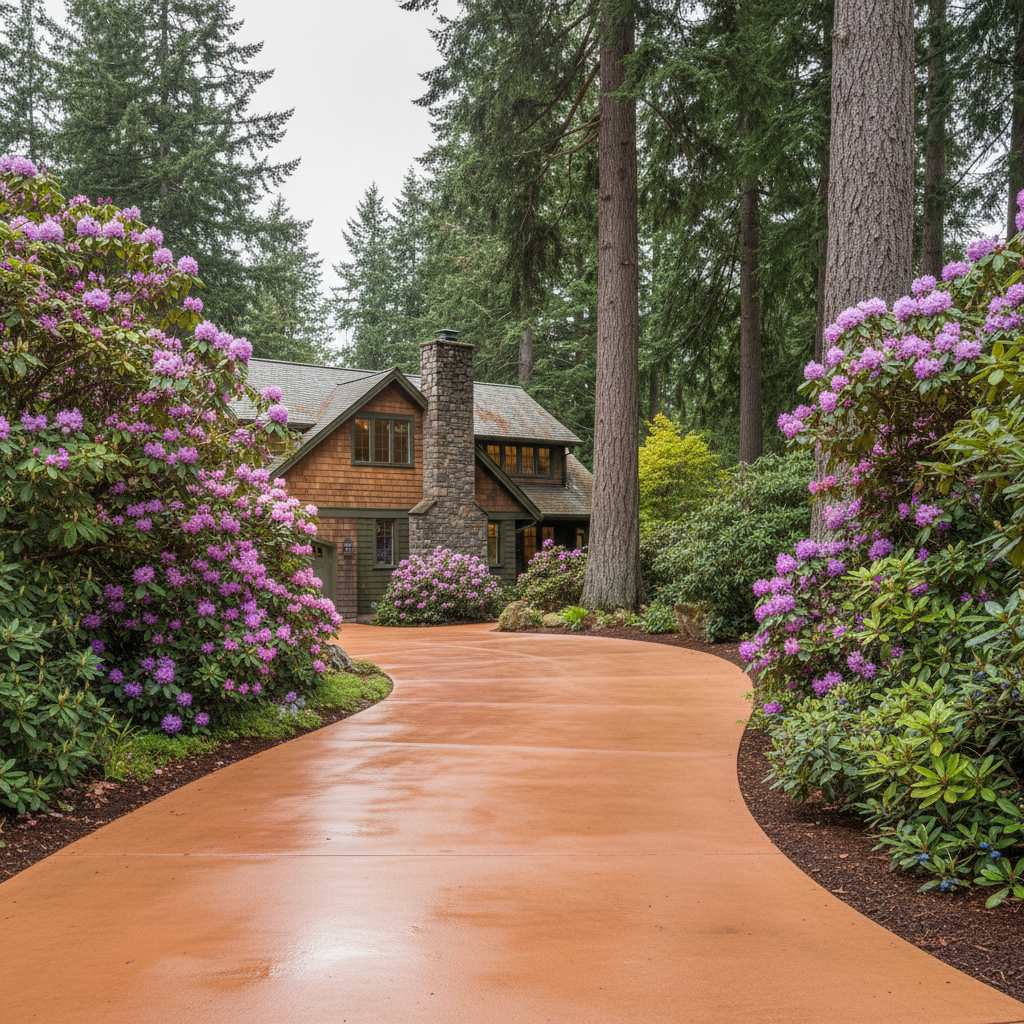
Are you tired of dull gray concrete that drains the aesthetic appeal from your outdoor spaces? In Salem, OR, property owners increasingly turn to decorative concrete solutions to transform ordinary driveways, patios, and walkways into stunning architectural features. With advances in pigmentation technology and application techniques, colored concrete in Salem Oregon has evolved from basic functionality to sophisticated design statements that complement the Pacific Northwest’s unique architectural character.
Since the early 20th century, when engineer Mason Scofield pioneered concrete pigmentation in 1915, decorative concrete has transformed how we approach outdoor surfaces. Today’s homeowners and business owners in Salem benefit from over a century of innovation, with options ranging from integral color to acid stains, stamped patterns, and exposed aggregate finishes that withstand Oregon’s challenging freeze-thaw cycles.
Quick Answer: Understanding Colored Concrete Options
Colored concrete uses pigments or stains to create aesthetically appealing surfaces for driveways, patios, sidewalks, and commercial spaces. In Salem, OR, these systems typically cost $8-15 per square foot installed, depending on complexity and color selection.
Key Takeaways:
- Integral color provides consistent pigmentation throughout the concrete slab
- Surface stains offer dramatic effects with lower material costs
- Oregon’s climate requires air-entrained concrete for freeze-thaw durability
- Professional installation ensures proper curing and long-term color stability
- Decorative concrete reduces heat island effect compared to asphalt
Understanding Decorative Concrete Applications in Salem
Salem’s position as Oregon’s capital city, established permanently in 1864, means the area features a mix of historic and modern architecture. When we work throughout neighborhoods from downtown Salem (97301) to South Salem (97302) and West Salem (97304), we observe how decorative concrete complements both Victorian-era homes and contemporary developments. The region’s temperate climate with distinct wet and dry seasons creates specific challenges for concrete installations that national contractors often overlook.
Local concrete work dates to the mid-19th century, when Salem transitioned from wooden sidewalks to Portland cement concrete in the 1890s. Today’s decorative applications build on this foundation with advanced pigmentation systems and finishing techniques. For property owners seeking to upgrade their outdoor spaces, understanding the available options helps make informed decisions about design, durability, and investment.
Integral Color Systems
Integral color involves adding pigments directly to the concrete mix before pouring. This approach ensures consistent coloration throughout the entire slab depth, providing superior durability compared to surface-only treatments. When chips or wear occur, the underlying concrete matches the surface appearance. We typically recommend integral color for high-traffic applications like driveways and commercial walkways where long-term performance justifies the investment.
According to research from the National Institute of Standards and Technology, properly formulated integral color systems maintain their appearance for decades with minimal maintenance. Color options range from subtle earth tones that complement Salem’s natural landscape to bold architectural statements suitable for contemporary designs.
Acid Stains and Chemical Treatments
Acid stains create variegated, translucent color effects by chemically reacting with minerals in the concrete surface. This technique produces unique, organic patterns that cannot be exactly replicated—each installation becomes a one-of-a-kind artistic element. The process works particularly well for patio surfaces where distinctive character enhances outdoor living spaces.
Chemical staining requires careful surface preparation and application technique. Before applying stains, we coordinate with local utility providers like Portland General Electric to ensure outdoor electrical systems won’t interfere with the installation process. The color palette typically includes earth tones—terracotta, sage green, rich brown, and charcoal—that harmonize with Pacific Northwest aesthetics.
Stamped and Textured Finishes
Combining color with stamped patterns creates concrete surfaces that mimic natural stone, brick, slate, or wood. Our stamped concrete services transform ordinary slabs into sophisticated design elements at a fraction of the cost of genuine masonry materials. The technique proves especially popular for entryways, courtyards, and pool decks where premium aesthetics meet practical budgets.
Due to Salem’s freeze-thaw cycles—typically 20-30 annually—we always specify air-entrained concrete for stamped applications. This regional adaptation prevents surface spalling and extends the lifespan of decorative installations, a detail that generic national contractors often miss when working in Oregon’s climate zone.
Common Mistakes with Decorative Concrete Projects
When property owners pursue colored concrete in Salem Oregon without proper guidance, several recurring problems emerge that compromise both appearance and durability. Understanding these pitfalls helps ensure successful project outcomes.
Inadequate Substrate Preparation
Oregon’s Willamette Valley features variable soil conditions with expansive clay deposits in many areas. Insufficient base preparation leads to settling, cracking, and premature failure of decorative surfaces. Professional installations require proper excavation depth, compacted aggregate base, and adequate drainage systems to manage Salem’s average 40 inches of annual rainfall.
We’ve observed failures where contractors skipped soil testing and encountered unexpected clay layers. The City of Salem building department requires specific base specifications for concrete work—compliance ensures structural integrity and protects your investment. Attempting DIY preparation without understanding local soil characteristics frequently results in costly repairs within the first few years.
Poor Color Selection and Samples
Color perception changes dramatically between small samples and large installations. What appears subtle in a six-inch sample may look overwhelming across a 500-square-foot driveway. Additionally, concrete color shifts during the curing process and varies with lighting conditions, moisture content, and surface texture.
Successful projects begin with large mock-up sections—ideally 4×4 feet minimum—viewed under various lighting conditions. We recommend observing samples during morning, midday, and evening to understand how Oregon’s diffused light affects appearance. This extra step prevents disappointment and ensures the final result matches expectations.
Improper Sealing and Maintenance
Decorative concrete requires appropriate sealing to protect against moisture intrusion, freeze-thaw damage, and surface wear. Many property owners either skip sealing entirely or apply inappropriate products that create adhesion problems or unnatural gloss levels. Salem’s wet winters demand breathable sealers that allow moisture vapor transmission while blocking liquid water infiltration.
Regular resealing every 2-3 years maintains optimal protection and appearance. This maintenance requirement surprises homeowners accustomed to maintenance-free materials, yet the investment in periodic sealing extends decorative concrete lifespan by decades compared to neglected installations.
Best Practices for Decorative Concrete Success
Achieving exceptional results with colored concrete requires attention to design principles, material selection, and installation protocols specific to Salem’s environment and architectural context.
Coordinating with Existing Architecture
Decorative concrete should complement rather than compete with your home’s architectural style. Historic properties near Bush’s Pasture Park benefit from traditional color palettes and subtle textures that respect period authenticity. Contemporary homes in South Salem’s newer developments can accommodate bolder design statements with geometric patterns and modern color schemes.
When selecting colors, consider existing elements: roof color, siding material, trim details, and landscaping. We typically recommend pulling accent colors from these established features rather than introducing entirely new palette elements. This approach creates visual harmony throughout the property and enhances curb appeal for potential buyers if you decide to sell.
Timing Installation with Weather Patterns
Salem’s climate features distinct wet and dry seasons, with most precipitation falling between October and May. Optimal concrete installation occurs during the dry summer months when ambient temperatures range between 60-80°F and humidity remains relatively low. These conditions promote proper curing and allow decorative techniques like stamping and coloring to develop correctly.
Winter installations require special considerations including heated enclosures, accelerated curing admixtures, and extended protection periods. While possible, off-season work increases costs and complexity. Planning projects for late spring through early fall optimizes quality and budget efficiency. For detailed cost considerations, review our guide on stamped concrete driveway costs in Salem, OR.
Selecting Qualified Contractors
Decorative concrete demands specialized skills beyond basic concrete finishing. Look for contractors with documented experience in colored concrete applications, manufacturer certifications for specific product systems, and portfolios demonstrating quality craftsmanship. Salem Concrete maintains expertise in various decorative techniques and stays current with evolving materials and methods.
According to Oregon state regulations, concrete contractors must maintain proper licensing and bonding. Verify credentials before committing to any project, and request references from recent installations you can personally inspect. This due diligence protects against substandard work and ensures your investment delivers lasting value.
Step-by-Step Installation Process
Understanding the installation sequence helps property owners appreciate the craftsmanship involved and recognize quality work when evaluating contractor proposals.
Site Preparation and Base Construction
Professional installations begin with thorough site evaluation and excavation to design specifications. In Salem, we typically remove 8-12 inches of soil to accommodate compacted aggregate base material and the concrete slab itself. Proper grading ensures water drains away from structures—critical in Oregon’s wet climate.
After excavation, we install 4-6 inches of crushed rock base compacted in lifts using mechanical tampers. This substrate distributes loads evenly and prevents differential settling. Edge forms establish precise elevations and boundaries for the finished surface. Quality base work represents roughly 40% of total project effort but determines long-term performance.
Concrete Placement and Coloring
For integral color systems, pigments are added at the batch plant before delivery to ensure thorough mixing throughout the entire load. Upon arrival, the concrete is placed, spread, and consolidated to eliminate air pockets. Initial screeding levels the surface to proper grade using laser-guided equipment for precision.
Surface color treatments occur after initial setting when the concrete reaches appropriate firmness. Color hardeners are broadcast across the surface and worked into the top layer through repeated floating. This technique concentrates pigmentation where it provides maximum visual impact while improving surface durability. The timing window for these operations is narrow—typically 2-4 hours depending on temperature and humidity.
Texturing, Stamping, and Finishing
Once surface color application is complete, decorative techniques create desired textures and patterns. Stamping tools impress realistic stone or tile patterns into the semi-firm concrete. This process requires coordinated teamwork and precise timing—if performed too early, stamps sink too deeply; too late, and patterns won’t transfer properly.
After pattern stamping, release agents are cleaned from the surface and control joints are cut to manage inevitable cracking along predetermined lines. The concrete then cures for several days before final sealing. Professional installations include controlled curing protocols that maintain optimal moisture levels during this critical period. View examples of completed work in our project portfolio.
Frequently Asked Questions
How long does colored concrete last in Oregon’s climate?
Properly installed colored concrete with appropriate air entrainment and regular sealing typically lasts 25-30 years or more in Salem’s climate. Integral color systems outlast surface-only treatments because pigmentation extends through the entire slab depth. Annual maintenance including cleaning and periodic resealing every 2-3 years maximizes longevity and appearance retention.
Can existing concrete be colored?
Yes, existing concrete accepts staining and overlay systems that add color and texture. Acid stains penetrate the surface to create variegated effects, while concrete overlays apply a thin layer of colored material over existing slabs. These retrofit options cost less than complete replacement but require sound substrate conditions without extensive cracking or deterioration.
What maintenance does decorative concrete require?
Decorative concrete requires regular cleaning with pH-neutral cleaners, prompt removal of stains from leaves or chemicals, and resealing every 2-3 years. Avoid deicing salts during winter—they can damage both color and surface integrity. Pressure washing should use moderate pressure (1500-2000 PSI maximum) to prevent surface erosion. These simple practices preserve appearance and structural performance for decades.
Does colored concrete fade over time?
All concrete experiences some color change due to UV exposure and weathering. Integral color systems fade minimally because pigmentation extends throughout the slab. Surface treatments show more noticeable fading over 10-15 years but can be refreshed through reapplication. Quality sealers with UV inhibitors significantly slow the fading process. Darker colors typically show less visible change than lighter shades.
How does decorative concrete compare to pavers or natural stone?
Decorative concrete costs 30-50% less than comparable paver or natural stone installations while providing similar aesthetic results. Unlike segmental pavers, concrete creates monolithic surfaces that resist weed growth and settling. Maintenance requirements are comparable or slightly less. Natural stone offers unmatched authenticity but commands premium prices. For most residential applications, high-quality decorative concrete delivers exceptional value.
Conclusion
Colored concrete in Salem Oregon represents a sophisticated solution for property owners seeking to enhance outdoor spaces with durable, attractive surfaces that withstand the Pacific Northwest’s challenging climate. From integral color systems that provide consistent pigmentation throughout the slab to dramatic acid stains and textured stamped finishes, modern decorative concrete offers unprecedented design flexibility at accessible price points.
Success depends on proper planning, quality materials, and skilled installation that addresses Salem’s specific environmental conditions including freeze-thaw cycles, seasonal moisture variations, and variable soil characteristics. By avoiding common mistakes like inadequate substrate preparation and poor sealing, you protect your investment and ensure lasting beauty. Whether upgrading an existing property or planning new construction throughout areas like downtown Salem (97301), South Salem (97302), or West Salem (97304), decorative concrete provides the perfect balance of aesthetics, durability, and value.
Ready to transform your outdoor spaces with professional decorative concrete? Contact experienced local contractors who understand Oregon’s unique requirements and can guide you through design selection, color choices, and installation scheduling for optimal results.
Sources and References
- National Institute of Standards and Technology – Concrete materials research and standards
- Oregon State Government – Building codes and contractor licensing requirements
- Portland Cement Association – Historical context of decorative concrete development