
Last Updated: December 24, 2025
Are you facing delays, budget overruns, or quality concerns on your commercial construction project? Choosing the wrong concrete contractor can derail schedules, compromise structural integrity, and cost thousands in rework. Salem, OR’s wet climate and seismic requirements demand contractors who understand local conditions and deliver durable, code-compliant installations from warehouse floors to loading zones.
For business owners, property managers, and general contractors in Salem, selecting commercial concrete contractors in Salem, Oregon who combine technical expertise with reliable project management is critical. The right partner coordinates seamlessly with your team, navigates local regulations, and delivers installations built to withstand Oregon’s freeze-thaw cycles and heavy commercial use.
Quick Answer: What to Look for in Salem Commercial Concrete Contractors
Qualified commercial concrete contractors in Salem, OR should carry full licensing and insurance, demonstrate experience with Oregon’s climate and seismic codes, provide detailed project timelines with clear communication protocols, and show a portfolio of completed commercial work including slabs, foundations, and site concrete installations.
Key factors when evaluating contractors:
- Local regulatory knowledge: Familiarity with Salem building codes and permit requirements
- Climate-appropriate practices: Mix designs and installation methods suited to Oregon’s wet winters
- Commercial specialization: Experience with heavy-duty slabs, structural foundations, and ADA compliance
- Schedule reliability: Track record of meeting deadlines and coordinating with general contractors
- Safety protocols: Documented safety programs for commercial job sites
Understanding Commercial Concrete Work in Salem, OR
Commercial concrete projects in Salem differ fundamentally from residential work in scale, complexity, and regulatory oversight. When we work on commercial installations throughout the Willamette Valley, we encounter projects ranging from warehouse slabs designed for forklift traffic to multi-phase parking structures requiring careful staging to minimize business disruption.
Types of Commercial Concrete Projects
Salem’s commercial concrete sector encompasses diverse project types, each with distinct technical requirements. Industrial warehouse slabs demand thick sections with heavy reinforcement to support racking systems and constant vehicle traffic. Retail centers require durable parking lots and walkways with proper drainage designed for Oregon’s 40+ inches of annual rainfall.
Loading zones present particularly demanding specifications—truck traffic generates concentrated loads that require specialized mix designs and structural analysis. Our teams regularly coordinate with structural engineers to ensure these installations meet federal highway standards for heavy vehicle access.
Climate Considerations for Salem Commercial Work
Oregon’s climate presents specific challenges that generic contractors often underestimate. Due to Salem’s frequent freeze-thaw cycles, we always specify air-entrained concrete with proper water-cement ratios to prevent surface scaling and internal damage. This contrarian approach differs from warmer regions where air entrainment might be optional, but in the Willamette Valley it’s essential for longevity.
Wet-weather installation protocols matter equally. When our crews work near the intersection of Commercial St SE and Liberty St SE or in the Northeast Salem industrial corridor, we account for Salem’s 150+ rainy days annually by scheduling pours during weather windows and using protective coverings to ensure proper curing without washout.
Common Mistakes When Hiring Commercial Concrete Contractors
Project failures often stem from avoidable selection errors. Understanding these pitfalls helps property owners and general contractors make informed decisions when evaluating concrete services in the Salem area.
Choosing Based Solely on Low Bid
The lowest bidder frequently cuts corners through inferior materials, inadequate reinforcement, or rushed installation. A commercial slab that fails prematurely due to inadequate subgrade preparation or improper joint spacing can cost 3-5 times the original installation to repair or replace. When we review failed installations near West Salem or South Salem neighborhoods (zip codes 97304 and 97302), substandard initial work is the most common culprit.
Ignoring Local Regulatory Expertise
Contractors unfamiliar with Marion County building codes and Oregon state construction regulations generate costly delays through permit rejections and required rework. The City of Salem requires specific stormwater management features for commercial parking lots and loading areas—contractors without this knowledge create compliance headaches that stall certificate of occupancy approvals.
Overlooking Coordination Capabilities
Commercial projects involve multiple trades working in tight sequences. Concrete contractors who fail to coordinate with excavation teams, utility companies like Portland General Electric, and following trades create schedule conflicts that ripple through entire construction timelines. Successful commercial contractors maintain clear communication channels and adapt to field conditions in real-time.
Best Practices for Selecting Commercial Concrete Contractors
A systematic evaluation process helps identify contractors capable of delivering quality commercial installations on schedule and within budget. These practices apply whether you’re building in Downtown Salem, the Lancaster Drive business corridor, or the Hayesville district.
Verify Licensing and Insurance Coverage
Oregon requires Construction Contractors Board (CCB) licensing for commercial concrete work. Verify active license status and confirm general liability insurance with limits appropriate for your project size—typically $2 million or higher for substantial commercial installations. Request certificates of insurance naming your entity as additional insured before work begins.
Review Portfolio of Commercial Projects
Examine completed work similar to your project scope. Ask for references from recent commercial clients and contact them directly about schedule performance, problem-solving capabilities, and final quality. Visiting completed project sites provides firsthand evidence of workmanship and attention to detail.
Assess Technical Capabilities and Equipment
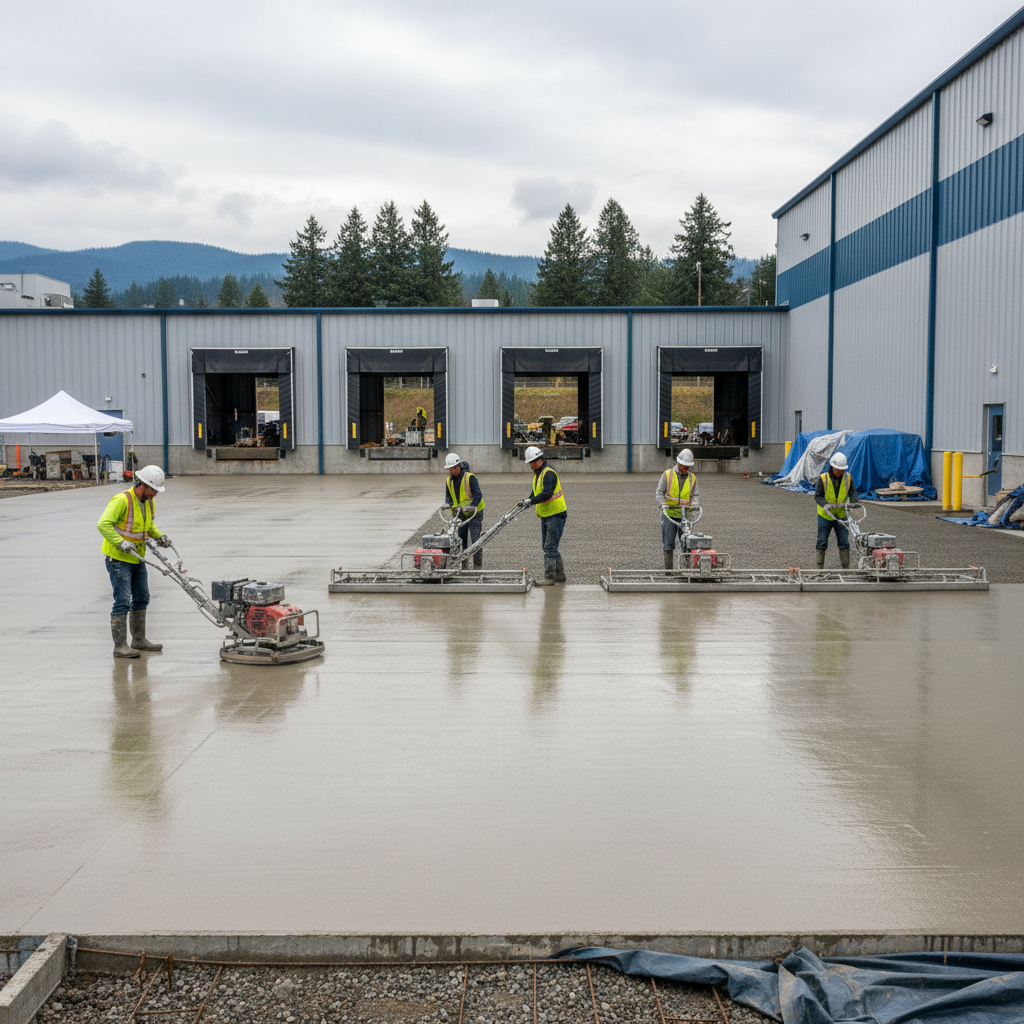
Commercial-scale concrete work requires specialized equipment—laser-guided screeds for large slabs, power trowels for smooth finishes, and adequate forming systems. Contractors should demonstrate familiarity with structural engineering plans, reinforcement schedules, and mix design specifications. Ask about their relationships with local ready-mix suppliers and testing laboratories that verify concrete strength and quality.
How to Evaluate Bids and Proposals
Comparing contractor proposals requires understanding what elements constitute a comprehensive commercial concrete bid. Incomplete or vague proposals signal contractors who may lack experience or intend to submit change orders later.
Essential Bid Components
Complete commercial proposals should detail:
- Scope of work: Specific deliverables including excavation depth, subgrade preparation, reinforcement specifications, concrete mix design, and finish requirements
- Timeline: Detailed schedule with milestone dates and weather contingency allowances
- Materials specifications: Concrete strength (psi), admixtures, reinforcement type and placement
- Exclusions: Clear statement of work NOT included (utility coordination, site access improvements, etc.)
- Payment terms: Draw schedule tied to completion milestones, not calendar dates
Red Flags in Proposals
Beware of proposals that use vague language like “standard commercial mix” without specifying compressive strength, those lacking detailed timelines, or bids significantly below competitors without clear explanation. Contractors who resist providing references or Certificate of Insurance documents before contract signing often create problems during construction.
Questions to Ask During Bid Review
Clarify how contractors handle unforeseen conditions like poor soil bearing capacity or unexpected groundwater. Ask about their protocol for coordinating with Portland General Electric or Northwest Natural Gas when working near utility corridors throughout Salem’s commercial zones (zip code 97301 encompasses much of the downtown and adjacent business districts). Understanding their change-order process before signing prevents disputes during construction.
Working Successfully with Your Concrete Contractor
Contract award marks the beginning of a partnership that requires active management and clear communication. Successful commercial concrete projects in Salem result from collaborative relationships between owners, general contractors, and specialty trades.
Pre-Construction Planning
Schedule a pre-construction meeting to review site logistics, access points, material staging areas, and coordination with other trades. Establish communication protocols—who makes field decisions, how changes are documented, and what constitutes acceptable daily progress. When working with experienced teams, this planning phase prevents most common conflicts.
Quality Control and Inspections
Commercial concrete work requires multiple inspection points: subgrade verification before pour, reinforcement placement inspection, fresh concrete testing (slump, air content, temperature), and strength testing through cylinder samples. City of Salem building inspectors must approve critical stages before proceeding—contractors should schedule these inspections proactively to avoid delays.
Managing Weather Delays
Oregon weather creates scheduling uncertainty. Establish clear weather delay policies in your contract—what conditions trigger postponement, how rescheduling occurs, and whether any costs shift. Experienced contractors maintain flexibility in their schedules and communicate proactively when weather threatens planned pours.
Frequently Asked Questions
How long does commercial concrete take to cure before use?
Light foot traffic is generally safe after 24-48 hours, but commercial slabs require 7 days minimum before vehicle traffic and typically 28 days to reach full design strength. Heavy equipment and racking systems should not be installed until 28-day cylinder tests confirm adequate strength. Salem’s cool, damp climate can slow curing, making proper scheduling essential.
What concrete strength is required for commercial applications?
Most commercial slabs use 3,500-4,000 psi concrete, while heavy industrial floors and loading docks may require 4,500-5,000 psi or higher. Your structural engineer specifies the required strength based on anticipated loads. Parking structures and elevated decks have specific mix requirements including air entrainment and supplementary cementitious materials for durability.
Should I choose a contractor who offers design-build services?
Design-build delivery can streamline projects by creating single-source responsibility for design and construction. This approach works well for straightforward commercial projects like parking lots or warehouse expansions. Complex projects with specific architectural requirements may benefit from traditional design-bid-build to ensure independent design oversight.
How do I verify a contractor’s Oregon CCB license?
Visit the Oregon Construction Contractors Board website and use their license lookup tool. Enter the contractor’s business name or CCB number to verify active status, coverage limits, and complaint history. Licensed contractors must maintain bonds and insurance, providing financial protection if problems arise.
What warranties should commercial concrete contractors provide?
Standard warranties cover workmanship defects for 1-2 years, though materials like concrete and reinforcement have inherent durability when properly installed. Warranties should specify what conditions void coverage (improper maintenance, overloading beyond design specifications, etc.) and the process for claiming warranty service. Get all warranty terms in writing before contract signing.
Conclusion
Selecting qualified commercial concrete contractors in Salem, Oregon requires evaluating technical capabilities, local regulatory knowledge, and project management experience beyond simply comparing bid prices. Oregon’s climate demands contractors who understand air-entrained mixes, proper curing protocols, and freeze-thaw durability—shortcuts in these areas create expensive failures within years.
Successful commercial concrete projects throughout Salem, from West Salem retail centers to Northeast Salem industrial parks, result from thorough contractor vetting, complete bid specifications, and collaborative project management. Verify licensing and insurance, review portfolios of similar work, and establish clear communication protocols before breaking ground.
Whether you’re planning a warehouse expansion, parking lot replacement, or new commercial foundation, investing time in contractor selection prevents schedule delays, cost overruns, and quality problems. For guidance on your specific commercial concrete needs, contact experienced local contractors who can assess your project requirements and provide detailed proposals.
Sources and References
- Oregon Construction Contractors Board – Licensing and regulatory requirements for commercial concrete contractors
- Federal Highway Administration (FHWA.gov) – Heavy vehicle load standards and pavement design
- Oregon.gov – State construction regulations and building code requirements
- City of Salem Building Department – Local permitting and inspection requirements for commercial construction