
Last Updated: January 14, 2026
Are the cracks in your concrete driveway or patio widening every winter? For property owners in Salem, OR, understanding concrete expansion joint filler isn’t just about aesthetics—it’s about preventing costly repairs down the road. The Pacific Northwest’s freeze-thaw cycles place unique demands on concrete structures, making proper joint treatment essential for long-term durability.
From the State Capitol complex to residential driveways throughout the 97301 and 97302 zip codes, every concrete installation in Salem faces the same challenge: managing thermal expansion and contraction. When done correctly, expansion joint fillers extend the life of your concrete surfaces by decades. When ignored or improperly installed, they lead to spalling, water infiltration, and structural damage.
Quick Answer: What Is Concrete Expansion Joint Filler?
Concrete expansion joint filler is a compressible material installed in gaps between concrete slabs to accommodate thermal expansion, contraction, and movement. It prevents cracking, water infiltration, and structural damage by allowing concrete sections to move independently without exerting pressure on adjacent slabs or fixed structures.
Key Takeaways:
- Expansion joint fillers protect concrete from freeze-thaw damage common in Salem’s climate
- Different applications require specific filler types: preformed boards for sidewalks, semi-rigid polyurea for industrial floors
- Installation timing directly affects filler performance and longevity
- Proper joint spacing and filler selection prevent costly repairs and extend concrete life
- Professional installation ensures compliance with local building codes and optimal performance
Understanding Expansion Joint Fillers for Pacific Northwest Conditions
The Willamette Valley’s climate presents specific challenges for concrete structures. Temperature swings from winter lows in the 30s to summer highs in the 90s cause concrete to expand and contract repeatedly throughout the year. Without proper joint treatment, this movement creates stress that manifests as cracks, spalling, and structural failure.
Why Salem Properties Need Quality Joint Fillers
Salem’s freeze-thaw cycles are less severe than eastern Oregon, but they’re frequent enough to cause significant damage. When water penetrates unsealed joints and freezes, it expands with tremendous force—enough to crack even properly reinforced concrete. The National Weather Service data shows Salem experiences an average of 15-25 freeze-thaw cycles annually, each one testing your concrete’s joint integrity.
Our team regularly works with properties near the Oregon State Capitol and throughout West Salem, where we’ve observed that structures with properly installed expansion joint fillers consistently outlast those without by 20-30 years. This longevity difference becomes especially pronounced in concrete driveways and exterior slabs exposed to de-icing salts and moisture.
Types of Expansion Joint Fillers Used in Salem
Not all joint fillers perform equally in Oregon’s climate. The right choice depends on your application, traffic loads, and exposure conditions:
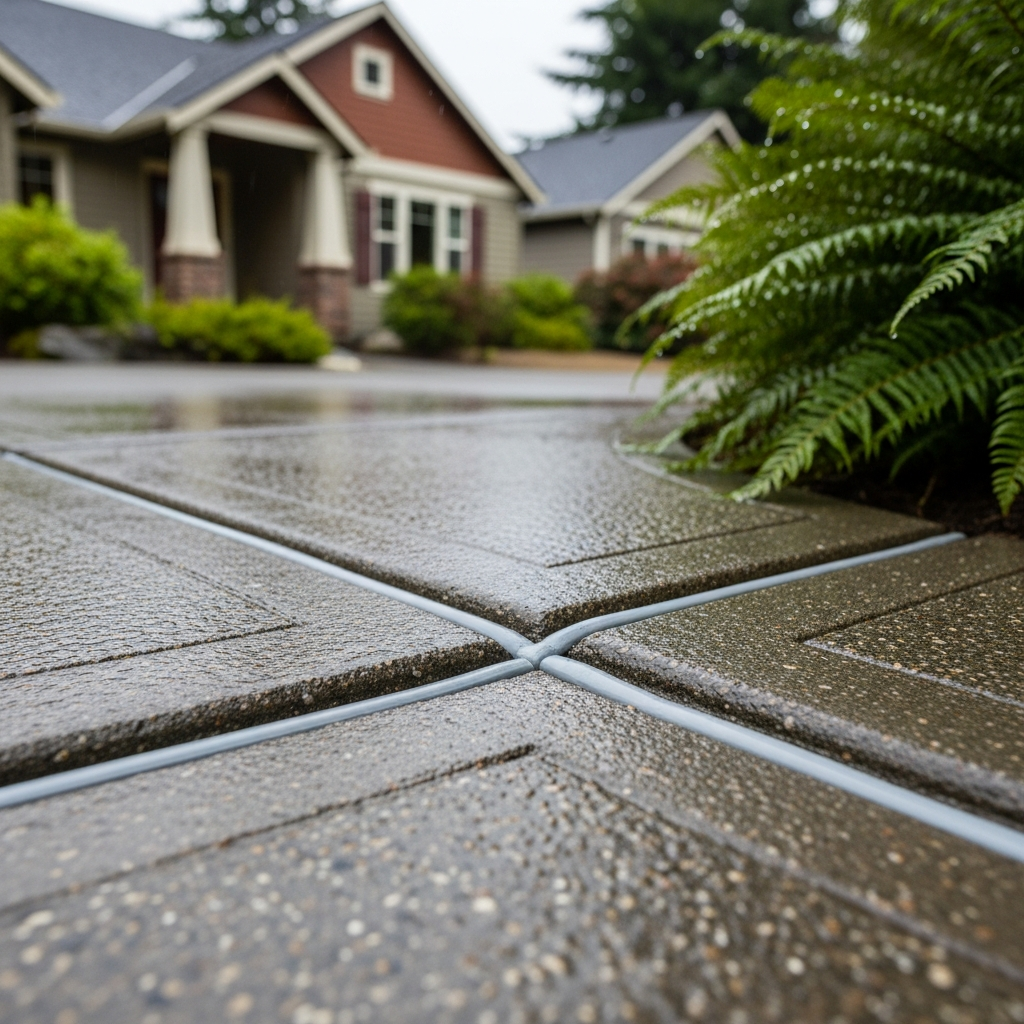
Preformed Expansion Joint Fillers: These asphalt-impregnated fiberboard or cork materials work well for sidewalks, residential driveways, and concrete patios. They compress as concrete expands and recover when it contracts. We typically install these at regular intervals and where slabs meet fixed structures like building foundations or retaining walls.
Semi-Rigid Polyurea and Epoxy Fillers: Industrial facilities and commercial properties throughout Salem increasingly specify these for interior floors and high-traffic areas. Unlike soft elastomeric sealants, semi-rigid fillers support hard-wheel traffic from forklifts and pallet jacks while still accommodating joint movement.
Elastomeric Sealants with Backer Rod: For parking structures and building expansion joints, elastomeric sealants paired with closed-cell foam backer rod provide watertight seals that accommodate significant movement. These systems are common in Salem’s larger civic and commercial projects.
Local Material Considerations
We source aggregate from nearby quarries to match the thermal expansion characteristics of existing concrete infrastructure throughout Marion County. This attention to material compatibility reduces differential movement at joints and extends filler life. Before any project, we coordinate with Portland General Electric to identify and mark underground utilities—a critical step given the extensive utility networks beneath Salem’s older neighborhoods.
Common Mistakes in Expansion Joint Installation
Over two decades working in the Salem market, we’ve seen the same errors repeated across residential, commercial, and industrial projects. Understanding these mistakes helps property owners make informed decisions and avoid costly repairs.
Installing Joint Filler Too Early
Concrete continues to shrink for weeks or months after placement as excess water evaporates and the cement hydrates. According to research from the American Concrete Institute, installing semi-rigid joint fillers before this shrinkage completes creates excessive stress on the filler material. When the concrete later expands during summer heat, the over-compressed filler either debonds or protrudes above the surface—a particular problem for stamped concrete and polished floors.
The optimal timing varies by project, but for most Salem installations, we wait 60-90 days for interior slabs and 30-60 days for exterior work before applying semi-rigid fillers. This patience prevents the filler protrusion issues we’ve observed in warehouse floors throughout the Keizer and North Salem industrial areas.
Inadequate Joint Preparation
Joint sidewalls must be clean, dry, and free of debris or laitance for proper filler adhesion. Rushed contractors often skip this step, leading to early debonding. When our crews install joint filler in Salem, we use wire brushes, compressed air, and sometimes chemical cleaners to ensure pristine joint surfaces. This preparation is especially critical in saw-cut joints where cutting slurry can coat sidewalls with a bond-breaking film.
Incorrect Joint Spacing and Width
The City of Salem’s building codes reference ACI guidelines for joint spacing, typically requiring control joints every 10-15 feet for sidewalks and slabs. Expansion joints—which actually accommodate movement—should be placed at intersections with fixed structures and at regular intervals in large slabs. Using joint widths that don’t match the expected movement range causes fillers to either compress beyond their capacity or fail to maintain contact with sidewalls.
Best Practices for Concrete Joint Treatment in Salem
Professional installation following established protocols ensures joint systems perform as designed throughout their service life. These practices have proven effective across thousands of projects in the Willamette Valley.
Match Filler Type to Application Demands
Residential sidewalks and driveways perform well with preformed fiberboard fillers that cost $2-4 per linear foot installed. Industrial floors with forklift traffic require semi-rigid polyurea systems at $8-15 per linear foot. Parking structures and bridges need engineered joint systems with metal cover plates, precompressed foam, and water stops—investments of $50-200 per linear foot that deliver decades of low-maintenance service.
We evaluate traffic loads, exposure conditions, joint width, and movement range before recommending a filler system. Properties throughout the 97301, 97302, and 97304 zip codes face similar climate conditions but vastly different structural demands based on their use.
Implement Proper Installation Timing
For preformed expansion joint filler at building interfaces, installation happens during concrete placement—the material acts as a form edge and remains in place as concrete is placed against it. For saw-cut control joints that will receive semi-rigid filler, timing depends on shrinkage completion and climate. Salem’s mild, wet winters mean slower drying and longer wait times compared to eastern Oregon’s dry climate.
Consider Long-Term Maintenance Requirements
Preformed fiberboard in exterior applications typically needs replacement every 10-15 years as weathering degrades the material. Semi-rigid polyurea and epoxy fillers in protected interior environments can last 20-30 years. When we design concrete services for Salem properties, we factor lifecycle costs, not just installation expenses. A slightly more expensive system that eliminates maintenance for decades often proves the economical choice.
Step-by-Step Installation Guide for Expansion Joint Fillers
Whether you’re a property manager overseeing contractor work or a homeowner understanding the process, these steps outline professional joint filler installation:
Step 1: Joint Design and Layout
Before concrete placement, establish joint locations based on slab dimensions, structural elements, and expected traffic patterns. Expansion joints should separate slabs from fixed structures (building foundations, columns, walls) and divide large slabs into manageable sections. Control joints manage shrinkage cracking between expansion joints. For Salem projects, we typically space expansion joints 50-100 feet apart for large slabs, with control joints every 10-15 feet between them.
Step 2: Install Preformed Filler During Placement
For expansion joints at building perimeters or between pours, preformed fiberboard or foam is installed against the fixed element or edge form before fresh concrete arrives. The material must extend the full depth of the slab and be securely held in vertical position. When concrete is placed and consolidated, it keys against the compressible filler, creating a clean joint.
Step 3: Create Saw-Cut Joints (for Control Joints)
Within 6-18 hours of placement—when concrete is firm enough to support the saw but soft enough to cut cleanly—saw joints are cut to one-quarter to one-third slab depth. These control joints create a weak plane where shrinkage cracks form in a controlled, straight line rather than randomly across the slab. In Salem’s cool, damp conditions, we monitor concrete strength carefully to hit this narrow timing window.
Step 4: Prepare Joint Surfaces
After concrete has cured sufficiently (timing varies by application), clean joints thoroughly. Use compressed air to remove loose particles, wire brushes to remove laitance from sidewalls, and approved solvents if necessary to eliminate bond-breaking contaminants. For semi-rigid fillers, joints must be absolutely clean and dry.
Step 5: Install Backer Rod (If Applicable)
For joints receiving elastomeric sealants, closed-cell foam backer rod is installed to the proper depth. The rod provides a backing surface for the sealant and controls its shape, ensuring proper bond and movement capacity. Rod diameter should be 25% larger than joint width for a snug fit.
Step 6: Apply Joint Filler or Sealant
Following manufacturer instructions for temperature range and application method, install the joint filler. Semi-rigid materials are typically poured or pumped into joints and self-level. Sealants are tooled to proper depth and shape. For most Salem projects, fall or spring installation provides ideal temperature conditions—avoiding winter cold that slows curing and summer heat that can cause premature setup.
Step 7: Protect During Cure and Monitor Performance
Most joint fillers require protection from traffic and moisture during initial cure—typically 24-72 hours. After cure, inspect joints periodically for debonding, cracking, or displacement. Well-installed systems require minimal maintenance but benefit from annual inspection and cleaning to remove debris that can prevent joint movement.
Frequently Asked Questions About Concrete Joint Fillers in Salem
How long does expansion joint filler last in Oregon’s climate?
Preformed fiberboard in exterior applications typically lasts 10-15 years before weathering requires replacement. Semi-rigid polyurea and epoxy fillers in protected interior floors can perform for 20-30 years. High-quality elastomeric sealants with proper backer rod last 15-25 years depending on UV exposure and traffic. Salem’s moderate climate extends filler life compared to areas with more extreme temperature swings.
Can I install expansion joint filler myself?
Simple preformed filler replacement in residential sidewalks or small slabs is DIY-friendly with basic tools and careful attention to joint preparation. However, semi-rigid polyurea systems and structural joint assemblies require specialized equipment, technical knowledge, and experience to install correctly. Improper installation voids material warranties and often leads to premature failure. For critical applications or commercial projects, professional installation ensures optimal performance and code compliance.
What’s the difference between expansion joints and control joints?
Expansion joints are designed to accommodate movement in all directions—expansion, contraction, and sometimes horizontal displacement. They typically use compressible filler materials and completely separate adjacent concrete sections. Control joints (also called contraction joints) are saw-cut or tooled grooves that create a weak plane where shrinkage cracks form predictably. Many control joints receive sealant for weather protection but don’t accommodate significant expansion. The distinction matters for material selection and installation timing.
Do interior concrete floors need expansion joints?
Interior slabs-on-grade experience less thermal movement than exterior concrete but still require control joints to manage shrinkage. True expansion joints are needed where interior slabs meet building columns, walls, or adjacent slabs, and at building expansion joints that extend through the floor. Warehouse and industrial facilities throughout Salem increasingly specify semi-rigid joint fillers even for interior control joints to support hard-wheel traffic and prevent edge damage.
How much does professional joint filler installation cost?
Costs vary widely based on filler type and application complexity. Basic preformed fiberboard installation runs $2-4 per linear foot. Semi-rigid polyurea for industrial floors costs $8-15 per linear foot. Elastomeric sealant systems with backer rod range from $5-12 per linear foot. Engineered structural joint systems for parking decks or bridges can exceed $50-200 per linear foot. These figures include materials and professional installation in the Salem market as of January 2026.
Conclusion: Protecting Your Salem Concrete Investment
Concrete expansion joint filler in Salem, OR represents a small fraction of overall construction costs but plays a disproportionate role in long-term performance. From residential driveways in West Salem to industrial warehouses near the Keizer border, proper joint treatment protects your investment from Oregon’s climate extremes and extends concrete service life by decades.
The key is matching filler type, installation timing, and maintenance planning to your specific application. Preformed materials work well for sidewalks and residential projects. Semi-rigid systems excel in high-traffic industrial environments. Engineered assemblies deliver watertight, durable performance for critical infrastructure. Professional installation ensures these systems perform as designed, preventing the costly repairs that result from inadequate joint treatment.
As Salem continues to grow—with new residential developments, expanded commercial districts, and infrastructure improvements—the demand for quality concrete work and proper joint systems will only increase. Property owners who invest in correct joint detailing and material selection today avoid the spalling, cracking, and water damage that plague structures where joints were afterthoughts rather than integral design elements.
Whether you’re planning new construction, repairing existing concrete, or evaluating contractor proposals, understanding expansion joint fillers empowers you to make informed decisions that protect your property and your budget for years to come.
Sources and References
- American Concrete Institute (ACI) – www.concrete.org
- National Weather Service – www.weather.gov
- Technical research on concrete joint systems and Pacific Northwest construction practices
- Field observations and case studies from Salem-area concrete projects
Disclaimer: This article provides general information about concrete expansion joint fillers and installation practices in Salem, OR. Specific project requirements may vary based on site conditions, structural design, local building codes, and material specifications. Consult with qualified professionals and obtain necessary permits before undertaking concrete construction or repair work.