
Last Updated: December 24, 2025
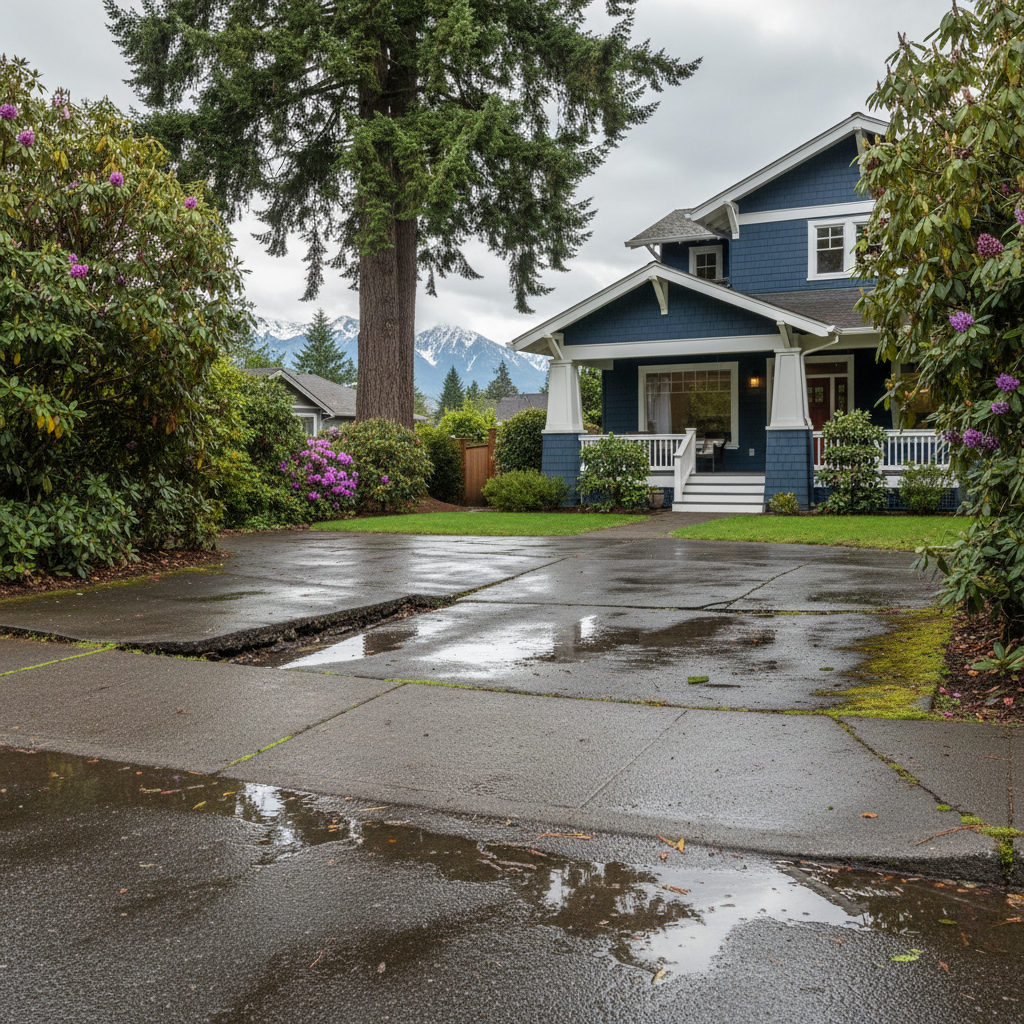
Is your concrete driveway sinking near the curb, creating a dangerous trip hazard? Does rainwater pool against your foundation because the walkway slopes the wrong direction? If you’re dealing with uneven concrete around your Salem, OR property, you’re facing more than just an eyesore—you’re looking at potential structural damage, water intrusion, and liability concerns that worsen with every passing season.
The good news: concrete floor leveling in Salem, OR offers a cost-effective alternative to complete slab replacement. Modern techniques can restore your sunken concrete to its original position in hours, not days, using minimally invasive methods that preserve your existing investment while eliminating hazards.
Quick Answer: What You Need to Know About Concrete Leveling
Concrete leveling raises sunken slabs by injecting material beneath the surface to fill voids and restore elevation. In Salem, OR, professionals use three primary methods: polyurethane foam injection (fastest, lightweight), stone slurry grout (traditional, durable), and mudjacking (older technique). Most residential projects complete in 2-4 hours with same-day usability, costing 50-70% less than replacement.
Key Takeaways:
- Polyurethane foam leveling offers precision and minimal weight addition
- Stone slurry grout provides long-term stability for heavier applications
- Willamette Valley soil conditions require specialized leveling approaches
- Most projects cost $500-$1,500 depending on slab size and method
- Professional leveling extends concrete lifespan by 10-15 years
Understanding Concrete Settlement in Salem, OR
Before exploring concrete leveling services, it’s essential to understand why settlement occurs. Salem’s unique geographic position in the Willamette Valley creates specific challenges for concrete installations. The region’s clay-heavy soils, seasonal rainfall patterns, and occasional freeze-thaw cycles combine to create conditions where soil compaction and erosion frequently undermine concrete slabs.
When concrete is initially poured, the subbase should be properly compacted and graded. However, over time, water infiltration, root growth, poor drainage, and natural soil consolidation create voids beneath slabs. Without support, concrete sections sink under their own weight and any additional load, creating uneven surfaces that worsen progressively.
Why Salem Properties Experience Concrete Settlement
The USDA Natural Resources Conservation Service identifies the Willamette Valley’s predominant soil types as silty clay loam with high moisture retention. During Salem’s wet season (November through March), these soils absorb significant water, causing expansion. When summer drought arrives, rapid drying leads to soil shrinkage and compaction—a cycle that creates voids beneath concrete over years.
Properties in neighborhoods like West Salem near Wallace Road NW or areas around Bush’s Pasture Park frequently experience settlement issues due to their proximity to natural drainage patterns and older construction standards that didn’t account for modern soil stabilization techniques. We’ve observed that driveways installed before 2000 in the South Salem area (zip code 97302) often show settlement near aprons and garage approaches, where vehicle weight concentrates stress on inadequately compacted fill.
Common Signs Your Concrete Needs Leveling
Recognizing settlement early prevents secondary damage. Key indicators include:
- Visible height differences between adjacent concrete sections (threshold: 1/4 inch creates trip hazards)
- Water pooling against foundations or in driveway sections after rain
- Gaps appearing between concrete and structures like garage doors or steps
- Cracks widening as unsupported sections flex under weight
- Separation at control joints exceeding original spacing
When our teams work in neighborhoods around Lancaster Drive NE or near the Cascade Gateway Park area, we often encounter homeowners who’ve ignored settlement for years, allowing what could have been a simple $800 repair to become a $3,000+ replacement scenario due to extensive cracking and structural complications.
Modern Concrete Leveling Methods: Comparing Your Options
Three primary techniques dominate today’s concrete floor leveling Salem OR market, each with distinct advantages for specific applications and soil conditions.
Polyurethane Foam Injection: Precision and Speed
Introduced commercially around 2012, polyurethane foam leveling (also called polyjacking) has become the preferred method for residential applications. The process involves drilling small 5/8-inch holes through the sunken slab at strategic locations, then injecting a two-part polyurethane foam that expands within seconds, filling voids and lifting concrete with hydraulic pressure.
The foam’s expansion is controllable, allowing technicians to achieve precise elevation adjustments measured in fractions of an inch. Unlike heavier materials, polyurethane weighs just 2-4 pounds per cubic foot—approximately 100 times lighter than concrete—meaning it adds virtually no additional load to already compromised soil. The material is waterproof, won’t wash out during Salem’s rainy season, and cures in minutes, allowing immediate use of the repaired surface.
According to concrete restoration specialists, polyurethane’s lightweight properties make it particularly effective for Salem’s moisture-sensitive soils, which can’t support additional weight from denser leveling compounds. The foam creates a stable, permanent solution that resists future settlement when properly installed.
Stone Slurry Grout Leveling: Durability and Value
Developed in the 1980s by innovator Grover Miller, stone slurry grout leveling improved upon traditional mudjacking by using crushed limestone aggregate mixed with Portland cement and water. This cleaner, more consistent material pumps through 1-inch holes drilled in the slab, filling voids and providing hydraulic lift.
Stone slurry weighs approximately 100 pounds per cubic foot—significantly heavier than foam but still less than concrete. The material works well for larger commercial applications, concrete driveways, and situations where additional compressive strength benefits the repair. Slurry typically costs 20-30% less than polyurethane, making it attractive for budget-conscious projects.
Due to Oregon’s freeze-thaw cycles—though milder than Midwest winters, still a factor in Salem’s winter weather—we recommend air-entrained stone slurry formulations for enhanced durability. The microscopic air bubbles provide expansion relief that prevents cracking when moisture freezes within the material.
Traditional Mudjacking: The Original Method
Mudjacking (slabjacking) dates to the early 1900s, when contractors pumped slurries of soil, cement, and water beneath slabs to raise them. While effective for heavy commercial work like highways and industrial floors, mudjacking’s heavier equipment, larger injection holes (up to 2 inches), and messier material have made it less popular for residential applications as newer technologies emerged.
The mixture typically weighs 120-140 pounds per cubic foot, adding substantial load to soil that already demonstrated compaction issues. Modern contractors increasingly favor foam or stone slurry for residential concrete leveling in Salem, OR, reserving mudjacking for specific commercial scenarios where its characteristics provide advantages.
| Method | Hole Size | Weight (lb/cu ft) | Cure Time | Best For |
|---|---|---|---|---|
| Polyurethane Foam | 5/8 inch | 2-4 | 15 minutes | Residential, precision work |
| Stone Slurry Grout | 1 inch | 100 | 24 hours | Driveways, larger areas |
| Mudjacking | 1.5-2 inches | 120-140 | 24-48 hours | Commercial, heavy-duty |
Common Mistakes Homeowners Make With Concrete Settlement
Understanding what not to do prevents costly errors and ensures successful concrete restoration.
Delaying Repairs Until Replacement Becomes Necessary
The most expensive mistake is waiting. A slab that settles 1-2 inches can typically be leveled for $500-$1,200. That same slab, left to settle 4+ inches with extensive cracking, may no longer be salvageable, forcing a $4,000-$8,000 replacement. We’ve seen properties in the Hayesville area (zip code 97305) where deferred maintenance on walkway settlement led to foundation water intrusion requiring extensive remediation—turning an $800 leveling job into a $15,000+ repair.
Settlement accelerates over time. Each winter’s freeze-thaw cycle widens cracks, allows more water penetration, and erodes additional soil from beneath the slab. Early intervention preserves your investment and prevents secondary damage.
Attempting DIY Leveling With Inadequate Methods
Internet tutorials promoting “self-leveling compound” or “grout injection” as DIY solutions misrepresent the complexity of proper concrete leveling. Professional equipment—specialized pumps, pressure gauges, void detection tools, and trained operators—ensures controlled, uniform lifting without over-stressing the slab.
Amateur attempts frequently result in cracked slabs, uneven lifts, or material that washes out during the first heavy rain. The cost to repair a failed DIY leveling attempt often exceeds what professional service would have cost initially.
Ignoring Underlying Drainage Issues
Leveling addresses symptoms, but sustainable repairs require identifying root causes. If settlement resulted from gutter downspouts discharging directly onto the slab edge, or improper grading directing surface water under the concrete, leveling provides only temporary relief unless drainage corrections accompany the work.
Before digging or making drainage modifications, Oregon law requires property owners to coordinate with Salem Electric for utility location marking—especially important in neighborhoods near Fairview Industrial Drive SE where underground utilities are densely concentrated. Reputable contractors include drainage assessment as part of their evaluation process.
Best Approach to Concrete Leveling in Salem, OR
Successful concrete restoration follows a systematic process that addresses both immediate settlement and long-term stability.
Professional Assessment and Method Selection
Quality contractors begin with thorough site evaluation, measuring settlement amounts, inspecting for structural cracks, and probing to estimate void sizes. They assess soil conditions, drainage patterns, and potential contributing factors before recommending a specific leveling method.
For most Salem residential applications—walkways, patios, driveway approaches, and pool decks—polyurethane foam provides optimal results. Its lightweight properties suit our clay soils, and precision control accommodates the tight tolerances required near building foundations. Stone slurry works well for larger driveway sections in neighborhoods like Four Corners or South Salem where budget considerations prioritize cost-effectiveness over ultra-lightweight solutions.
The Leveling Process: What to Expect
Professional concrete floor leveling typically follows this sequence:
- Preparation: The area is cleaned and injection hole locations marked based on void mapping
- Drilling: Holes are precisely drilled through the slab at calculated depths
- Injection: Material is pumped beneath the slab, monitoring lift with laser levels
- Adjustment: Multiple injection points ensure uniform support and precise elevation
- Finishing: Holes are patched with color-matched concrete, leaving minimal evidence
Most residential projects complete in 2-4 hours. Polyurethane-lifted slabs can support foot traffic immediately and vehicle traffic within an hour. Stone slurry requires 24-hour curing before heavy use.
Post-Leveling Maintenance and Protection
After leveling, protect your investment with proper maintenance. Seal cracks within 30 days using polyurethane or silicone-based sealants designed for concrete joints—products like NexusPro provide flexible, waterproof barriers that prevent water infiltration while accommodating seasonal expansion and contraction.
Address drainage issues by extending downspouts at least 6 feet from foundations, installing French drains where surface water accumulates, and maintaining positive grading (minimum 2% slope away from structures). These measures prevent soil erosion that could undermine your freshly leveled concrete.
How to Choose a Concrete Leveling Contractor in Salem, OR
Selecting the right contractor ensures quality results and long-term satisfaction. Start by verifying credentials with the Oregon Construction Contractors Board—all contractors performing work over $1,000 must maintain active CCB licenses. Check for general liability insurance and workers’ compensation coverage to protect your property and limit liability.
Questions to Ask Potential Contractors
When obtaining estimates, ask these critical questions:
- What method do you recommend and why? Quality contractors explain their reasoning based on your specific conditions
- How do you address underlying causes? Look for comprehensive assessment, not just quick fixes
- What warranty do you provide? Reputable firms warranty workmanship for 2-5 years minimum
- Can you provide local references? Ask for recent projects in Salem neighborhoods similar to yours
- Do you handle drainage corrections? Full-service providers offer complete solutions
Red Flags to Avoid
Beware of contractors who pressure immediate decisions, require large upfront deposits (Oregon law limits deposits to $1,000 or one-third of contract price, whichever is less), or can’t provide proof of licensing and insurance. Avoid “we’re working in your neighborhood” door-to-door solicitors—legitimate contractors don’t need high-pressure tactics.
Unrealistically low bids often indicate inexperience or substandard materials. Quality polyurethane foam and proper equipment represent significant investments; contractors must charge accordingly to provide lasting results. Local options worth evaluating include Salem Concrete, TerraFirma Foundation Systems, and other established providers with verifiable track records in the Willamette Valley.
Frequently Asked Questions About Concrete Leveling
How long does concrete leveling last?
Professional concrete leveling using polyurethane foam or stone slurry typically lasts 10-15 years or longer when underlying drainage issues are addressed. The materials themselves are permanent, but longevity depends on preventing future soil erosion and maintaining proper site drainage.
What’s the cost of concrete leveling compared to replacement?
Concrete leveling typically costs 50-70% less than replacement. A standard residential walkway leveling might run $500-$1,200, while replacing that same section would cost $2,000-$4,000 including demolition, disposal, and new installation. Driveways show even greater savings—leveling a 500-square-foot driveway section averages $1,200-$2,500 versus $3,500-$7,500 for replacement.
Can all settled concrete be leveled?
Most settled concrete qualifies for leveling if the slab remains structurally intact. Slabs with extensive cracking (more than 30% of surface area), severe spalling, or settlement exceeding 6 inches may require replacement. A professional assessment determines suitability—contractors evaluate slab thickness, crack patterns, and structural integrity before recommending leveling or replacement.
Will leveling work in Salem’s wet climate?
Yes—modern leveling materials are specifically engineered for moisture exposure. Polyurethane foam is hydrophobic (water-repellent) and won’t absorb moisture or degrade when saturated. Stone slurry cures to a dense, waterproof mass that resists erosion. Both materials outperform traditional mudjacking in wet conditions, making them ideal for Salem’s rainy season challenges.
When is the best time of year to level concrete in Salem?
Concrete leveling can be performed year-round in Salem’s moderate climate. Summer offers advantages of dry conditions and predictable weather, but spring and fall work well too. Winter leveling is possible during dry spells, though contractors may avoid days with active precipitation or temperatures below 35°F. Schedule projects during Oregon’s drier months (June-September) for maximum scheduling flexibility.
Conclusion: Protecting Your Salem Property Investment
Concrete settlement isn’t just a cosmetic issue—it represents a progressive threat to your property’s safety, value, and structural integrity. Modern concrete floor leveling in Salem, OR provides a proven, cost-effective solution that restores functionality while preserving your existing investment.
Whether you’re dealing with a tripping hazard on your front walkway, water pooling against your foundation, or uneven driveway sections, professional leveling offers lasting correction at a fraction of replacement cost. By choosing the appropriate method—polyurethane foam for precision residential work or stone slurry for larger, budget-conscious projects—and addressing underlying drainage issues, you can extend your concrete’s lifespan by 10-15 years or more.
Don’t wait until settlement forces expensive replacement. Early intervention protects your property, eliminates liability concerns, and preserves curb appeal. For homeowners throughout Salem—from West Salem and Hayesville to South Salem and Four Corners—professional concrete leveling delivers results that last.
Ready to restore your concrete? Contact us for a professional assessment and discover how modern leveling techniques can save you thousands while delivering superior, lasting results.
Sources and References
- Oregon Construction Contractors Board – Licensing Requirements and Contractor Verification (oregon.gov/ccb)
- USDA Natural Resources Conservation Service – Soil Survey and Classification Data (nrcs.usda.gov)
- Research data on concrete leveling methods, historical development, and modern applications