
Last Updated: December 23, 2025
Are you planning a backyard transformation but worried about choosing the wrong contractor? In Salem, OR, where winter rains and freeze-thaw cycles test every outdoor installation, selecting the right concrete patio contractor makes the difference between a beautiful investment that lasts decades and a cracked, settling disaster within three years. The choice you make today will affect your property value, outdoor enjoyment, and maintenance costs for the next quarter-century.
As of December 2025, the Salem market includes over 200 concrete and paver specialists, from long-established firms to new operators. This competitive landscape offers homeowners excellent options but also requires careful vetting. We’ve seen firsthand how Oregon’s unique climate demands specific installation techniques that many contractors overlook—and how those shortcuts create expensive problems down the road.
Quick Answer: What Makes a Quality Salem Concrete Patio Contractor?
Quality concrete patio contractors in Salem, OR prioritize proper base preparation (minimum 8 inches of compacted aggregate), hold valid licensing and insurance, and understand Oregon’s wet climate requirements. They provide detailed written estimates, offer material warranties, and demonstrate experience with local soil conditions and drainage challenges.
Key factors to verify before hiring:
- Valid Oregon contractor license, bonding, and liability insurance
- Minimum 8-inch aggregate base with compaction testing
- References from projects completed in Salem’s climate zones
- Written warranties covering both materials and workmanship
- Detailed contracts specifying base materials, thickness, and drainage plans
- Experience with utility coordination (Pacific Power, Northwest Natural Gas)
Understanding Salem’s Concrete Patio Market in 2025
The Salem concrete patio market has evolved significantly, with homeowners increasingly demanding engineered solutions rather than basic installations. Recent data shows 128 verified homeowner reviews averaging 4.3 stars across major platforms, indicating strong competition and quality standards. Local firms like LME Concrete LLC, RBP Construction, and Liberty Concrete & Epoxy Floors have built reputations through consistent quality work adapted to regional conditions.
When our teams work throughout Salem—from West Salem near Wallace Marine Park to the neighborhoods around Bush’s Pasture Park—we consistently encounter soil conditions that require specialized base preparation. The Willamette Valley’s clay-rich soils and seasonal water tables demand attention to drainage that contractors from drier climates often miss.
The Local Climate Challenge
Salem receives approximately 40 inches of annual rainfall, with most precipitation occurring between October and May. This extended wet season creates unique challenges for concrete installations. Proper drainage systems aren’t optional—they’re essential for preventing water accumulation that leads to settling, cracking, and frost heave during occasional winter freezes.
Contractors experienced with Salem conditions understand that surface drainage must account for our clay soils’ poor percolation rates. We’ve seen numerous patios installed by out-of-area contractors who applied techniques that work in Portland’s better-draining soils but fail in Salem’s environment. The result: standing water, erosion around edges, and premature failure.
Material Longevity and Selection
According to industry data, material choice significantly impacts lifespan and maintenance:
| Material Type | Expected Lifespan | Maintenance Level |
|---|---|---|
| Concrete Pavers | 25-30 years | Low |
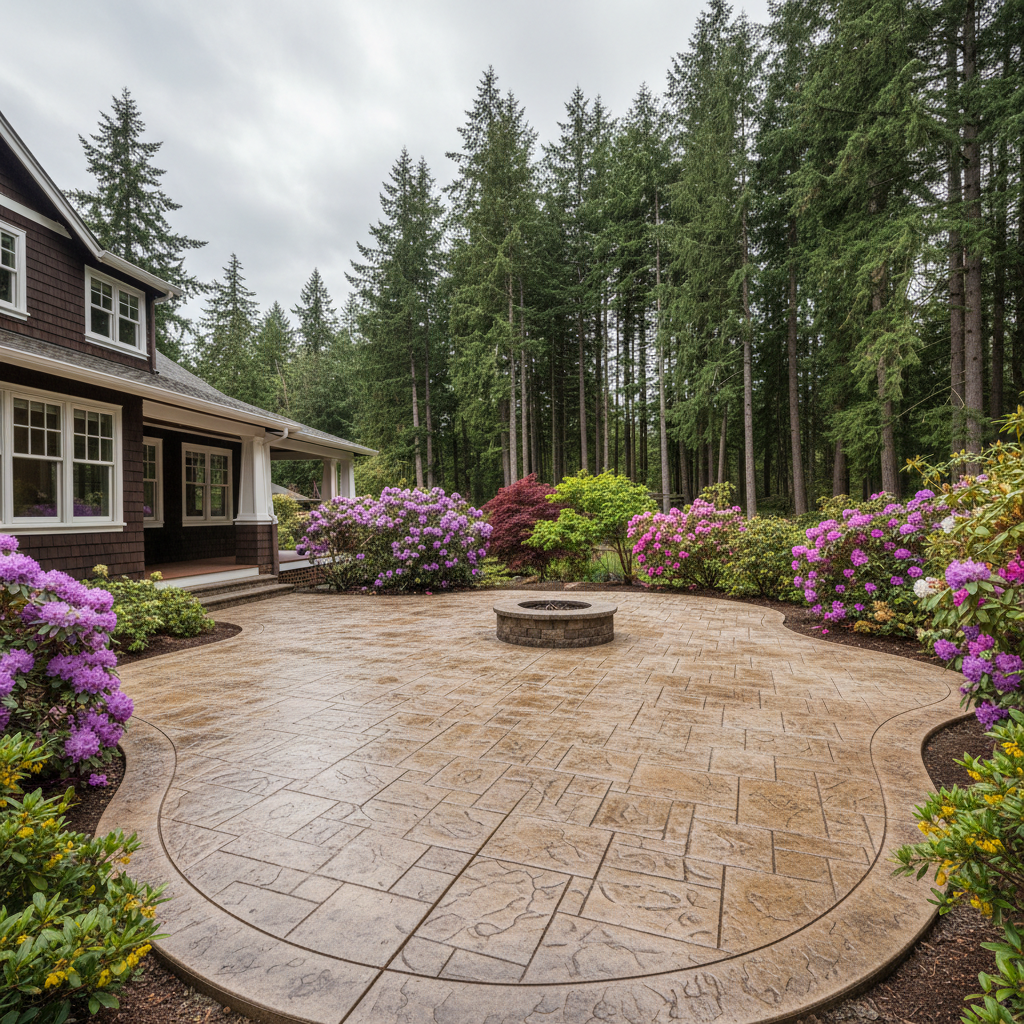
| Stamped Concrete | 15-25 years | Moderate |
| Flagstone | 50+ years | Moderate |
For Salem homeowners, concrete patio services typically focus on pavers and poured concrete due to their durability in wet conditions. Pavers offer the advantage of individual replacement if damage occurs, while properly installed poured concrete with control joints manages thermal expansion effectively.
Common Mistakes When Hiring Patio Contractors
After years working in the Salem area—from South Salem near Morningside and Fairmount neighborhoods to North Salem around Lancaster Drive—we’ve identified recurring mistakes homeowners make when selecting contractors. These errors cost thousands in repairs and create years of frustration.
Choosing Based on Price Alone
The lowest bid often indicates shortcuts in base preparation or materials. Quality concrete patio contractors in Salem, OR invest in proper excavation, compacted aggregate bases, and adequate drainage systems—costs that can’t be eliminated without compromising longevity. A patio installed with insufficient base depth (less than 6 inches) may save $800-1,200 initially but require $3,000-5,000 in repairs within five years.
We’ve replaced numerous failed patios where contractors skipped compaction testing or used sand bases instead of proper aggregate. In Salem’s wet climate, sand bases allow water infiltration that creates voids, leading to settling and cracking. The savings disappear quickly when repairs become necessary.
Skipping Licensing and Insurance Verification
Oregon requires contractor licensing for projects exceeding $1,000, yet unlicensed operators remain common. Working with unlicensed contractors voids homeowner protections, creates liability exposure, and often results in substandard work. Always verify current licensing through the Oregon Construction Contractors Board before signing contracts.
Insurance verification matters equally. Contractors should carry both general liability and workers’ compensation coverage. Without proper insurance, homeowners face potential liability for worker injuries or property damage during construction—risks that can exceed project costs by multiples.
Neglecting Utility Coordination
Before any excavation, contractors must coordinate with utility providers including Pacific Power, Northwest Natural Gas, and the City of Salem water department. Oregon law requires 811 utility locates before digging. Professional contractors handle this coordination automatically, but inexperienced operators sometimes skip this critical step, risking utility damage, service disruption, and significant repair costs.
Best Practices for Selecting Your Contractor
Finding the right contractor requires systematic evaluation beyond initial impressions. Our experience throughout Salem—including projects in West Salem (97304), South Salem (97302), and Northeast Salem (97301)—has shown which factors predict successful outcomes.
Request Detailed Written Proposals
Quality contractors provide comprehensive written proposals specifying base material types, depths, compaction methods, concrete specifications (PSI rating, air entrainment percentage), and drainage plans. Proposals should detail removal and disposal of existing materials, site preparation procedures, and finishing techniques. Vague estimates suggesting “standard installation” indicate contractors who may cut corners or lack systematic processes.
Ask specifically about base preparation. Contractors should specify minimum 8-inch depth of open-graded aggregate, compaction testing methods, and how they address Salem’s clay soils. For stamped concrete services, inquire about pattern options, color durability, and sealing schedules appropriate for Oregon’s wet climate.
Verify Local Project Experience
Request references from Salem-area projects completed within the past three years. Contact previous clients to ask about drainage performance during winter months, whether settling or cracking occurred, and how contractors handled any warranty issues. Viewing completed projects in person reveals quality details photos don’t show—edge details, joint placement, surface finishing consistency, and how installations weather over time.
Contractors familiar with Salem understand local conditions that outsiders miss. For example, we always specify air-entrained concrete for outdoor flatwork—a practice essential for freeze-thaw resistance that some contractors from milder climates overlook. This regional knowledge prevents problems before they start.
Compare Warranty Terms
Warranty coverage varies significantly among contractors. Standard warranties should cover settling, cracking from installation defects, and workmanship issues for minimum three years. Material warranties depend on products used—quality pavers often carry 25+ year manufacturer warranties, while concrete mix warranties typically span one year. Understand what’s covered and excluded, particularly regarding drainage issues and seasonal freeze-thaw effects.
The Installation Process: What to Expect
Understanding proper installation helps homeowners identify contractors who follow best practices versus those taking shortcuts. Professional patio installation follows systematic steps that account for Salem’s unique conditions.
Site Preparation and Base Construction
Proper installation begins with excavation to appropriate depth, typically 12-14 inches below finished grade to accommodate base material and surface layers. Contractors should probe soil conditions to identify soft spots requiring additional excavation or stabilization. In Salem’s clay soils, we often encounter areas requiring geotextile fabric to prevent base material migration into subsoil.
The base layer—minimum 8 inches of open-graded aggregate—gets placed in lifts and compacted using plate compactors or roller equipment. Quality contractors perform density testing to verify adequate compaction, typically targeting 95% of maximum density. This step prevents future settling that causes uneven surfaces and ponding water.
Drainage Integration
Given Salem’s rainfall patterns, surface drainage requires careful planning. Patios should slope minimum 2% (1/4 inch per foot) away from structures. In areas with poor soil drainage, contractors may recommend perimeter drains or catch basins to handle runoff. We’ve found that properties in lower-lying areas near Pringle Creek or Mill Creek watersheds often benefit from subsurface drainage systems that prevent water accumulation under patios.
Surface Installation and Finishing
For poured concrete, contractors should use minimum 3,500 PSI mix with air entrainment for freeze-thaw resistance. Control joints placed every 8-10 feet manage thermal expansion and control crack location. Surface finishing depends on desired appearance—broom finish for traction, smooth trowel for contemporary looks, or stamped patterns for decorative effects.
Paver installations require precision edge restraint systems and polymeric sand joints activated with water to prevent weed growth and sand migration. Individual paver placement and leveling determines final quality—rushed installations show uneven surfaces and irregular joint spacing that accelerate deterioration.
Frequently Asked Questions
How much does a concrete patio cost in Salem, OR?
Concrete patio costs in Salem typically range $12-25 per square foot for basic poured concrete and $15-35 per square foot for pavers or stamped designs. A 400-square-foot patio averages $5,600-10,000 depending on material choices, site preparation requirements, and finishing details. Complex drainage needs or difficult access can increase costs 15-25%.
What’s the best time of year to install a patio in Salem?
Late spring through early fall (May-September) provides optimal conditions for concrete work in Salem. Concrete requires temperatures above 50°F for proper curing, and dry weather facilitates base preparation and finishing. Booking contractors for summer installation typically requires 4-8 weeks advance scheduling during peak season.
Do I need permits for a concrete patio in Salem?
The City of Salem typically doesn’t require permits for ground-level patios not attached to structures, but regulations vary by property location and patio specifications. Patios requiring retaining walls over 4 feet or significant grading may need permits. Professional contractors familiar with Salem building codes advise on permit requirements during estimates.
How long should I wait before using a new concrete patio?
Concrete reaches sufficient strength for light foot traffic within 24-48 hours but requires 7 days before heavy use and 28 days to reach full strength. Avoid placing furniture or heavy items for one week, and wait 30 days before applying sealers. Paver patios can typically handle full use immediately after polymeric sand activation.
Should I seal my concrete patio?
Sealing concrete patios in Salem’s wet climate extends lifespan by preventing moisture penetration, staining, and surface deterioration. Apply penetrating sealers 30 days after installation, then reapply every 2-3 years. Stamped concrete benefits from decorative sealers that enhance color while providing protection. Regular sealing maintains appearance and reduces maintenance requirements significantly.
Moving Forward With Your Patio Project
Selecting the right concrete patio contractor in Salem, OR requires research beyond price comparisons. Prioritize contractors demonstrating Oregon licensing, local project experience, detailed proposals, and understanding of regional climate challenges. The investment in quality installation pays dividends through decades of trouble-free outdoor living space.
As you evaluate options, remember that proper base preparation, drainage planning, and material selection appropriate for Salem’s conditions separate lasting installations from premature failures. Request multiple detailed quotes, verify references, and don’t hesitate to ask technical questions about installation methods. Reputable contractors welcome informed customers and gladly explain their processes.
Whether you’re considering traditional poured concrete, decorative pavers, or stamped designs, working with experienced local professionals ensures your outdoor investment performs well through Oregon’s wet winters and warm summers. Salem Concrete brings extensive knowledge of regional conditions and proven installation techniques to every project. Contact us to discuss your patio vision and receive a comprehensive proposal tailored to your property’s specific needs.
Your outdoor living space represents a significant investment in your home’s functionality and value. Taking time to select the right contractor ensures that investment delivers satisfaction for decades. Learn more about our approach and completed installations at concretesalem.com.
Sources and References
- Oregon Construction Contractors Board – www.ccb.state.or.us
- Industry standards for concrete patio installation and longevity – Portland State University Civil Engineering Department
- Local contractor reviews and ratings data – Verified homeowner platforms (2025)