
Last Updated: December 24, 2025
Is your commercial concrete floor looking dull, stained, and uninviting to customers? You’re not alone—business owners throughout Salem, OR face the challenge of maintaining attractive, durable flooring that withstands heavy foot traffic while staying within budget. The solution might be simpler than you think: professional concrete staining that transforms worn surfaces into striking, low-maintenance features that enhance your brand image.
From retail showrooms to restaurants, warehouses to office lobbies, concrete staining services in Salem, OR offer commercial property owners a cost-effective alternative to costly floor replacement. With Oregon’s wet winters and temperature fluctuations, properly stained and sealed concrete provides the weather resistance and longevity your business needs, all while creating a polished aesthetic that impresses clients and customers alike.
Quick Answer: What Commercial Concrete Staining Delivers
Professional concrete staining transforms commercial floors through chemical reactions that penetrate the surface, creating permanent, variegated colors that resist chipping and peeling. Combined with sealing, stained concrete provides durable, slip-resistant surfaces ideal for high-traffic commercial environments while reducing maintenance costs compared to traditional flooring options.
Key Benefits for Commercial Properties:
- Permanent color that won’t chip or peel like paint
- Cost-effective alternative to floor replacement ($3-$10 per sq ft)
- Enhanced durability against Salem’s freeze-thaw cycles and moisture
- Low-maintenance surfaces requiring only periodic resealing
- Customizable colors and finishes to match brand aesthetics
- Quick installation with minimal business disruption
Understanding Commercial Concrete Staining Options
When exploring concrete services for your commercial property, understanding the difference between staining types helps you make informed decisions. Two primary methods dominate the market, each offering distinct advantages for different business applications.
Acid-Based Staining: Natural Variegation
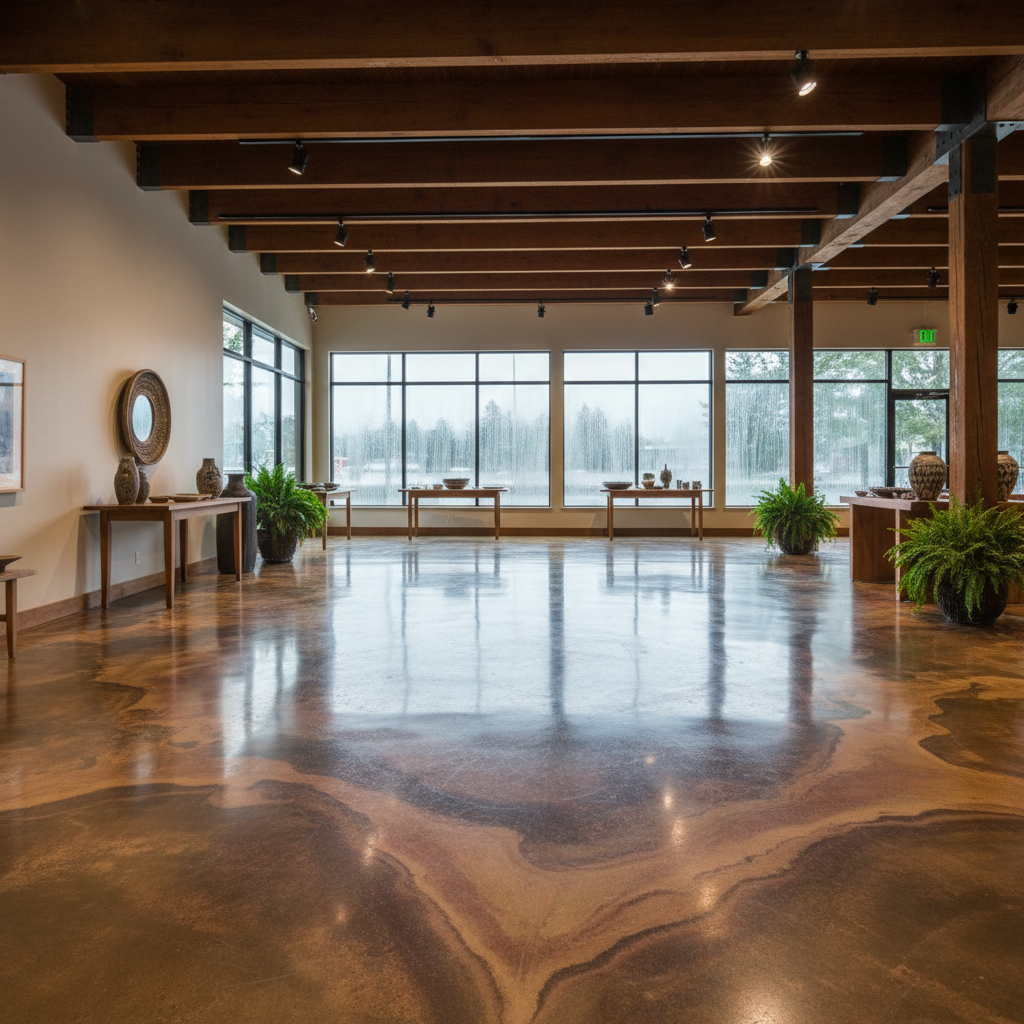
Acid stains utilize hydrochloric acid mixed with metallic salts to chemically react with concrete’s lime content. This process creates permanent, earth-toned colors with natural-looking variations that mimic stone or marble. The reaction penetrates deep into the concrete surface rather than sitting on top, making it ideal for commercial spaces where durability is paramount.
We’ve found that acid staining works particularly well for Salem businesses seeking rustic or industrial aesthetics—think breweries, boutique hotels, and upscale retail spaces. The color palette typically includes browns, tans, terra cottas, and soft greens. According to research from concrete material science, these stains create unique patterns that can’t be replicated, giving each floor a one-of-a-kind appearance.
Water-Based Staining: Expanded Color Control
Water-based stains offer broader color palettes with more predictable results. These penetrating stains provide excellent coverage without the fumes associated with acid staining, making them suitable for occupied buildings where ventilation might be limited. The color range extends from vibrant blues and reds to subtle grays and blacks.
For commercial clients prioritizing specific brand colors or modern aesthetics, water-based stains deliver consistency across large floor areas. When our team works in South Salem’s commercial district near Commercial Street SE, we often recommend water-based options for retail environments where precise color matching matters most.
Hybrid Applications: Combining Staining with Protective Coatings
Today’s most durable commercial floors combine staining with epoxy or polyurethane top coats. This hybrid approach delivers decorative appeal with industrial-grade protection against spills, chemicals, and heavy traffic. The sealed surface becomes essentially impervious to staining from oils, food, or liquids—critical for restaurants, auto shops, and manufacturing facilities.
Common Mistakes Commercial Property Owners Make
Understanding what can go wrong with concrete staining helps you avoid costly do-overs and ensures your investment delivers long-term value.
Skipping Proper Surface Preparation
The most common failure point in commercial concrete staining isn’t the stain itself—it’s inadequate surface prep. Existing sealers, oils, adhesive residue, or contamination prevent proper stain penetration, resulting in blotchy, uneven coloring. Professional contractors must thoroughly clean surfaces with pH-neutral solutions and address all cracks or damage before staining begins.
In our experience working throughout the 97301 and 97302 zip codes, we’ve encountered numerous commercial floors where previous DIY attempts failed due to insufficient cleaning. One warehouse near the intersection of Portland Road NE and Silverton Road NE required complete grinding to remove old coatings before successful staining could occur.
Neglecting Post-Stain Sealing
Staining without sealing is like painting a car without clear coat—the color might look good initially, but it won’t last. Unsealed stained concrete remains vulnerable to moisture absorption, staining from spills, and surface deterioration from traffic. Salem’s wet climate makes sealing absolutely essential for exterior applications like commercial patios and walkways.
For commercial interiors, we typically recommend penetrating sealers for breathability or epoxy coatings for maximum protection. The choice depends on your specific use case, traffic levels, and exposure to chemicals or moisture.
Choosing Paint Over Stain for High-Traffic Areas
Some business owners opt for concrete paint instead of staining, attracted by lower upfront costs. This rarely ends well in commercial settings. Paint sits on the surface and chips, peels, or wears through under foot traffic and equipment movement. Stains penetrate the concrete, making them essentially permanent and far more durable for commercial applications.
Best Practices for Commercial Concrete Staining Projects
Successfully implementing concrete staining services in Salem, OR requires strategic planning and execution. These best practices ensure optimal results for commercial properties.
Match Stain Type to Business Use Case
Different commercial environments demand different staining approaches. Restaurants and food service facilities benefit from acid-stained floors sealed with food-safe epoxy coatings. Retail showrooms might prioritize polished, water-based stains that create glossy, modern aesthetics. Warehouses and manufacturing spaces need industrial-grade sealed surfaces that resist chemical exposure.
Before starting your project, consult with providers like Salem Concrete to evaluate your specific requirements. A proper assessment considers foot traffic patterns, exposure to moisture or chemicals, desired aesthetics, and budget constraints.
Plan for Salem’s Climate Conditions
Here’s a contrarian insight that national contractors often miss: Oregon’s Willamette Valley experiences unique moisture conditions that affect concrete performance differently than drier climates. Before any staining work begins, we coordinate with Portland General Electric to ensure proper HVAC operation during curing, maintaining consistent humidity levels that prevent premature drying or moisture trapping.
For outdoor commercial applications like driveways and parking areas, Salem’s freeze-thaw cycles demand air-entrained concrete and premium penetrating sealers. Acrylic-resin sealers provide excellent water repellency while maintaining breathability—essential for preventing moisture buildup that leads to spalling and surface damage.
Schedule Work to Minimize Business Disruption
Smart scheduling keeps your business operational during floor improvements. Most commercial staining projects can be completed in sections, allowing partial business operation. Depending on the stain and sealer type, cure times vary from 24 hours for basic water-based stains to several days for epoxy-topped installations.
Many Salem businesses schedule staining during slower seasons or extended weekends. For 24/7 operations, phased approaches work well—completing one section at a time while routing traffic to unstained areas.
How Commercial Concrete Staining Works: Step-by-Step Process
Understanding the staining process helps you set realistic expectations and prepare your facility appropriately.
Step 1: Surface Assessment and Preparation
Professional contractors begin with thorough surface evaluation, checking for existing sealers, damage, or contamination. Any cracks require repair with concrete patching compounds. The surface then undergoes aggressive cleaning using industrial degreasers and mechanical scrubbing or grinding to open the concrete pores.
Step 2: Stain Application and Chemical Reaction
For acid staining, contractors apply the solution using pump sprayers or brushes, allowing 4-24 hours for the chemical reaction to develop full color. Water-based stains penetrate faster, typically requiring multiple coats applied at intervals. Temperature and humidity control during this phase proves critical—Salem’s commercial applications benefit from controlled indoor environments maintained between 60-80°F.
Step 3: Neutralization and Cleaning
Acid-stained floors require neutralization with ammonia or baking soda solutions, followed by thorough rinsing to remove residual chemicals. This step prevents ongoing chemical reactions that could affect sealer adhesion. The surface must completely dry before sealing—typically 24-48 hours depending on humidity levels.
Step 4: Sealer Application and Curing
Final sealing protects the stained surface. Options range from penetrating sealers (minimal sheen, breathable) to topical epoxy or polyurethane coatings (high gloss, maximum protection). Commercial applications typically receive 2-3 coats of sealer, with light sanding between coats for optimal adhesion. Full cure takes 3-7 days before normal traffic resumes.
Cost Factors for Commercial Concrete Staining in Salem, OR
Commercial concrete staining costs vary based on several factors, with typical pricing ranging from $3-$10 per square foot for complete staining and sealing projects. Understanding these variables helps you budget appropriately.
| Cost Factor | Impact on Price | Notes |
|---|---|---|
| Square Footage | Lower per-sq-ft cost for larger areas | Projects over 1,000 sq ft often receive volume pricing |
| Stain Type | Acid stains typically cost more | Requires specialized handling and neutralization |
| Surface Condition | Poor condition increases prep costs | Extensive cracking or old coatings require removal |
| Sealer Selection | Epoxy costs more than acrylics | Premium sealers provide longer protection intervals |
| Design Complexity | Multi-color or patterns increase labor | Custom logos or borders require masking and precision |
For businesses throughout Salem’s 97301, 97302, and 97305 zip codes, obtaining multiple quotes helps establish fair market pricing. Be wary of significantly low bids—proper surface preparation and quality materials constitute the majority of project costs, and shortcuts here compromise long-term results.
Maintaining Your Stained Commercial Concrete
Properly maintained stained concrete can last decades with minimal upkeep. Regular maintenance preserves appearance and extends the time between resealing.
Daily and Weekly Maintenance: Sweep or dust mop daily to remove abrasive dirt. Damp mop with pH-neutral cleaners weekly—avoid harsh acids or alkaline cleaners that degrade sealers. For commercial kitchens or food service areas, address spills immediately to prevent staining through the sealer.
Periodic Resealing: Depending on traffic levels, commercial floors require resealing every 2-5 years. High-traffic entryways may need more frequent attention, while back-of-house areas last longer between treatments. Watch for water no longer beading on the surface—this indicates sealer degradation.
Businesses near Salem’s downtown core, particularly around the Marion County Courthouse and surrounding commercial blocks, experience heavier foot traffic that accelerates sealer wear. Strategic maintenance scheduling during slower business periods prevents appearance deterioration.
Frequently Asked Questions
How long does commercial concrete staining take?
Most commercial staining projects require 3-7 days from start to finish, including surface preparation, staining, sealing, and curing time. Larger facilities may be completed in phases to maintain partial operations.
Can existing commercial floors be stained?
Yes, most existing concrete floors accept staining if properly prepared. However, floors with existing coatings, heavy contamination, or extensive damage may require grinding or resurfacing before staining. A professional assessment determines feasibility.
Is stained concrete slippery when wet?
Stained concrete can be slippery if sealed with high-gloss topical coatings. For commercial applications where slip resistance matters, contractors add non-slip additives to final sealer coats or choose matte-finish sealers that maintain traction.
How does staining compare to other decorative concrete options?
Staining offers the most cost-effective decorative option for existing floors. Stamped concrete provides textured patterns but requires new concrete pours. Polishing creates glossy surfaces but works best on specific concrete mixes. Each approach serves different aesthetic and functional goals.
What permits or regulations apply to commercial concrete work in Salem?
The City of Salem Building Division typically doesn’t require permits for surface treatments like staining. However, structural concrete repairs or new pours may require permits. Reputable contractors maintain proper licensing and handle permit requirements when applicable.
Making Your Commercial Concrete Investment Count
Transforming your commercial concrete surfaces through professional staining delivers immediate aesthetic improvements and long-term durability benefits. Whether you operate a retail storefront, restaurant, warehouse, or office building in Salem, OR, stained concrete provides an elegant, practical solution that withstands the demands of daily business operations.
The key to successful results lies in partnering with experienced local contractors who understand Salem’s unique climate challenges and commercial requirements. Proper surface preparation, appropriate stain selection, and quality sealing make the difference between a floor that impresses for years versus one that disappoints within months.
As you evaluate options for your commercial property, remember that concrete staining services in Salem, OR offer exceptional value compared to complete floor replacement or alternative materials. The investment typically pays for itself through reduced maintenance costs, enhanced customer perception, and extended surface life.
Ready to explore how professional concrete staining can elevate your commercial space? Contact local specialists to schedule an assessment and discover customized solutions tailored to your specific business needs and budget.
Sources and References
- Portland Cement Association – Concrete Material Science and Applications
- City of Salem Building Division – Commercial construction regulations and requirements
- Industry data on decorative concrete trends and pricing benchmarks (2025)
Disclaimer: This content is for informational purposes only. Pricing, timelines, and specific recommendations vary based on individual project conditions. Always consult with licensed contractors for project-specific guidance and obtain multiple quotes before proceeding with commercial concrete work.