
Last Updated: January 7, 2026
Are you staring at that cracked patio or uneven walkway, wondering if you can tackle it yourself? Many Salem, OR homeowners face this dilemma every spring. While DIY concrete projects Salem OR can save money on small-scale work, understanding when to grab your tools—and when to call professionals—makes the difference between a weekend success story and a costly repair nightmare.
Concrete work in Oregon’s Willamette Valley presents unique challenges. Our freeze-thaw cycles, seasonal rainfall, and specific soil conditions demand more than just mixing and pouring. This guide draws from decades of local concrete experience to help you navigate your project confidently, whether you’re building a simple garden border or considering a concrete patio transformation.
Quick Answer: Can You DIY Concrete in Salem, OR?
Yes, homeowners can successfully complete small-scale concrete projects like stepping stones, garden edging, or minor repairs. However, structural work like driveways, patios over 100 square feet, or projects requiring proper drainage solutions typically need professional expertise due to Salem’s climate demands and local building requirements.
Key Takeaways:
- Small projects under 50 square feet are DIY-friendly for experienced homeowners
- Salem’s freeze-thaw cycles require air-entrained concrete for lasting durability
- Professional volumetric mixing eliminates waste on medium to large projects
- Proper permits from the City of Salem may be required for structural work
- Wrong material choices can lead to cracking within the first winter season
Understanding Salem’s Concrete Requirements
Salem’s location in the heart of the Willamette Valley creates specific demands for concrete work that differ from other regions. Our winters bring alternating freezing and thawing that can destroy improperly mixed concrete within a single season. When we work throughout neighborhoods from West Salem (97304) to South Salem (97302), we consistently see DIY failures from homeowners who used standard concrete mixes without understanding local requirements.
Climate Considerations for Concrete Projects
Oregon’s climate demands air-entrained concrete for any exterior application. This specialized mix contains microscopic air bubbles that provide expansion space when water freezes within the concrete matrix. Due to Kansas-style freeze-thaw cycles we experience in the Willamette Valley, we always specify air-entrained concrete—a lesson many DIYers learn the hard way after their first winter.
Salem receives an average of 42 inches of rainfall annually, concentrated between October and April. This means proper drainage planning isn’t optional—it’s critical. Projects that don’t account for water runoff end up with standing water that accelerates deterioration and creates hazardous ice patches during winter months.
Local Building Requirements and Permits
The City of Salem requires permits for most structural concrete work, including driveways, patios over certain dimensions, and any work affecting property drainage. Before starting DIY concrete projects in Salem OR, contact the Building and Safety Division at 555 Liberty Street SE. Permit requirements protect both you and your neighbors from structural issues and drainage problems.
Additionally, before any digging, Oregon law requires calling 811 to locate underground utilities. When working in established Salem neighborhoods, coordination with utility providers prevents costly damage to electrical, gas, and water lines.
Common DIY Concrete Mistakes in Salem
After decades of repairing failed DIY projects, we’ve identified patterns in what goes wrong. Understanding these mistakes before you start can save thousands in repairs.
Using Wrong Mix Ratios for Local Conditions
The biggest mistake is purchasing standard concrete mix from big-box stores without understanding local aggregate requirements. Salem’s soil composition and climate demand specific mix designs. We source aggregate from nearby quarries to match the thermal expansion characteristics of existing infrastructure—knowledge that typical DIY resources don’t provide.
Standard mixes often lack proper air entrainment, use incorrect water-to-cement ratios, or don’t account for Salem’s temperature fluctuations during curing. A concrete driveway that looks perfect in summer can develop spiderweb cracks before Christmas if the mix isn’t right.
Inadequate Site Preparation
Salem’s clay-heavy soils require proper compaction and base preparation. Many DIYers skip the crucial step of creating a stable, well-drained base. Without 4-6 inches of compacted gravel, concrete settles unevenly as our wet winters saturate the ground. This creates the low spots and cracks we’re frequently called to repair.
Proper grading for drainage is equally critical. In our experience working with Salem residents, we see numerous projects where water pools against foundations because DIYers didn’t establish proper slope—at least 1/4 inch per foot away from structures.
Underestimating Project Complexity
A 10×10 patio seems manageable until you realize you need to move, mix, pour, and finish 1.2 cubic yards of concrete within a narrow working window. Concrete doesn’t wait—once mixed, you have limited time before it begins setting. Projects exceeding 50 square feet quickly overwhelm most DIY setups, leading to cold joints (weak spots where separate batches meet) and inconsistent finishes.
Best Approaches for Successful DIY Concrete Work
If you’re determined to tackle concrete work yourself, strategic planning and realistic scope definition make success possible.
Ideal DIY Concrete Projects for Salem Homeowners
Start with projects that forgive imperfection and don’t bear structural loads:
- Stepping stones: Individual pieces allow practice without commitment to large areas
- Garden borders and edging: Low-stress applications that don’t require structural integrity
- Small repairs: Patching cracks or filling minor voids in existing concrete
- Decorative elements: Planters, birdbaths, or yard art where aesthetics matter more than engineering
These projects let you learn concrete’s behavior without risking major investment or creating structural problems. Many homeowners successfully complete these before considering larger projects that might benefit from professional expertise.
When to Consider Professional Help
Professional concrete services make financial sense when project complexity, material requirements, or consequences of failure exceed DIY capabilities. For work like stamped concrete or structural applications, professional equipment and expertise prevent costly do-overs.
Modern volumetric concrete mixers have transformed project economics. These mobile units mix fresh concrete on-site in precise quantities from 0.25 to 25 cubic yards, eliminating waste from over-ordering. Local providers like Salem Concrete offer this flexibility, making professional service competitive with DIY material costs on medium-sized projects.
Step-by-Step Guide for Simple Concrete Projects
For appropriate DIY projects, following proper procedures ensures better results.
Planning and Material Calculation
Calculate concrete volume in cubic yards: multiply length × width × depth (all in feet), then divide by 27. Add 10% extra for waste and minor depth variations. For Salem projects, specify air-entrained concrete with 5-7% air content designed for freeze-thaw durability.
Plan your work for moderate temperatures between 50-80°F. Salem’s spring (April-May) and fall (September-October) provide ideal conditions. Avoid pouring when rain threatens within 24 hours or when overnight temperatures may drop below 40°F during the critical first week of curing.
Site Preparation Requirements
Excavate to proper depth, accounting for both base material and concrete thickness. For Salem’s clay soils, install 4-6 inches of compacted crushed rock base. Use a plate compactor (rentable locally) to achieve proper density—hand tamping rarely provides adequate compaction.
Install forms using straight 2×4 or 2×6 lumber, ensuring level and plumb installation. Stake forms securely—concrete’s weight will push weak forms out of position. Apply form release oil to prevent concrete from bonding to wood.
Mixing, Pouring, and Finishing
For bagged concrete, follow manufacturer ratios precisely. Too much water weakens concrete dramatically—aim for consistency that holds its shape but flows enough to eliminate air pockets. Pour in sections, working systematically to avoid cold joints.
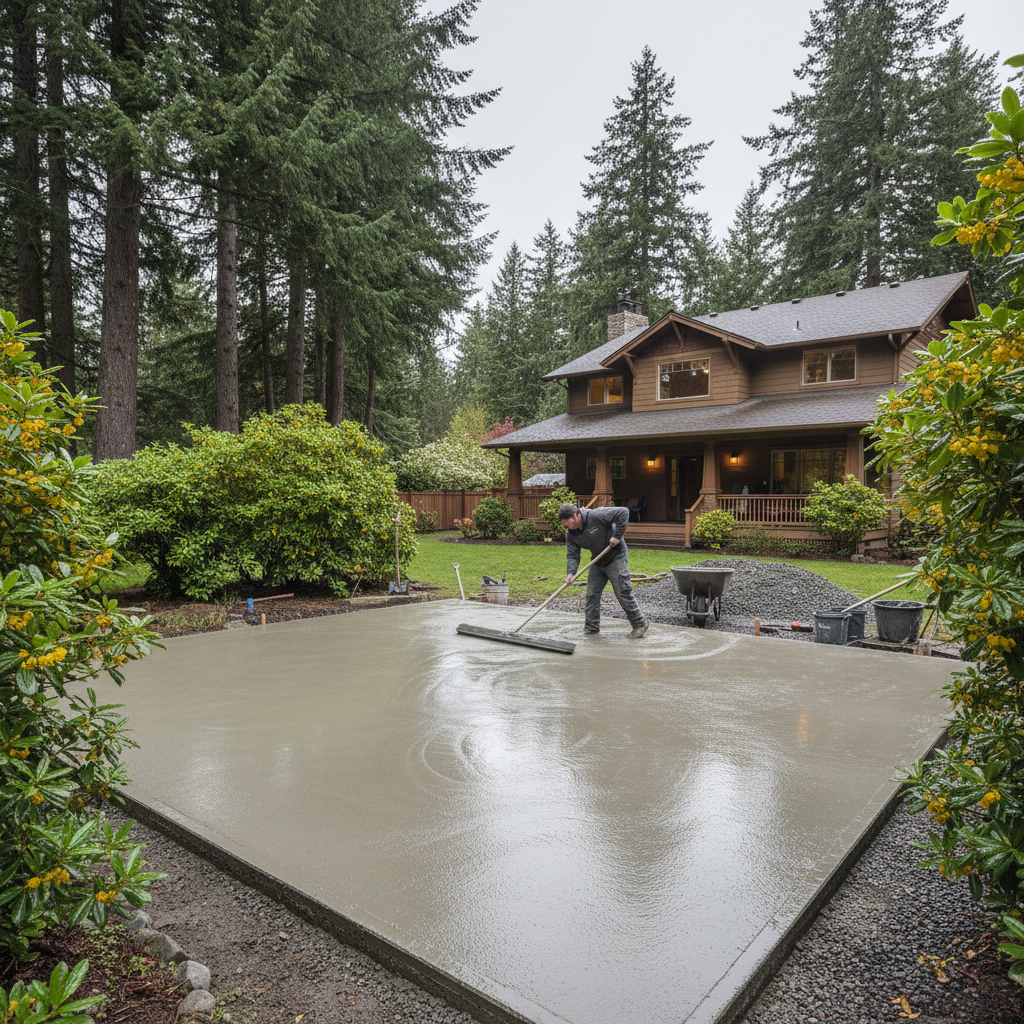
Use a straight board (screed) to level concrete flush with forms, then float the surface to bring cream (fine material) to the top. Avoid overworking, which can weaken the surface. For Salem’s climate, consider a broom finish for slip resistance during wet weather.
Cure concrete properly by keeping it moist for at least seven days. Cover with plastic sheeting or apply curing compound. According to the Portland Cement Association, proper curing increases concrete strength by up to 50% compared to uncured concrete.
Cost Comparison: DIY vs Professional Services
Understanding true costs helps make informed decisions about DIY concrete projects Salem OR.
| Project Type | DIY Materials Cost | Professional Cost | Savings Analysis |
|---|---|---|---|
| Small walkway (25 sq ft) | $150-250 | $400-600 | Significant DIY savings |
| Medium patio (150 sq ft) | $600-900 | $1,200-1,800 | Moderate savings, high effort |
| Driveway (400 sq ft) | $1,800-2,500 | $3,200-4,800 | Risk outweighs savings |
These figures don’t account for tool rental ($200-400 for larger projects), your time value, or potential repair costs from errors. When considering stamped concrete driveway costs, professional work includes specialized equipment and expertise that’s nearly impossible to replicate as a DIYer.
Frequently Asked Questions
What’s the smallest concrete project worth doing yourself in Salem?
Stepping stones, small repairs under 10 square feet, or decorative elements are ideal starter projects. These allow learning without major investment or structural concerns.
Can I pour concrete in Salem during winter?
Winter concrete work requires special precautions including heated enclosures and blankets to maintain proper curing temperatures above 50°F. Most DIYers should wait for spring when temperatures naturally support proper curing.
How long before I can walk on new concrete?
Wait 24-48 hours for foot traffic and 7 days minimum before vehicle traffic. Concrete continues gaining strength for 28 days, reaching full design strength around one month after placement.
Do I need a permit for a small concrete patio in Salem?
The City of Salem requires permits for most concrete work exceeding basic repairs. Contact the Building and Safety Division before starting any patio, driveway, or structural concrete project to determine specific requirements.
What’s the best time of year for DIY concrete in Salem, OR?
Late spring (April-May) and early fall (September-October) provide ideal conditions with moderate temperatures and lower rainfall probability. Avoid our rainy season (November-March) and extreme summer heat.
Making the Right Decision for Your Project
DIY concrete projects in Salem, OR can be rewarding when matched to appropriate scope and skill level. Small decorative or non-structural work offers genuine savings and learning opportunities. However, Salem’s climate demands specific material choices and techniques that many DIY resources overlook.
For projects exceeding 100 square feet or requiring structural integrity, professional services often provide better value when you account for material waste, tool rental, your time, and the risk of expensive failures. Local concrete contractors throughout Salem (serving zip codes 97301, 97302, 97304, and surrounding areas) offer expertise in Oregon-specific requirements that ensure projects withstand our unique climate challenges.
Whether you choose DIY or professional installation, understanding what concrete work demands in Salem’s environment sets you up for success. Start small, learn the fundamentals, and scale up as your skills and confidence grow. Your home improvement goals deserve the foundation—quite literally—that proper concrete work provides.
Sources and References
- Portland Cement Association – Concrete curing requirements and best practices
- City of Salem Building and Safety Division – Local permit requirements and building codes
- Oregon State Building Code – Concrete specifications for freeze-thaw regions