
Last Updated: December 24, 2025
When you walk through Salem’s downtown neighborhoods or along the pathways at historic cemeteries, you’re likely stepping on one of the most durable and visually striking concrete finishes available: exposed aggregate. This hybrid of polished stone and structural concrete has become a cornerstone of local commercial and residential projects, offering slip resistance, longevity, and an aesthetic that complements Oregon’s natural landscape. But what makes exposed aggregate concrete Salem OR contractors install so well-suited to our Willamette Valley climate?
Whether you’re planning a driveway upgrade, a commercial plaza, or a decorative patio, understanding how exposed aggregate performs in Salem’s wet winters and mild summers—and knowing which local practices ensure lasting results—can save you thousands in premature repairs and disappointing outcomes.
Quick Answer: What Is Exposed Aggregate Concrete?
Exposed aggregate concrete is a decorative finish where the top layer of cement paste is removed—either by washing, brushing, or chemical retarders—to reveal the natural stone (aggregate) beneath. The result is a textured, slip-resistant surface that combines the durability of concrete with the visual appeal of natural river rock or decorative stone.
Key Takeaways:
- Ideal for driveways, patios, walkways, pool decks, and commercial entries
- Provides excellent slip resistance in Salem’s wet climate
- Uses locally sourced Willamette Valley aggregates for cost efficiency
- Offers a mid-range decorative option between plain broom finish and intricate stamped patterns
- Requires professional installation for uniform appearance and long-term performance
Why Exposed Aggregate Works Well in Salem, OR
Salem’s climate and geography create unique conditions that make exposed aggregate concrete Salem OR projects particularly successful. Our location in the Willamette Valley provides abundant access to high-quality river gravel and crushed stone, which are essential for creating the decorative surface finish.
Climate Considerations for Salem Projects
Salem experiences approximately 40 inches of rain annually, with most precipitation occurring between October and May. This wet climate makes slip resistance a critical safety factor for exterior concrete surfaces. When our team works on projects throughout the 97301, 97302, and 97305 zip codes, we prioritize exposed aggregate for entries, ramps, and steps where traction is paramount.
Unlike smooth troweled finishes that become slick when wet, the textured surface of exposed aggregate provides natural grip even during Salem’s heaviest downpours. The technique also allows proper drainage through the slightly irregular surface profile, preventing standing water that can accelerate freeze-thaw damage during occasional winter cold snaps.
Local Aggregate Sources and Quality
The Oregon Concrete & Aggregate Producers Association represents 55 producing companies statewide, ensuring consistent availability of quality materials. For Salem projects, we typically source aggregates from nearby Willamette Valley quarries and river deposits, which offer excellent hardness (typically around 7 on the Mohs scale) and natural color variations that complement regional architecture.
Using local aggregates provides two key advantages: reduced transportation costs and better thermal compatibility with existing infrastructure. Stones that originate from the same geological region as your project site will expand and contract at similar rates during temperature changes, minimizing stress cracks and separation.
Common Applications in Salem Commercial and Residential Projects
We see exposed aggregate specified across a wide range of applications throughout Marion County. The finish’s versatility makes it appropriate for both utilitarian and high-design contexts.
Residential Installations
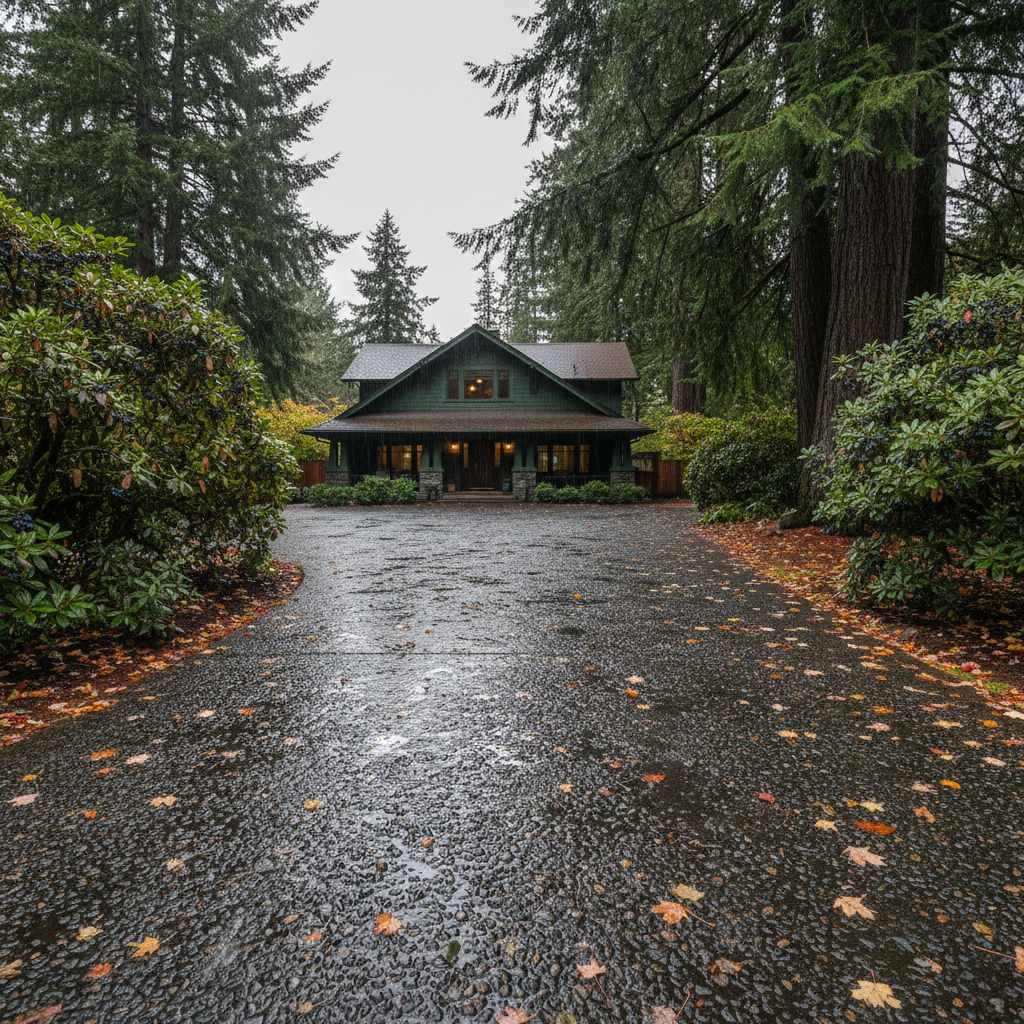
For homeowners, exposed aggregate commonly appears in driveways, where the combination of durability and curb appeal adds immediate value. The surface stands up well to vehicle traffic while offering visual interest that plain concrete cannot match. We also frequently install it for outdoor patios, pool decks, and garden walkways where the natural stone appearance integrates seamlessly with landscaping.
In South Salem neighborhoods near Bush’s Pasture Park, exposed aggregate walkways and entries have become particularly popular as homeowners seek finishes that echo the area’s historic character while meeting modern performance standards.
Commercial and Institutional Use
Commercial properties often specify exposed aggregate for parking lots, building entries, and pedestrian plazas. The Salem Cemetery Commission recently requested this finish for pathways, describing it as “a hybrid of concrete and stone work” that provides appropriate solemnity and long-term durability for memorial sites, according to a 2025 Salem Historical Commission discussion.
Retail centers along Commercial Street SE and Lancaster Drive NE frequently use exposed aggregate to define pedestrian zones and create visual interest in large expanses of flatwork. The finish meets ADA requirements when properly installed, making it suitable for accessible ramps and crossings.
Common Mistakes That Compromise Exposed Aggregate Projects
Even with quality materials and favorable climate, poor installation practices can undermine the appearance and longevity of exposed aggregate concrete in Salem, OR. Understanding these pitfalls helps property owners make informed decisions when selecting contractors.
Improper Timing of Surface Treatment
The window for washing or brushing away surface paste is narrow—typically 4 to 18 hours after placement, depending on temperature and mix design. Acting too early removes aggregate; waiting too long makes the paste nearly impossible to remove without damaging the surface. In Salem’s cool, damp conditions, setting times can extend significantly compared to warmer climates, requiring experienced judgment rather than rigid adherence to textbook timelines.
Inadequate Air Entrainment
While Salem experiences fewer freeze-thaw cycles than eastern Oregon, occasional winter cold snaps can still cause surface scaling if concrete is not properly air-entrained. According to FHWA guidelines, exterior flatwork should contain 5-7% entrained air to create microscopic voids that accommodate ice expansion. We always specify air entrainment for Salem projects, a precaution that adds minimal cost but dramatically improves long-term durability.
Inconsistent Aggregate Distribution
Patchy appearance is the most common complaint with exposed aggregate work. This occurs when aggregates segregate during placement, when seeding depth varies, or when exposure techniques are applied unevenly. Professional contractors use systematic seeding patterns and maintain consistent brush pressure to ensure uniform stone coverage across the entire surface.
Best Practices for Salem Exposed Aggregate Installation
Successful exposed aggregate concrete requires attention to every phase, from mix design through final sealing. Our experience across hundreds of Salem-area projects has identified the practices that consistently deliver superior results.
Mix Design Tailored to Local Conditions
We work with local ready-mix suppliers who understand Salem’s environment. A typical exposed aggregate mix for our area includes a low water-cement ratio (0.45 or less), 5-7% entrained air, and aggregates graded to minimize voids while ensuring uniform distribution. Due to Salem’s frequent rain, we often add set-retarding admixtures when weather forecasts predict precipitation during the critical finishing window.
Surface Retarder Application
Most modern exposed aggregate work uses chemical surface retarders rather than relying solely on water washing. We spray retarder immediately after finishing the slab, which slows the set of the top 1/8 to 1/4 inch of paste while allowing the interior concrete to cure normally. This technique provides much more control over exposure depth and timing compared to traditional methods.
Contrary to what many national guides suggest, we source aggregates from nearby Willamette Valley quarries rather than importing decorative stone from distant suppliers. Local river rock not only reduces project costs but also matches the thermal expansion characteristics of Salem’s existing infrastructure—a detail that prevents differential movement and cracking over time.
Proper Curing and Sealing
After exposing the aggregate, the concrete must cure for at least seven days before foot traffic and 28 days before vehicular loads. We apply a penetrating sealer designed for textured surfaces, which protects against moisture intrusion and staining without creating a slippery film. Resealing every 2-3 years maintains appearance and performance, particularly in high-traffic areas or where vehicles may track in deicing chemicals.
Comparing Exposed Aggregate to Other Decorative Finishes
Salem property owners often weigh exposed aggregate against stamped concrete, pavers, and plain finishes. Each has distinct cost, aesthetic, and performance characteristics.
| Finish Type | Typical Cost Range (per sq ft) | Best Applications |
|---|---|---|
| Broom Finish | $4–$7 | Utilitarian driveways, service areas |
| Exposed Aggregate | $8–$15 | Patios, entries, pool decks, walkways |
| Stamped Concrete | $12–$20 | High-design patios, courtyards |
| Pavers | $15–$30 | Luxury landscapes, permeable systems |
For most Salem residential projects, exposed aggregate offers the best balance of cost, durability, and visual appeal. It’s significantly more affordable than pavers, easier to maintain than stamped patterns (which can show wear at texture peaks), and far more attractive than standard broom finishes.
Frequently Asked Questions
How long does exposed aggregate concrete last in Salem?
With proper installation and routine sealing, exposed aggregate typically lasts 20-30 years in Salem’s climate. The key is ensuring adequate air entrainment and maintaining the sealer to protect against moisture intrusion and freeze-thaw damage during occasional winter cold snaps.
Can exposed aggregate be installed year-round in Salem?
Spring through early fall (April–October) offers the most reliable conditions. Winter installation is possible but requires careful attention to forecasts, as rain during the critical 4-18 hour exposure window can wash away too much paste or create an uneven finish.
Is exposed aggregate slippery when wet?
No—it provides excellent traction even during Salem’s heavy rain. The exposed stone creates a naturally textured surface with better slip resistance than smooth troweled or stamped finishes.
How does exposed aggregate compare to stamped concrete for Salem driveways?
Exposed aggregate is more durable for vehicular traffic because the surface is actual stone rather than a thin color layer that can wear away. It’s also 20-40% less expensive and requires less maintenance over time, making it the practical choice for most driveways.
What maintenance does exposed aggregate require?
Routine cleaning with a pressure washer and resealing every 2-3 years. Avoid deicing salts when possible; sand provides traction without chemical damage. Address cracks promptly to prevent water intrusion and expansion.
Making the Right Choice for Your Salem Property
Exposed aggregate concrete represents a proven, cost-effective solution for Salem property owners seeking a decorative finish that performs well in our climate. The combination of local aggregate availability, excellent slip resistance for wet conditions, and mid-range pricing makes it appropriate for a wide range of residential and commercial applications.
When planning your project, prioritize contractors who understand Salem-specific considerations: the need for air entrainment in our climate, the advantages of local Willamette Valley aggregates, and the timing challenges presented by frequent rain. Whether you’re installing a new patio, driveway, or commercial walkway, the investment in proper installation and materials will deliver decades of low-maintenance performance.
For expert guidance on your specific project needs and a detailed proposal, visit Salem Concrete to connect with experienced professionals who understand both the technical requirements and aesthetic possibilities of exposed aggregate concrete throughout Marion County.
Sources and References
- Federal Highway Administration. “Guide to Concrete Overlays.” FHWA, 2005. https://www.fhwa.dot.gov/pavement/concrete/pubs/05063/
- Oregon Concrete & Aggregate Producers Association. Industry data and member resources, 2025.
- Salem Historical Commission. Discussion records regarding Cemetery Commission requests, 2025.