
Last Updated: January 15, 2026
Is your concrete floor in Salem, OR creating problems for your flooring installation or causing drainage issues in your garage? Whether you’re dealing with a sunken driveway slab or an uneven basement floor that’s ruining your renovation plans, understanding how to properly level concrete can save you thousands of dollars and prevent costly mistakes. The Pacific Northwest’s unique climate conditions—with wet winters and temperature fluctuations—make concrete leveling both necessary and challenging for Salem homeowners.
Concrete floor leveling involves several proven methods, from traditional self-leveling cement to modern polyurethane foam injection systems. The right approach depends on whether you’re addressing settlement in an above-grade garage slab or correcting uneven surfaces in a basement floor. When our team works throughout Salem neighborhoods from West Salem to South Gateway, we encounter both types of problems regularly, each requiring specific techniques and materials suited to Oregon’s moisture levels and soil conditions.
Quick Answer: Leveling Concrete Floors in Salem, OR
To level a concrete floor in Salem, OR, you’ll use either self-leveling cement for below-grade floors with surface irregularities or polyurethane foam injection for sunken above-grade slabs. The method depends on whether the concrete needs lifting or surface smoothing, with most projects completed in a single day.
Key Takeaways:
- Self-leveling cement works best for basement floors with uneven surfaces requiring a new wear layer
- Polyurethane foam injection lifts settled slabs without adding significant weight to the structure
- Surface preparation is critical—removing sealers, oils, and testing moisture levels determines success
- Salem’s climate requires special attention to moisture levels and freeze-thaw considerations
- Professional assessment helps identify the root cause of settlement and prevents recurring issues
Understanding Concrete Floor Problems in Salem, OR
Before learning how to level concrete floor surfaces in Salem, you need to identify what’s causing the problem. The Willamette Valley’s clay-rich soils and high seasonal moisture create specific challenges that differ from drier regions. We see two distinct categories of concrete issues throughout the 97301, 97302, and 97304 zip codes.
Above-Grade Settlement Issues
Above-grade floors—including garage slabs, driveways, and concrete patios—frequently settle when poured on improperly compacted backfill. When soil beneath the slab washes away or compresses over time, voids form underneath, causing the concrete to sink and create uneven surfaces. This problem is particularly common in newer developments where construction schedules didn’t allow adequate settling time before concrete placement.
Salem’s wet winters exacerbate this issue as water infiltration erodes soil beneath slabs. Unlike eastern Oregon’s drier climate, our region experiences sustained moisture that gradually undermines concrete support. A driveway that appears perfectly level in summer might show noticeable settling by spring after winter rains have done their work.
Below-Grade Surface Irregularities
Basement floors present a different challenge. These below-grade surfaces are often poured with inherent highs and lows due to limited access during installation. The problem becomes apparent when homeowners attempt to install vinyl plank flooring, engineered hardwood, or other systems requiring flat substrates. Even minor variations of half an inch over eight feet can prevent proper flooring installation and void manufacturer warranties.
According to the City of Salem Building Division, proper concrete finishing techniques should minimize these irregularities, but many older basements throughout historic Salem neighborhoods were poured before modern standards existed.
Self-Leveling Cement Method for Concrete Floors
Self-leveling cement remains the most reliable approach for correcting uneven below-grade concrete surfaces. This method creates a smooth, level surface ideal for flooring installations, but success depends entirely on proper preparation and application techniques that account for Salem’s moisture conditions.
Critical Surface Preparation Steps
Before applying any self-leveling compound, the concrete surface must be mechanically prepared through shot blasting or grinding. This removes paints, adhesives, oils, and sealers that act as bond breakers, preventing the new material from adhering properly. We’ve seen countless failed leveling jobs throughout Salem where contractors skipped this step, resulting in delamination within months.
After mechanical preparation, thorough vacuuming removes all dust and debris. The next critical step involves moisture testing using the MVER (Moisture Vapor Emission Rate) test. Oregon’s climate means basement slabs often carry higher moisture levels than expected, requiring epoxy-based primers with sand broadcast rather than standard acrylic primers. This moisture testing step separates professional installations from amateur attempts.
Application Process and Timing
Once the surface is primed, all perimeter gaps must be sealed to prevent the liquid self-leveling compound from escaping. The material itself requires precise mixing using mechanical equipment—never by hand. The water-to-powder ratio must exactly match manufacturer specifications. Too much water weakens the final product, while too little prevents proper flow and self-leveling action.
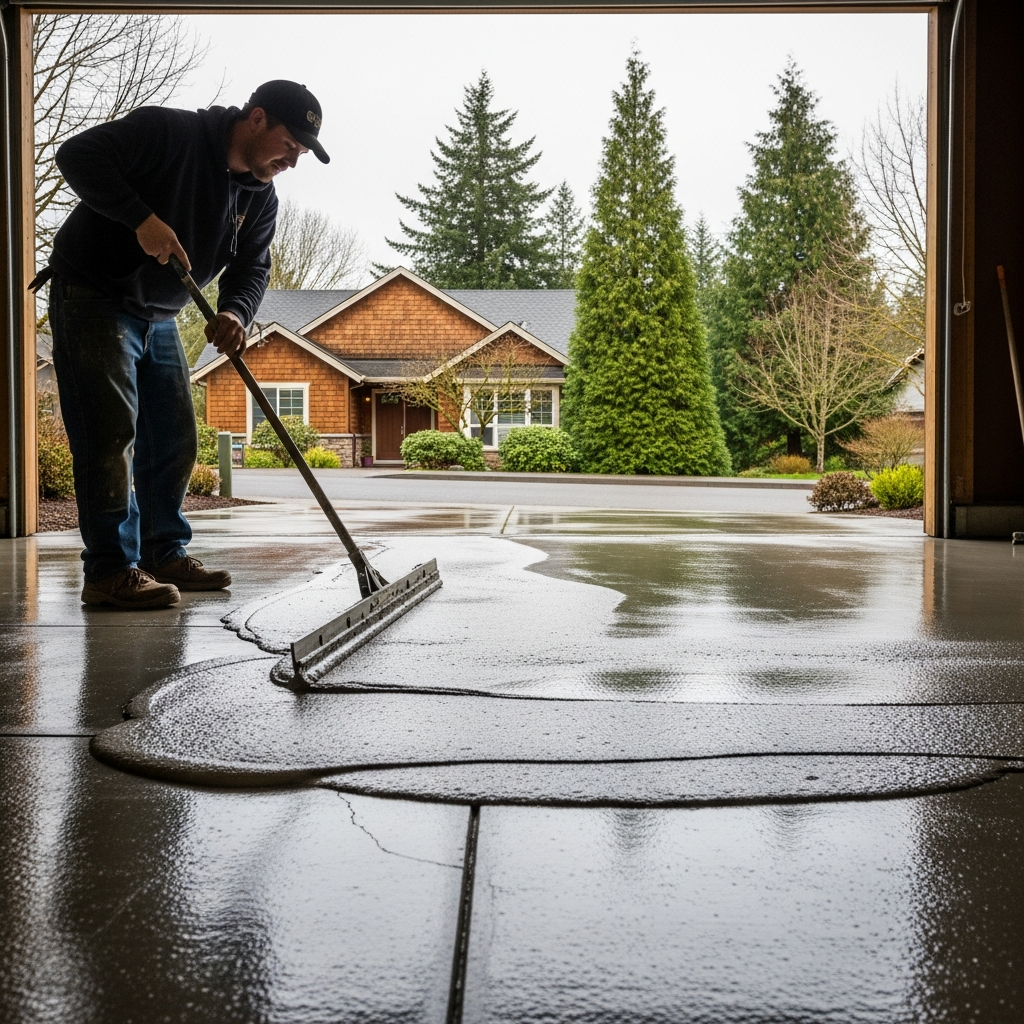
Application begins at one end of the room, working backward toward the exit. A gauge rake spreads the material to the desired thickness, while the compound’s self-leveling properties do most of the work. Contractors wear spike shoes to walk through the wet material without creating depressions. Curing time varies by product and ambient conditions, but Oregon’s cooler, more humid climate typically extends curing times compared to manufacturer specifications based on ideal conditions.
Modern Polyurethane Foam Injection Systems
For sunken above-grade slabs, polyurethane foam injection—often marketed as PolyLevel—offers a contemporary alternative to traditional mudjacking. This method addresses the root problem of voids beneath concrete by injecting expanding foam through penny-sized holes drilled in the slab surface.
How Foam Injection Works
The process involves drilling small access holes at strategic locations, then injecting two-part polyurethane foam beneath the slab. As the chemicals mix, they expand up to 20 times their liquid volume, filling voids and exerting controlled lifting pressure on the concrete above. The foam penetrates soil crevices and completely fills cavities that caused the original settlement.
The lightweight nature of polyurethane foam—weighing approximately 4 pounds per cubic yard compared to concrete’s 120 pounds—makes it ideal for Salem’s soil conditions. Adding heavy mudjacking material can actually worsen settlement problems in our clay soils, while foam injection adds negligible weight. Many concrete services in the region have transitioned to foam systems for this reason.
Advantages for Oregon Conditions
Foam injection offers specific benefits for Salem’s climate and soil conditions. The material is hydrophobic, resisting water absorption that would otherwise compromise stability during our wet winters. Installation can be completed in a single day, with the slab walkable or drivable within 15 minutes—no extended curing periods required. The foam is also environmentally friendly and made with recycled materials, addressing growing environmental concerns among Salem homeowners.
Unlike cement-based approaches, foam injection requires minimal surface disturbance. The small injection holes are filled with color-matched concrete, leaving barely visible repair marks. This aesthetic advantage matters for front walkways and visible driveway sections where large mudjacking holes would be unsightly.
Common Mistakes When Leveling Concrete Floors
Understanding how to level concrete floor surfaces properly means avoiding the pitfalls that lead to failed installations and wasted money. We’ve seen these mistakes repeatedly throughout Salem, and they’re almost always preventable with proper planning.
Skipping Moisture Testing
The most common mistake is applying self-leveling cement without testing moisture levels first. Oregon’s climate means concrete slabs often retain moisture, especially in basements. When moisture vapor rises through newly applied leveling compound, it delaminates the material or damages flooring installed above. A $50 moisture test prevents thousands in repair costs, yet contractors frequently skip this step.
Due to Willamette Valley’s high water table and rainfall patterns, we always coordinate with Pacific Power and local utility companies when addressing drainage issues that contribute to concrete moisture problems. Proper drainage around foundations prevents recurring moisture issues that undermine leveling work.
Incorrect Product Selection
Using the wrong leveling product for the application guarantees failure. Self-leveling cements come in various formulations—some designed for thin applications up to 1/2 inch, others capable of building up several inches. Using a thin-pour product where thick buildup is needed results in cracking and failure. Similarly, choosing products without adequate compressive strength for garage floors or commercial applications leads to premature breakdown under load.
Addressing Symptoms Rather Than Causes
Perhaps the most expensive mistake is leveling concrete without addressing why it settled in the first place. If poor drainage, expansive clay soils, or structural issues caused the original problem, simply leveling the surface provides temporary cosmetic improvement while the underlying issue continues. Within months or years, the problem returns—often worse than before.
Step-by-Step Guide to Leveling Your Concrete Floor
This comprehensive guide walks through the concrete leveling process from initial assessment through final curing, providing specific steps for Salem homeowners considering DIY projects or wanting to understand what professional contractors should be doing.
Assessment and Planning Phase
Step 1: Determine the Problem Type. Is your concrete settled and sunken (requiring lifting), or is it simply uneven with high and low spots (requiring surface leveling)? Use a long straightedge or laser level to map the floor’s irregularities. Document measurements to determine which areas need the most attention.
Step 2: Test Environmental Conditions. Conduct MVER moisture testing for below-grade floors. Check ambient temperature and humidity—self-leveling products require specific environmental conditions for proper curing. Salem’s cooler, damp conditions often fall outside ideal ranges, requiring climate control during application.
Step 3: Select the Appropriate Method. For settled slabs, foam injection or mudjacking lifts the concrete. For uneven surfaces, self-leveling cement smooths irregularities. Some situations require both approaches—lifting settled sections first, then applying self-leveler for final smoothness. Professional contractors from Salem Concrete and other local providers can assess which approach your specific situation requires.
Execution and Application
Step 4: Prepare the Surface. Mechanically grind or shot blast the concrete to remove all coatings and contaminants. This step is non-negotiable for successful bonding. Vacuum thoroughly, then apply appropriate primer based on moisture test results. Allow primer to cure according to manufacturer specifications.
Step 5: Mix and Apply Leveling Compound. Using a mechanical mixer, combine self-leveling cement with water at exact manufacturer ratios. Work in manageable batches—the material has limited working time once mixed. Pour and spread from the furthest point toward your exit, using a gauge rake to achieve target thickness. The material self-levels, but you may need a smoothing trowel for edges and corners.
Step 6: Protect During Curing. Maintain proper temperature and humidity during curing. In Salem’s variable spring and fall weather, this may require temporary heating or dehumidification. Protect the surface from foot traffic, dust, and moisture according to product specifications—typically 24-48 hours before light traffic and 5-7 days before heavy loads or flooring installation.
Professional Concrete Leveling Services in Salem, OR
While DIY concrete leveling is possible for small projects, most Salem homeowners benefit from professional expertise, especially for above-grade slab lifting or large-scale basement floor leveling. Experienced contractors bring specialized equipment, product knowledge, and warranties that protect your investment.
What Professional Services Include
Professional concrete leveling begins with comprehensive site assessment to identify underlying causes of settlement or unevenness. Contractors examine drainage patterns, soil conditions, and structural factors that contributed to the problem. This diagnostic approach prevents recurring issues that plague quick-fix repairs.
Established providers offer concrete flatwork services that account for Oregon’s specific climate challenges, utilizing quality mixes and proven techniques to minimize cracks and maximize long-term performance. Services typically include concrete pouring, crack repairs, foundation reinforcement, concrete sealing, and pressure washing alongside leveling work. Most jobs throughout Salem can be completed in a single day, addressing sinking concrete on sidewalks, driveways, and patios.
Choosing a Salem Concrete Contractor
When selecting a contractor for concrete leveling work, verify they carry proper licensing and insurance as required by Oregon state law. Request references from recent projects similar to yours, and ask to see completed work if possible. Free initial inspections and estimates should be standard—be wary of contractors who charge for basic assessments.
Ask specific questions about their approach: Do they conduct moisture testing? What primers do they use for Salem’s conditions? How do they address drainage issues? What warranty covers the work? Detailed answers to these questions separate knowledgeable professionals from inexperienced operators. Don’t hesitate to contact us or other reputable local providers to compare approaches and pricing.
Frequently Asked Questions
How much does concrete floor leveling cost in Salem, OR?
Self-leveling cement typically costs $3-6 per square foot including materials and labor, though prices vary based on thickness required and surface preparation needs. Polyurethane foam injection for settled slabs generally runs $5-15 per square foot depending on the extent of settlement and void size. Most Salem contractors provide free estimates after on-site inspection.
Can I level a concrete floor myself?
DIY concrete leveling is feasible for small basement floor projects with minor irregularities, provided you have proper equipment for surface preparation and mixing. However, foam injection for sunken slabs requires specialized equipment and training. Large projects or those involving structural concerns should be handled by professionals who can diagnose underlying issues and provide warranted work.
How long does concrete leveling take to cure?
Self-leveling cement typically allows light foot traffic after 24 hours and full loading after 5-7 days, though exact timing depends on product formulation and ambient conditions. Salem’s cooler, more humid climate often extends these timeframes. Polyurethane foam injection allows immediate use—the slab is walkable within 15 minutes of application.
Will leveling fix all my concrete problems?
Leveling addresses surface irregularities and settlemen but doesn’t fix underlying structural issues, drainage problems, or expansive soil conditions that caused the original problem. Effective concrete repair requires addressing root causes alongside surface leveling. Professional contractors assess these factors during initial inspection to ensure long-lasting results.
What’s better for Salem conditions: foam injection or mudjacking?
Polyurethane foam injection generally performs better in Salem’s clay soils and wet climate because it adds minimal weight, resists moisture absorption, and completely fills voids. Traditional mudjacking uses heavy cement-mud mixtures that can contribute to further settlement in soft soils. Foam also cures immediately regardless of weather conditions, while mudjacking requires extended drying time that Oregon’s humidity can prolong.
Conclusion: Achieving Level Concrete Floors in Salem
Understanding how to level concrete floor surfaces in Salem, OR requires recognizing the unique challenges posed by Willamette Valley’s climate, soil conditions, and moisture levels. Whether you’re smoothing an uneven basement floor for new flooring installation or lifting a settled driveway slab, success depends on choosing the appropriate method, properly preparing surfaces, and addressing underlying causes of the problem.
Self-leveling cement provides excellent results for below-grade floors with surface irregularities, while polyurethane foam injection offers superior performance for lifting settled above-grade slabs. Both methods deliver professional results when applied correctly with proper surface preparation and moisture management. Salem homeowners should carefully assess their specific situation, considering factors like floor location, intended use, moisture conditions, and underlying soil stability.
For most homeowners, professional concrete leveling services offer the best value by combining diagnostic expertise, specialized equipment, and warranted workmanship. Quality contractors throughout the Salem area provide free inspections and detailed estimates that help you understand your options and make informed decisions about your concrete repair investment.
Sources and References
- City of Salem Building Division – Building Codes and Standards
- Oregon State University Extension Service – Soil and Foundation Information
- Research data on concrete leveling methods and materials