
Last Updated: January 3, 2026
Is your Salem driveway stuck in the concrete dark ages—plain, gray, and utterly forgettable? While your neighbors settle for basic slabs that crack and fade, there’s a transformative approach that combines the durability of traditional concrete with the aesthetic appeal of natural stone, brick, or tile. Textured concrete driveways in Salem, OR represent a modern solution that addresses both the region’s challenging climate and homeowners’ desire for distinctive curb appeal.
The Pacific Northwest climate demands surfaces that can withstand frequent rainfall, seasonal temperature swings, and the occasional freeze-thaw cycle. Textured concrete delivers on all fronts, offering customizable patterns and finishes that maintain their integrity through Salem’s weather extremes while requiring minimal maintenance compared to traditional materials like brick pavers or natural stone.
Quick Answer: What Are Textured Concrete Driveways?
Textured concrete driveways combine decorative surface patterns—stamped, brushed, or exposed aggregate—with standard concrete durability. In Salem, OR, these surfaces resist rain damage, provide excellent traction when wet, and offer design flexibility ranging from cobblestone to slate patterns. Professional installation ensures proper drainage and long-term performance in the region’s climate.
Key Benefits for Salem Homeowners:
- Superior traction during Salem’s rainy season compared to smooth concrete
- Customizable patterns that complement your home’s architectural style
- Lower maintenance requirements than brick or natural stone alternatives
- Enhanced property value through improved curb appeal
- Durability that withstands Pacific Northwest weather patterns
Understanding Textured Concrete Options in Salem
When we work with homeowners throughout South Salem (97302) and West Salem (97304), we encounter three primary texturing approaches, each offering distinct aesthetic and functional advantages. The choice depends on your design preferences, budget, and the specific conditions of your property.
Stamped Concrete Patterns
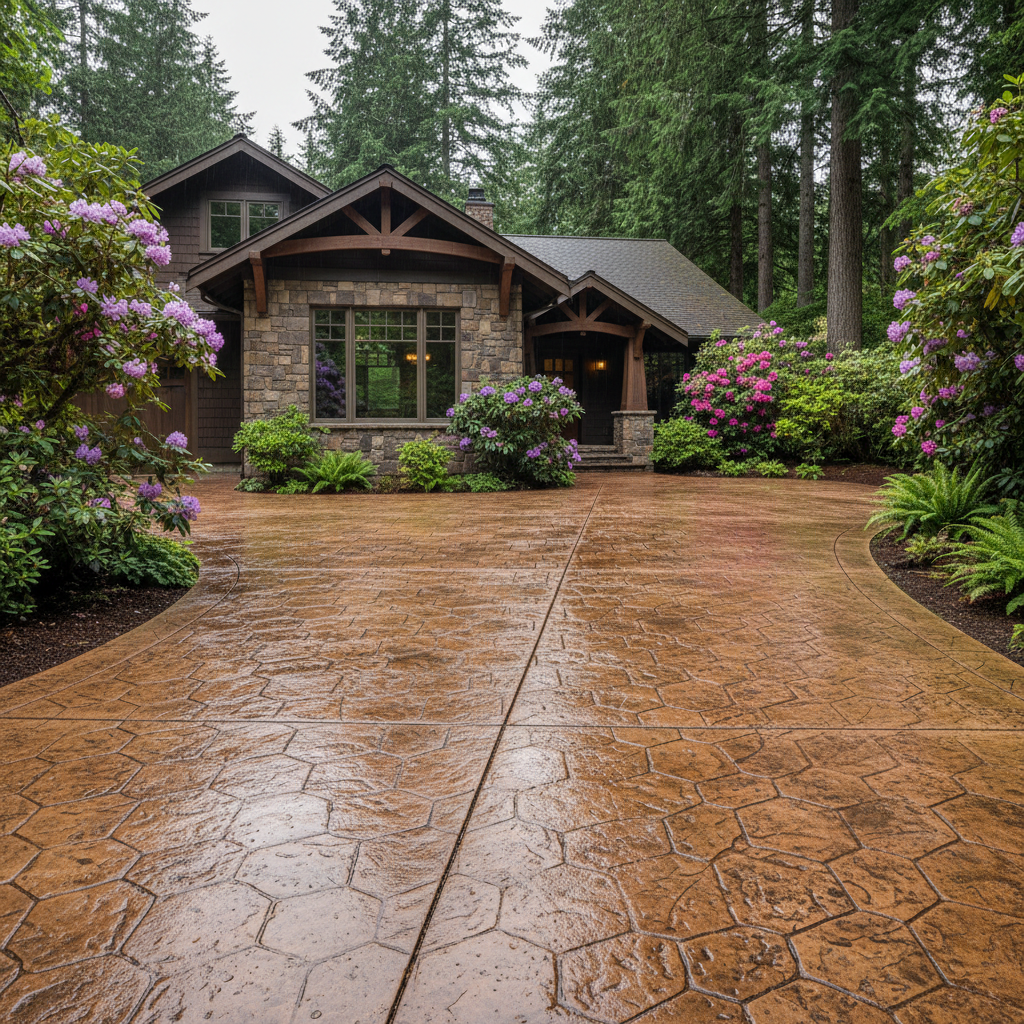
Stamped concrete remains the most popular decorative option for Salem driveways. The process involves pressing pattern mats into freshly poured concrete to create textures that mimic natural materials. Popular patterns include ashlar slate for a clean, modern stone appearance, cobblestone for old-world charm that complements historic Salem neighborhoods, and seamless texture that provides subtle visual interest without defined pattern lines.
The stamped concrete industry traces back approximately 70 years to Brad Bowman, who pioneered texture and embossing techniques that transformed decorative concrete. Today’s stamped concrete services incorporate advanced color hardeners and sealers specifically formulated for Salem’s climate conditions.
Exposed Aggregate Finishes
Exposed aggregate creates texture by revealing the decorative stones within the concrete mix. This technique offers exceptional traction—critical for Salem’s rainy climate—and requires less maintenance than stamped surfaces. We source aggregate from nearby Oregon quarries, which provides better thermal compatibility with existing infrastructure and matches the regional aesthetic that homeowners in areas like Fairmount Hill and Grant neighborhoods prefer.
Broom and Brushed Finishes
The most economical textured option, broom finishes create linear grooves that prevent slipping when wet. According to a 1939 Oregon State Highway Department publication, standard sidewalk finishes historically featured tamped concrete with granular texture to prevent slipping—a principle that remains relevant for modern Salem driveways. While less decorative than stamped patterns, brushed finishes offer practical functionality at lower cost.
Common Mistakes When Planning Your Driveway
In our experience working throughout Salem, from the Capitol area to Keizer Station, we consistently observe homeowners making preventable errors that compromise their driveway’s longevity and appearance. Understanding these pitfalls helps you avoid costly corrections down the line.
Ignoring Salem’s Climate Requirements
Salem receives approximately 40 inches of annual rainfall, creating unique challenges for concrete surfaces. Many homeowners select stamped patterns without considering drainage implications. Unlike smooth concrete that can become hazardously slick, properly textured surfaces provide essential traction. However, pattern selection matters—deeply recessed designs can accumulate water and debris, promoting organic growth and premature deterioration.
Due to Salem’s occasional freeze-thaw cycles, we always specify air-entrained concrete for concrete driveway services. This formulation includes microscopic air bubbles that provide expansion room when water freezes within the concrete matrix, preventing the surface cracking that plagues standard mixes during cold snaps.
Selecting Patterns That Clash With Architecture
A Mediterranean-style cobblestone pattern rarely complements a modern craftsman home common in Salem’s historic districts. When our team works in neighborhoods like Englewood or Highland, we recommend patterns that harmonize with the home’s architectural era and style. Victorian homes benefit from traditional brick patterns, while mid-century modern designs pair well with seamless textures or geometric stamps.
Choosing Unqualified Installers
Stamped concrete requires specialized skills distinct from basic concrete work. Timing is critical—stamps must be applied when concrete reaches precise firmness, color must be uniformly distributed, and joints must be strategically placed to control cracking. The City of Salem exempts certain concrete work from permit requirements under the 2021 Oregon Structural Specialty Code, but this doesn’t eliminate the need for qualified professionals who understand local soil conditions and building practices.
Best Approach for Salem Driveway Projects
Successful textured concrete installations follow a methodical process that accounts for Salem’s unique environmental conditions and regulatory framework. This approach ensures your investment delivers both immediate aesthetic impact and long-term durability.
Site Assessment and Preparation
Before any concrete gets poured, we coordinate with Pacific Power and Northwest Natural Gas to identify and mark underground utility lines—a critical safety step that prevents service disruptions and potential hazards. Salem’s clay-rich soils require proper excavation depth and aggregate base installation to prevent settling and cracking.
Drainage planning is non-negotiable in Salem’s wet climate. Your driveway must slope away from structures at a minimum 2% grade, and we often incorporate drainage channels or permeable borders to manage runoff effectively. Properties near Mill Creek or along the Willamette River require particular attention to water management.
Pattern and Color Selection Strategy
Visit our projects gallery to review completed installations across Salem neighborhoods. Pattern selection should consider your home’s architectural style, surrounding landscape elements, and practical factors like snow removal if you live in higher elevations around Salem Heights.
Color selection requires careful consideration of Salem’s frequently overcast skies. Lighter tones can appear washed out under cloud cover, while darker colors may show water spots more prominently during rainy seasons. Mid-tone earth colors—terra cotta, sandstone, and slate gray—typically perform best aesthetically throughout the year.
Installation Timing and Conditions
Salem’s climate creates a limited ideal installation window. We avoid pouring during rainy periods (typically November through March) and prefer temperatures between 50-80°F for optimal concrete curing. Spring and early fall offer the most favorable conditions, though summer installations are possible with proper moisture management protocols.
Step-by-Step Installation Process
Understanding the installation sequence helps you evaluate contractor proposals and set realistic expectations for project timelines. Professional textured concrete driveways in Salem, OR typically follow this proven methodology.
Foundation and Base Installation
After utility marking and excavation to appropriate depth (typically 8-12 inches), we install a compacted aggregate base. Salem’s soil conditions often require geotextile fabric beneath the base to prevent mixing with clay soils and maintain structural integrity. The base must be thoroughly compacted and properly graded before formwork installation.
Concrete Placement and Texturing
We pour air-entrained concrete mixed to specifications that account for Salem’s climate. For stamped applications, color hardener is broadcast onto the surface and worked into the concrete. Release agent follows, allowing stamp mats to be pressed into the surface without sticking. This timing-critical phase requires experienced crews who can recognize optimal concrete firmness—too soft and patterns blur, too firm and stamps won’t properly imprint.
Control joints are cut or tooled at strategic intervals to direct where inevitable cracking occurs. Proper joint placement—typically every 10 feet in both directions—ensures cracks occur in designated locations rather than randomly across your driveway’s surface.
Curing and Sealing
Proper curing is essential for achieving design strength and durability. We protect fresh concrete from Salem’s unpredictable weather, maintaining appropriate moisture levels throughout the curing period. After initial curing (typically 7-14 days), surfaces are cleaned and sealed with penetrating sealers specifically formulated for the Pacific Northwest climate. These sealers protect against moisture intrusion, freeze-thaw damage, and UV degradation while enhancing color depth.
Cost Factors for Salem Installations
Budget planning requires understanding the variables that influence project costs. For detailed pricing information, review our guide on stamped concrete driveway cost in Salem, OR. Several key factors affect final investment levels.
| Cost Factor | Impact Level | Considerations |
|---|---|---|
| Pattern Complexity | High | Intricate patterns require more labor and materials |
| Site Accessibility | Medium | Difficult access increases equipment and labor costs |
| Base Preparation | High | Poor soil conditions require additional base work |
| Color Options | Low-Medium | Multiple colors increase material and labor requirements |
Properties throughout Salem’s diverse neighborhoods—from South Commercial near Sunnyside to the Lancaster Drive corridor—present varying site conditions that affect preparation requirements. Clay soils common in many Salem areas may require additional base depth or soil stabilization, while properties with existing concrete necessitate removal and disposal costs.
Maintenance Requirements for Long-Term Performance
Textured concrete’s low-maintenance reputation is deserved, but it’s not maintenance-free. Salem’s climate creates specific care requirements that preserve your investment’s appearance and structural integrity.
Regular Cleaning and Inspection
Salem’s frequent rainfall naturally cleans surfaces, but organic debris accumulates in textured patterns. We recommend quarterly cleaning with pressure washing (using appropriate pressure levels to avoid surface damage) and prompt removal of leaves and debris that can stain surfaces or promote moss growth—a common issue in shaded driveways throughout Salem neighborhoods.
Sealer Reapplication Schedule
Salem’s UV exposure and moisture cycles gradually degrade protective sealers. Plan for resealing every 2-3 years, depending on traffic levels and weather exposure. This maintenance preserves color vibrancy, maintains moisture resistance, and extends surface life. According to Oregon Department of Transportation concrete maintenance guidelines, proper sealing significantly extends service life in the state’s climate conditions.
Winter Care Considerations
While Salem experiences mild winters compared to other regions, occasional freezing requires precautions. Avoid using deicing salts, which can damage concrete and affect color. Sand provides traction without chemical damage. If ice accumulates, allow natural melting rather than chipping, which can damage textured surfaces.
Frequently Asked Questions
How long do textured concrete driveways last in Salem?
With proper installation and maintenance, textured concrete driveways typically last 25-30 years in Salem’s climate. Air-entrained concrete formulations and quality sealers extend longevity by protecting against moisture intrusion and freeze-thaw damage. Regular maintenance, including periodic resealing, helps achieve or exceed expected service life.
Can textured concrete be installed year-round in Salem?
Installation during Salem’s rainy season (November-March) is challenging and generally inadvisable. Optimal conditions occur April through October when temperatures remain moderate and rainfall is less frequent. Cold weather installations require special concrete formulations and curing blankets, increasing costs and complexity.
Do textured driveways require special permits in Salem?
The City of Salem exempts concrete driveways from permit requirements under the 2021 Oregon Structural Specialty Code. However, projects that alter drainage patterns, affect right-of-way, or occur within historic districts may require approval. Properties in Salem’s designated historic areas should consult with the city’s planning department before proceeding.
What’s the difference between stamped and exposed aggregate?
Stamped concrete creates patterns through surface imprinting and typically includes integral color or color hardeners. Exposed aggregate reveals decorative stones within the concrete mix by removing the surface paste. Stamped offers more design flexibility, while exposed aggregate provides superior traction and requires less maintenance—both perform well in Salem’s climate.
How does textured concrete compare to pavers?
Textured concrete costs less than comparable paver installations and requires significantly less maintenance. Pavers can shift or settle in Salem’s clay soils, requiring periodic releveling and joint sand replacement. Textured concrete provides a monolithic surface less susceptible to weed growth and settling, though repairs are more noticeable than replacing individual pavers.
Choosing the Right Contractor
Contractor selection significantly impacts project outcomes. Salem homeowners should evaluate potential contractors based on experience with decorative concrete specifically, not just general concrete work. Request references from recent projects in Salem neighborhoods with similar soil conditions to your property. Qualified contractors understand local requirements, maintain proper licensing and insurance, and specify materials appropriate for the Pacific Northwest climate.
Salem Concrete and other experienced local firms provide detailed written proposals that specify concrete mix designs, base preparation methods, pattern options, and maintenance requirements. Be wary of significantly low bids that may indicate shortcuts in preparation, material quality, or installation technique—factors that compromise long-term performance.
Conclusion
Textured concrete driveways in Salem, OR represent a practical investment that enhances property aesthetics while delivering functional benefits tailored to the region’s climate. From the moisture resistance essential for Pacific Northwest conditions to the design flexibility that complements Salem’s diverse architectural styles, decorative concrete offers advantages that traditional smooth surfaces and alternative materials cannot match.
Success requires thoughtful planning—pattern selection that harmonizes with your home’s character, proper site preparation that accounts for local soil conditions, qualified installation during optimal weather windows, and commitment to maintenance protocols that preserve your investment. Whether you’re enhancing a historic home in Salem’s older neighborhoods or designing a contemporary driveway for new construction in South Salem (97302) or Keizer (97303), textured concrete provides the versatility to achieve your vision with materials engineered for long-term performance.
The evolution of concrete technology from purely utilitarian material to sophisticated decorative medium reflects changing homeowner expectations. Today’s textured surfaces balance practical performance with visual customization, offering Salem residents an opportunity to transform one of their property’s most visible features into a distinctive design element that withstands the test of time and weather.
Sources and References
1. Oregon State Highway Department (1939). Standard Sidewalk Specifications.
2. City of Salem. 2021 Oregon Structural Specialty Code Requirements.
3. Oregon Department of Transportation. Concrete Maintenance Guidelines.
4. Portland Cement Association. History of Concrete Development.